
Contrary to common belief, your chronological age is not the primary barrier to getting dental implants; your overall health is.
- Success depends on manageable factors like bone density, controlled chronic conditions (e.g., diabetes), and the right surgical technique.
- Modern technologies available in Montreal, such as 3D imaging and guided surgery, significantly increase safety and precision for older adults.
Recommendation: Use this guide to create your personal ‘Health Scorecard’ and have an informed, confident conversation with a qualified Montreal implant specialist.
Many Montrealers enjoying their retirement years share a common concern: is it too late for a permanent solution to missing teeth? The thought of surgery after 70 can be daunting, shadowed by questions about healing, safety, and whether the body is still up to the task. It’s a valid apprehension, often fueled by the misconception that age itself is a disqualifying factor. You may have heard that you need “good bones” or that chronic conditions automatically rule you out, leaving you to believe that removable dentures are your only path forward.
However, from a geriatric specialist’s perspective, this viewpoint is outdated. The critical question isn’t “How old are you?” but “How healthy are you?” The key to a successful outcome lies not in your birth year, but in a specific set of measurable health indicators—what we can call a “Health Scorecard.” Your biological age is far more important than your chronological age. Modern implant dentistry has evolved with techniques and technologies specifically designed to accommodate the health profiles of older adults, making the procedure safer and more predictable than ever before.
This article will dismantle the myth that you can be “too old” for dental implants. We will move beyond the generalities and provide you with a fact-based framework to assess your own suitability. We will explore the real factors that influence success, from bone health and diabetes management to the advanced surgical options available right here in Montreal. By the end, you will be empowered with the knowledge to not only determine if implants are right for you but also to confidently select a specialist who understands the unique needs of a senior patient.
To help you navigate this important decision, this guide is structured to answer your most pressing questions. We’ll break down the entire process, from initial assessment to long-term care, providing clear, actionable information tailored to Montreal seniors.
Summary: Are Dental Implants a Safe Option for Seniors Over 70 in Montreal?
- What If You Don’t Have Enough Bone for a Dental Implant?
- Why Does It Take 3 to 6 Months Before You Get Your Final Crown?
- Why Uncontrolled Diabetes Is a Red Flag for Implant Success?
- Freehand vs. Guided Surgery: Which Method Reduces Pain and Error?
- Can You Get Gum Disease Around a Titanium Implant?
- Titanium vs. Zirconia Implants: Which Is Better for Metal Situations?
- How to Verify a Montreal Dentist’s Implant Credentials Before Booking?
- What If You Don’t Have Enough Bone for a Dental Implant?
What If You Don’t Have Enough Bone for a Dental Implant?
This is often the first and most significant concern for seniors considering implants. The belief that years of missing teeth have led to irreversible bone loss, making implants impossible, is a common source of anxiety. It is true that the jawbone requires stimulation from tooth roots to maintain its volume, and its density can be affected by conditions like osteoporosis. However, a lack of sufficient bone is no longer the definitive barrier it once was. Today, it is a manageable challenge, not a disqualification.
The first step in any implant journey is a precise assessment. Modern dental practices in Montreal use a 3D Cone Beam CT (CBCT) scan to get a crystal-clear, three-dimensional image of your jaw. This technology is far more advanced than a standard dental X-ray, allowing a specialist to measure the exact height, width, and density of your bone. It removes all guesswork and provides the data needed to create a tailored surgical plan. This scan is the cornerstone of your bone health assessment.
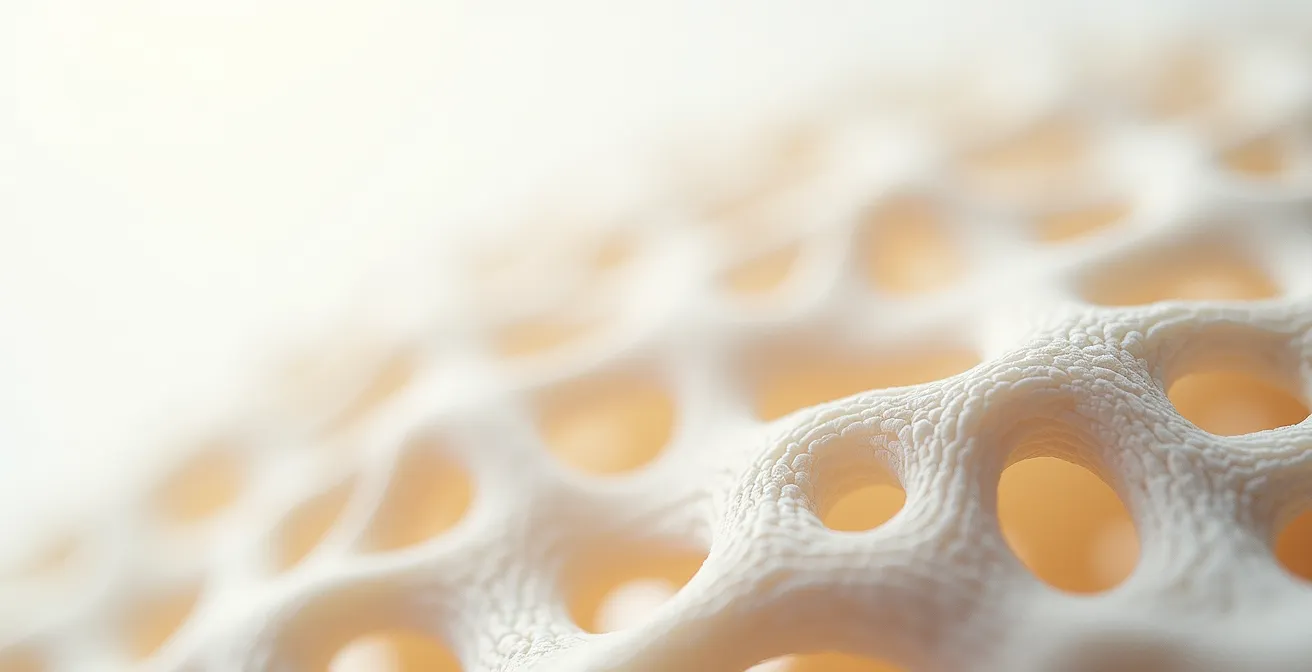
As the image above illustrates, bone has a complex lattice structure. The success of an implant depends on its ability to integrate with this structure. If the CBCT scan reveals insufficient volume, there are several highly effective bone reconstruction techniques available. These procedures are now routine in implant dentistry and have excellent success rates, even in older patients. The focus is on rebuilding a solid foundation to ensure the long-term stability of your implant.
Your Action Plan: Assessing Advanced Bone Reconstruction Options
- Get a 3D CBCT Scan: Insist on this scan at a specialized Montreal clinic for a precise bone assessment before any decisions are made.
- Discuss a Sinus Lift: If the upper jaw bone is insufficient, ask about a sinus lift procedure, a common technique to add bone height.
- Explore Guided Bone Regeneration (GBR): Inquire about GBR, which uses a membrane and bone grafting material (synthetic or your own) to rebuild bone where it’s needed.
- Consider the All-on-4® Technique: Ask if this is an alternative for you. It uses strategically angled implants to maximize contact with existing bone, sometimes avoiding the need for grafting altogether.
- Consult with University Specialists: For highly complex cases, request a referral or second opinion from specialists at the McGill University Health Centre.
Why Does It Take 3 to 6 Months Before You Get Your Final Crown?
Patience is a virtue, especially when it comes to dental implants. After the implant post is placed, there’s a crucial waiting period of three to six months before the final, visible tooth (the crown) is attached. This delay can feel frustrating, but it is the single most important factor in ensuring the lifelong success of your new tooth. This healing phase is not a passive waiting game; it’s when a remarkable biological process called osseointegration takes place.
Osseointegration is the magic behind dental implants. It is the process by which your living bone fuses directly with the biocompatible titanium or zirconia implant. The implant essentially becomes a part of your jaw, creating an anchor that is as strong as a natural tooth root. This fusion provides the incredible stability that allows you to chew, speak, and smile with confidence. Rushing this process by placing a crown too early (a practice known as immediate loading) can put pressure on the healing implant, disrupt the fusion, and risk complete failure.
For seniors, and particularly those with managed health conditions, allowing for a complete and undisturbed healing period is paramount. Your body’s healing timeline may be slightly different, but that doesn’t mean it’s less effective. As one specialist notes when reviewing complex cases, this caution is key. As Krennmair et al. state in a systematic review in the International Journal of Implant Dentistry, this phased approach is critical for at-risk patients:
Immediate loading protocols are viewed critically in elderly patients, especially those with diabetes. Risk-adapted follow-up care should be carried out after implant placement.
– Krennmair et al., International Journal of Implant Dentistry systematic review
Case Study: Successful Osseointegration in Diabetic Seniors
A prospective clinical study provides clear evidence that successful integration is very achievable in older adults. In an analysis of 22 implants placed in diabetic seniors, researchers tracked the stability of the implants over time using Implant Stability Quotient (ISQ) values. The ISQ scores rose from an average of 55.4 at placement to 73.7 at four months. This significant increase demonstrates that even with potential health complications, the bone successfully and strongly fused to the implants, paving the way for a successful final restoration.
Why Uncontrolled Diabetes Is a Red Flag for Implant Success?
For Montreal seniors managing diabetes, the question of implant safety is especially pertinent. Diabetes can affect the body in two primary ways that are relevant to oral surgery: it can slow down the healing process and it can increase the risk of infection. This is why a specialist will not just ask if you have diabetes; they will want to know how well it is controlled. The key metric they will be interested in is your HbA1c level, which provides a picture of your average blood sugar control over the past two to three months.
An elevated HbA1c level indicates that there is excess sugar in your bloodstream. This can impair the function of white blood cells, which are your body’s primary defense against infection. It also compromises circulation, reducing the delivery of oxygen and nutrients that are vital for tissue repair and bone healing. During the critical osseointegration phase, poor circulation and a weakened immune response can prevent the implant from fusing with the jawbone, leading to early failure.
The good news is that well-controlled diabetes is not a contraindication for dental implants. When your blood sugar levels are stable and within a healthy range, your body’s ability to heal and fight infection is significantly improved. The risk profile of a patient with an HbA1c under 7.5% is dramatically different from that of a patient with levels over 9%. Data clearly shows that control is everything. A 2024 systematic review confirmed that implants placed in patients with controlled diabetes had a success rate of 93.67%, which dropped to just 75% for those with poorly controlled HbA1c levels between 11.0-11.9%. This underscores the importance of working closely with your family doctor to ensure your diabetes is well-managed before proceeding with surgery.
Freehand vs. Guided Surgery: Which Method Reduces Pain and Error?
The thought of the surgical procedure itself is a major source of apprehension. Visions of a long, invasive, and painful process can be a significant deterrent. However, implant surgery has been revolutionized by technology. The debate between traditional “freehand” surgery and modern “computer-guided” surgery is particularly relevant for seniors, as the latter offers profound benefits in terms of safety, precision, and comfort.
In freehand surgery, the specialist relies on their experience, skill, and 2D X-rays to determine the position, angle, and depth of the implant. While effective in the hands of a true expert, it carries a higher inherent risk of human error. There’s a greater chance of damaging adjacent tooth roots, nerves, or sinuses. For the patient, it can often mean a longer procedure with more post-operative swelling and discomfort.
Computer-guided surgery, in contrast, is a game-changer. It begins with the 3D CBCT scan we discussed earlier. This detailed scan is loaded into sophisticated software, allowing the specialist to perform a “virtual surgery” on the computer first. They can precisely plan the ideal implant location down to a fraction of a millimeter, avoiding all critical anatomical structures. Based on this digital plan, a custom surgical guide—like a stencil for your mouth—is 3D printed. During the actual procedure, this guide fits perfectly over your gums and directs the implant placement exactly as planned. This approach minimizes the size of the incision (sometimes requiring no incision at all, known as “flapless” surgery), significantly reduces procedure time, and dramatically lessens post-operative pain and swelling. It transforms the experience from an art form into a precise science.
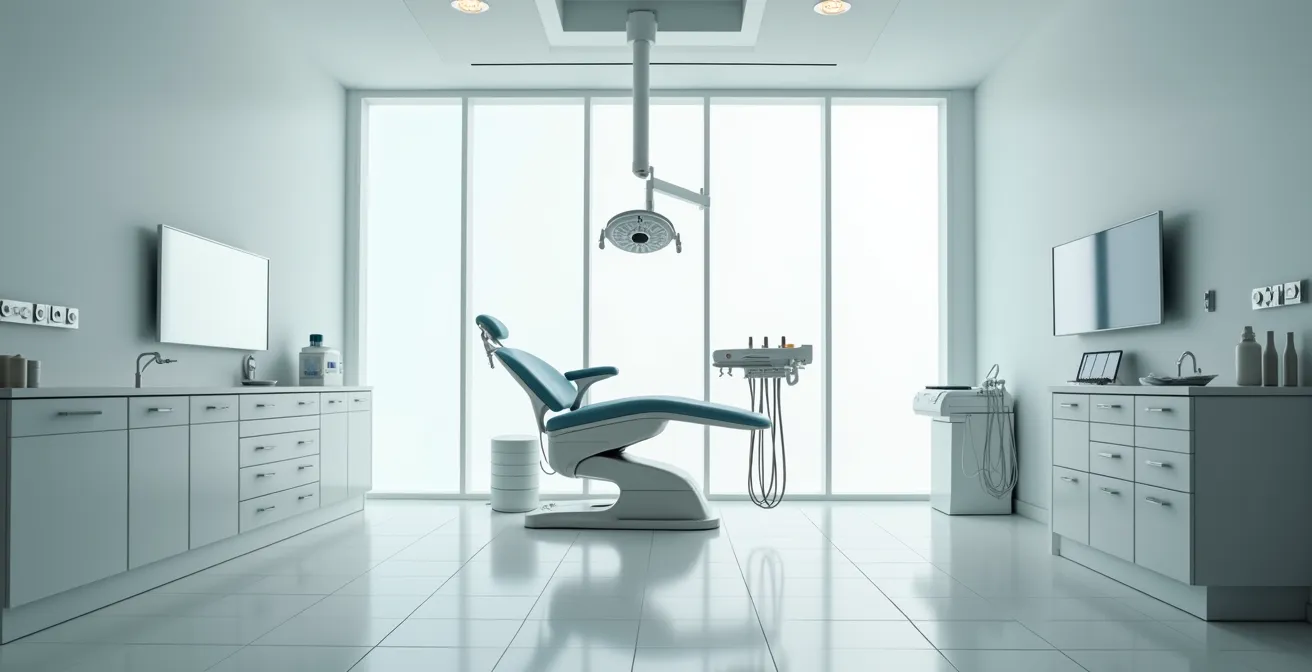
The clinical environment for guided surgery, as depicted above, reflects this ethos of precision and calm. This technology removes uncertainty and ensures a predictable, safe outcome, which is a top priority for any patient, especially those over 70.
Can You Get Gum Disease Around a Titanium Implant?
A dental implant is an artificial tooth root, so it can’t get a cavity. This leads some to believe that it’s immune to problems. Unfortunately, this is a dangerous misconception. While the implant itself is invulnerable, the surrounding gum and bone tissue are not. In fact, they can be susceptible to a condition very similar to gum disease, known as peri-implantitis.
Peri-implantitis is an inflammatory condition caused by the same bacteria that lead to periodontal (gum) disease around natural teeth. It starts as peri-implant mucositis, which is a reversible inflammation of the gums around the implant, characterized by redness and bleeding. If left untreated, it can progress to peri-implantitis, where the inflammation leads to the progressive loss of the bone supporting the implant. Ultimately, this bone loss can cause the implant to become loose and fail.
Seniors can be at a higher risk for two main reasons. First, conditions like diabetes can exacerbate inflammatory responses. A clinical study in the Journal of Pharmacy and Bioallied Sciences found that 45% of diabetic patients experienced peri-implant mucositis, highlighting the need for diligent maintenance. Second, physical limitations such as arthritis or reduced dexterity can make daily oral hygiene more challenging. Meticulous cleaning is the number one defense against peri-implant disease. Here are essential maintenance protocols for seniors:
- Schedule frequent professional cleanings: Plan for cleanings every 3-4 months instead of the standard 6 months to allow a hygienist to professionally clean around the implant.
- Use a water flosser: Devices like a Waterpik, readily available at Montreal pharmacies like Jean Coutu or Uniprix, are excellent for flushing out bacteria from around the implant crown.
- Select an electric toothbrush with a pressure sensor: This helps ensure thorough cleaning without applying excessive force that could damage the gum seal around the implant.
- Request specialized brushes: Ask your hygienist for interproximal brushes with modified handles designed for those with arthritic hands.
- Consider home-care services: If mobility is an issue, look into home-care dental hygiene services available in the Montreal area.
Titanium vs. Zirconia Implants: Which Is Better for Metal Situations?
When choosing an implant, the material it’s made from is a key consideration. For decades, titanium has been the undisputed “gold standard” in implantology. It’s a highly biocompatible material with an extensive track record of success. More recently, zirconia, a type of ceramic, has emerged as a popular metal-free alternative. For seniors, especially those with thin gums or concerns about metal allergies, understanding the differences is crucial.
Titanium implants have been used for over 40 years, and their long-term success is well-documented. Their ability to osseointegrate with the jawbone is proven beyond any doubt. The main aesthetic drawback is that in patients with very thin or receding gums, the dark grey color of the metal can sometimes show through, creating a slight shadow. True allergies to medical-grade titanium are extremely rare, but some patients simply prefer to avoid having any metal in their body.
Zirconia implants offer a compelling aesthetic advantage. Their tooth-like white color means there is no risk of a grey shadow showing through the gums. They are also highly biocompatible and have shown good osseointegration, though their clinical track record is shorter (around 15 years). They are typically more expensive than titanium and, being a one-piece design in many cases, can offer less prosthetic flexibility than the two-piece titanium systems. As Montreal dental specialists often explain, the concern over titanium allergies can be managed proactively.
True titanium allergies are extremely rare. However, for concerned patients, metal allergy patch testing can be arranged with allergist clinics before any procedure.
– Montreal dental specialists, Clinical consensus from Montreal implantology practices
To help you compare the options, this table summarizes the key properties based on data and pricing in the Montreal market. As outlined in a recent analysis of implant costs, material choice has a direct impact on the overall investment.
| Feature | Titanium Implants | Zirconia Implants |
|---|---|---|
| Biocompatibility | Excellent (decades of data) | Excellent (metal-free option) |
| Osseointegration | Gold standard, proven | Good, newer technology |
| Aesthetics | May show through thin gums | White color, better aesthetics |
| Cost in Montreal | $1,500-2,500 CAD | Higher premium pricing |
| Clinical Track Record | 40+ years proven success | 10-15 years clinical data |
How to Verify a Montreal Dentist’s Implant Credentials Before Booking?
The success of your dental implant procedure depends more on the skill of the surgeon than on any other single factor. This is especially true for senior patients, whose cases may involve bone grafting, managed health conditions, or other complexities. With over 84 dental implant clinics in Montreal, choosing the right professional can feel overwhelming. It is essential to move beyond slick marketing and verify a dentist’s actual training and experience.
Not all dentists who offer implants have the same level of training. Some may have only taken a weekend course, while others have completed extensive, multi-year post-graduate programs in surgery or prosthodontics at universities like Université de Montréal or McGill. A dentist’s commitment to the field is also demonstrated by their investment in modern technology and membership in respected international associations, which require ongoing education to maintain.
You have every right to be a discerning patient. When you go for a consultation, you are not just a patient; you are interviewing a candidate for a critical role in your healthcare. Do not be hesitant to ask direct and specific questions about their qualifications and experience with cases like yours. A confident and truly experienced specialist will welcome these questions and provide transparent answers. Here is a step-by-step guide to performing your due diligence:
- Check the ODQ Directory: The first step is to visit the website for the Ordre des dentistes du Québec (ODQ). Use their online member directory to confirm that the dentist has a valid license to practice in Quebec and to see if they are listed as a certified specialist (e.g., in prosthodontics or periodontics).
- Ask About Specific Training: Inquire about where they received their implant training. Ask them to differentiate between short-term courses and formal university residency or specialization programs.
- Inquire About Association Memberships: Ask if they are members of prestigious international organizations like the International Team for Implantology (ITI) or the American Academy of Implant Dentistry (AAID). This shows a commitment to staying current.
- Request Specific Experience: Ask direct questions like, “How many implant cases for patients over 70 have you completed in the last year?” or “What is your experience with bone grafting procedures?”
- Confirm Use of Modern Technology: Verify that they use the best practices we’ve discussed. Ask, “Do you use computer-guided surgery and 3D imaging for all of your implant cases?”
Key Takeaways
- Your overall health, not your age, is the most important factor for implant success. A ‘Health Scorecard’ focusing on controlled chronic conditions is key.
- Modern techniques like 3D CBCT scans and computer-guided surgery make the procedure safer, more precise, and less painful for seniors in Montreal.
- Bone loss and controlled diabetes are manageable challenges, not automatic disqualifications, thanks to procedures like bone grafting and careful health monitoring.
What If You Don’t Have Enough Bone for a Dental Implant?
We’ve come full circle, returning to the most fundamental concern for many seniors. After exploring the entire process, from healing timelines to verifying credentials, let’s revisit this question with a new perspective. Seeing a lack of bone on a scan can feel like a final roadblock, but it should instead be viewed as the final checkpoint on your Health Scorecard—a known variable that we now have a clear and predictable plan to address.
The fear of this hurdle often prevents people from even starting the conversation. Yet, as we’ve established, modern implantology has developed a robust toolkit specifically for this situation. Procedures like sinus lifts and guided bone regeneration are not experimental; they are routine, highly successful techniques that create the foundation necessary for a lifetime of function. Thinking of it this way reframes the narrative: it’s not about what you’ve lost, but about what can be rebuilt.
Ultimately, your journey to new teeth is a collaborative process. It requires a specialist with the right technical skills and a patient who is committed to their overall health. By managing your health, choosing an expert who uses precision technology, and committing to long-term maintenance, you are taking control of your oral health. Age does not define your candidacy; your proactive approach does.
Your next logical step is to get a personalized assessment. Book a consultation with a qualified Montreal implant specialist to get your 3D scan and build your own ‘Health Scorecard’, so you can make a final decision based on facts, not fear.