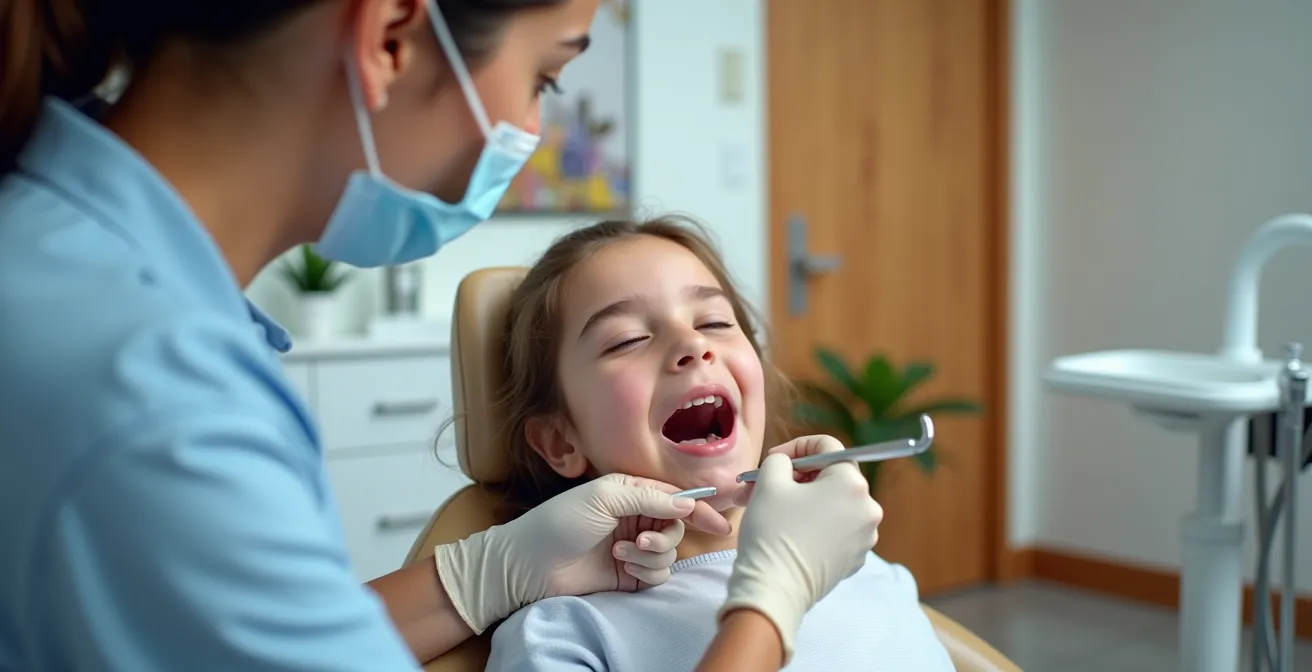
For a Montreal parent, dental sealants are a time-sensitive investment that prevents over 80% of molar cavities, offering a significant financial return by avoiding costly future fillings.
- The key to success is applying them within the first few months of a new molar’s eruption (around ages 6 and 12).
- Health Canada confirms the materials used are safe, with any potential BPA exposure being minimal and well within safety limits.
Recommendation: Assess your child’s molar eruption schedule now to capitalize on this critical window of prevention and discuss a proactive plan with your dentist.
As a parent in Montreal, seeing a dental bill can be a moment of calculation. You weigh the immediate cost against the long-term health of your child. This is especially true for preventative treatments like dental sealants, which aren’t always fully covered by the Régie de l’assurance maladie du Québec (RAMQ), even for children under 10. The fundamental question isn’t just “What is a sealant?” but “Is this a sound financial decision for my family?” Most will tell you it’s a simple plastic coating, a quick and painless procedure. This is true, but it misses the core point.
The real value of a dental sealant isn’t in the material itself, but in its strategic, time-sensitive application. This isn’t just about preventing a cavity; it’s about executing a calculated maneuver to achieve a significant “Return on Prevention” (ROP). The cost of a sealant today is a fraction of the cost of a filling, a root canal, or a crown tomorrow. This guide moves beyond the basic definition to provide a clear cost-benefit analysis, framing sealants as a crucial, proactive investment in your child’s future oral health and your family’s financial well-being.
This article will break down the effectiveness, the critical timing, safety concerns, and longevity of this treatment. By understanding these factors, you can move from uncertainty to making an informed, confident decision based on a clear cost-benefit calculus.
Summary: A Parent’s Guide to the Value of Dental Sealants
- How Sealants Block 80% of Cavities in the First 2 Years?
- Why You Must Seal Molars within 6 Months of Eruption?
- Can Adults Benefit from Sealants on Deep Grooves?
- Is There BPA in Dental Sealants and Is It Safe for Kids?
- How Long Do Sealants Last Before They Need Repair?
- Is Fluoride Varnish Safe for Toddlers Who Might Swallow It?
- Can You Heal a Cavity at Home Before It Needs a Filling?
- Why You Must Seal Molars within 6 Months of Eruption?
How Sealants Block 80% of Cavities in the First 2 Years?
The effectiveness of dental sealants is not a matter of opinion; it’s a statistical reality. The primary value proposition lies in their ability to act as a physical barrier. A child’s new molars have deep pits and fissures—microscopic grooves that are a paradise for food particles and bacteria but a nightmare for toothbrush bristles. Sealants flow into these grooves and harden, creating a smooth, easy-to-clean surface. This simple mechanism is remarkably effective, with official data confirming they prevent 80% of cavities for the first two years after application. The protection remains significant, at around 50% for up to four years, provided the sealant remains intact.
It is important to understand that sealants and fluoride treatments serve different but complementary roles. While fluoride works systemically to strengthen the smooth surfaces of all teeth, making the enamel more resistant to acid attacks, sealants provide targeted, mechanical protection for the most vulnerable chewing surfaces. For children in Quebec, this dual approach offers the highest level of proactive shielding. The combination ensures that both the hard-to-reach grooves and the exposed flat surfaces of the teeth are fortified against decay.
Your Action Plan: Understanding Sealant Effectiveness
- Understand the Risk Zone: Recognize that an overwhelming majority—9 in 10 cavities—occur in the back teeth (molars), the exact area where sealants are applied.
- Visualize the Barrier: Know that sealants create a physical shield, preventing food and bacteria from getting trapped in the deep grooves that brushing often misses.
- Combine for Max Protection: Pair sealants with regular fluoride treatments; sealants protect the grooves, while fluoride strengthens the smooth surfaces.
- Leverage RAMQ Coverage: For children under 10 in Quebec, schedule the sealant application during a routine check-up, which is typically covered, to minimize out-of-pocket costs.
- Monitor Sealant Integrity: Ensure the sealant’s condition is checked at every dental visit, as an intact sealant is what maintains the high protection rate.
Why You Must Seal Molars within 6 Months of Eruption?
The concept of “Return on Prevention” with dental sealants is critically linked to timing. Applying them is not just a matter of *if*, but *when*. The period immediately following the eruption of a permanent molar is the “window of vulnerability.” During this time, the enamel is not yet fully hardened, and the tooth is at its highest risk for decay. Sealing the tooth within the first six months to a year of its arrival closes this window, providing immediate protection when it’s needed most.

The timeline for this proactive shielding is predictable. As outlined in clinical protocols from pediatric hospitals, the first permanent molars (often called “six-year molars”) typically emerge around age six, with the second set (“twelve-year molars”) appearing around age twelve. Applying sealants right after they have fully erupted ensures the tooth is still cavity-free and can be cleaned thoroughly before the sealant is applied. The procedure itself is simple and non-invasive: the tooth is cleaned, a gel is applied to prepare the surface, and the liquid sealant is painted on, hardening in seconds under a special light. This immediate hardening creates an instant, durable shield during the most cavity-prone years of a child’s life.
Can Adults Benefit from Sealants on Deep Grooves?
While dental sealants are most commonly associated with pediatric dentistry, their application is not strictly limited to children. The same logic of proactive shielding can apply to adults who have a high risk of decay. Specifically, an adult with deep grooves or fissures in their molars, and who has no existing fillings or decay in those teeth, can be an excellent candidate. The sealant serves the same function: to block off these hard-to-clean areas from plaque and food debris.
The decision for an adult is a case-by-case analysis. For individuals with a history of cavities, a strong preference for sugary foods, or certain medical conditions that cause dry mouth (reducing saliva’s natural cleansing ability), sealants can be a very wise preventative investment. It is a proactive step to preserve natural tooth structure and avoid the cycle of fillings and repairs. As the dental experts at the Cleveland Clinic confirm, the benefit extends beyond childhood.
Adults without decay or dental fillings in their molars can also benefit from this treatment. In general, anyone who’s prone to tooth decay on their back teeth should consider sealants.
– Cleveland Clinic Dental Department, Cleveland Clinic Sealants Treatment Guide 2025
Therefore, while the primary window of opportunity is in childhood, adults with specific risk factors should not dismiss sealants as a viable option for maintaining their own oral health and avoiding more invasive procedures down the road.
Is There BPA in Dental Sealants and Is It Safe for Kids?
For any parent, the question of safety is paramount. Concerns about Bisphenol A (BPA) in plastics have understandably extended to dental materials. It’s crucial to clarify the facts. First, BPA itself is not an ingredient in dental sealants. Some common resin-based sealants are derived from monomers like bis-GMA, which can contain trace amounts of BPA. However, the potential exposure from sealants is extremely low and transient. The exposure, if any, occurs primarily within the first few hours after placement and is thousands of times lower than what is considered safe.
Health Canada, the national authority on public health, provides a clear benchmark for safety. The exposure from a single sealant application is a tiny fraction of Health Canada’s provisional tolerable daily intake for BPA, which is set at 25 micrograms per kilogram of body weight. The consensus in the dental and medical communities is that the immense benefit of preventing tooth decay far outweighs the negligible and temporary risk associated with this minimal exposure. Furthermore, simple measures taken by the dentist, such as washing the sealant surface or having the child rinse with water immediately after application, can reduce this already minuscule exposure even further.
For parents in Montreal who remain concerned, there are alternatives. Many dentists now offer BPA-free sealant options, such as those made from glass ionomer materials. These not only serve as a physical barrier but also have the added benefit of slowly releasing fluoride over time, providing an extra layer of chemical protection. This ensures that every parent can find a solution that aligns with both their child’s health needs and their personal comfort level regarding materials.
How Long Do Sealants Last Before They Need Repair?
A key part of the cost-benefit calculus for a parent is understanding the longevity of the investment. A dental sealant is not a permanent fixture, but it is a highly durable one. With proper oral hygiene and regular dental check-ups, the protective shield of a sealant can remain effective for a significant period. Clinical data from leading institutions like Boston Children’s Hospital shows that sealants typically last from 5 to 10 years.
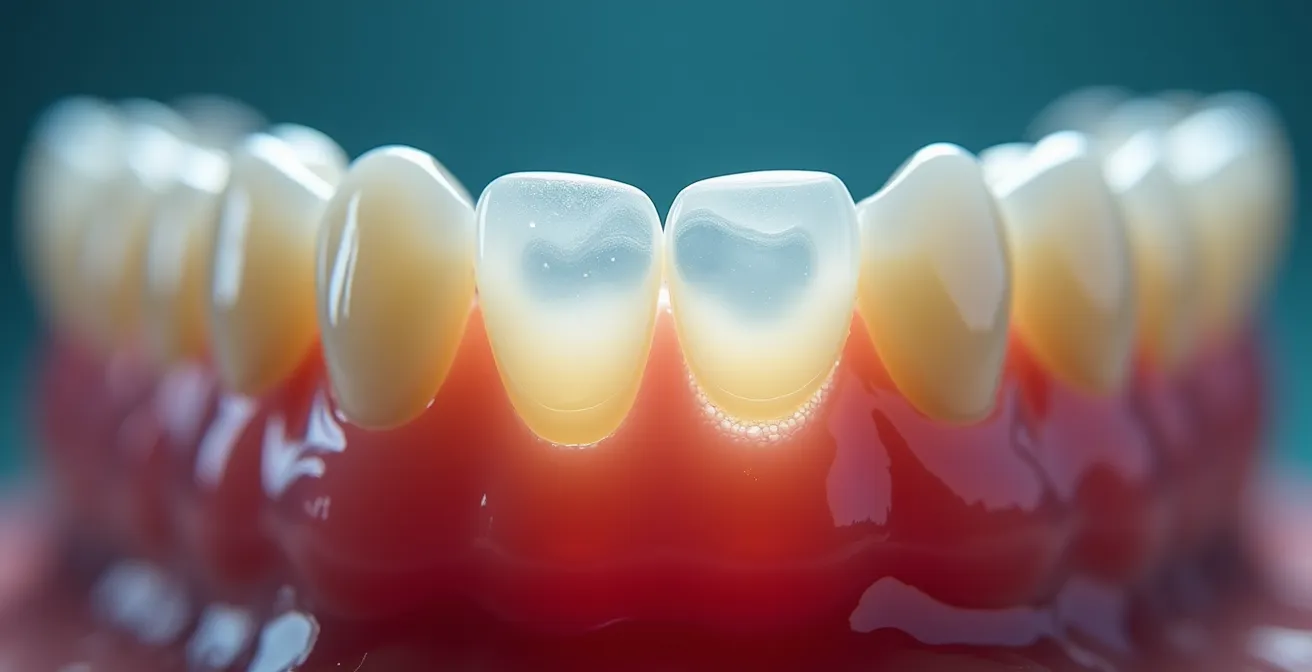
The lifespan of a sealant depends on a child’s chewing habits and diet. Hard or sticky candies, for example, can contribute to wear and tear. This is why regular dental visits are a critical component of the sealant strategy. At each check-up, the dentist will examine the structural integrity of the sealant. They check for any chips or areas where the sealant may have worn away. If a small breach is found, it can be easily and quickly repaired, restoring the protective barrier before any decay has a chance to start. This ongoing monitoring ensures that the initial investment continues to provide its protective return for many years.
Thinking of a sealant’s lifespan in terms of “5 to 10 years” means it can realistically protect a “six-year molar” all the way through adolescence, the period of highest cavity risk. The cost of a simple repair or re-application is still minimal compared to the cost of treating a cavity that could have formed in an unprotected or compromised tooth.
Key Takeaways
- Dental sealants offer over 80% cavity protection, but only when applied within the critical window just after molar eruption.
- The upfront cost should be viewed as a calculated investment against the significantly higher financial and health costs of future fillings and dental work.
- Safety is confirmed by Health Canada, and regular dental check-ups are essential to monitor the sealant’s integrity and ensure long-term effectiveness.
Is Fluoride Varnish Safe for Toddlers Who Might Swallow It?
For parents of very young children, the idea of any dental treatment can be daunting, especially one they might swallow. Fluoride varnish is a highly effective preventative tool, even for toddlers, and its safety profile is excellent precisely because of how it is designed and applied. Unlike foam or gel treatments, the varnish is not meant to be bathed in; it is painted on in a very small, controlled dose. The key to its safety lies in its composition.
As the Canadian Dental Association explains, the material is formulated to be extremely adherent. The moment the varnish is painted onto the teeth, it comes into contact with saliva and hardens almost instantly. This rapid setting time is a crucial safety feature.
The varnish is a ‘sticky’ substance painted directly onto teeth in a very small, controlled dose, which hardens on contact with saliva, minimizing the amount that can be swallowed.
– Canadian Dental Association, CDA Guidelines on Fluoride Varnish for Young Children
This “sticky” quality ensures that the fluoride stays exactly where it’s needed—on the tooth surface—and doesn’t get ingested in any significant quantity. The application protocol further enhances safety:
- The child is seated upright to prevent pooling or swallowing.
- A minimal amount (typically 0.25-0.5 ml for the whole mouth) is used.
- Parents are advised to avoid giving the child hard or crunchy foods for a few hours to allow the varnish to fully set and deliver its protective benefits.
This makes fluoride varnish a safe and powerful tool for protecting the primary teeth of even the youngest patients in a dental practice.
Can You Heal a Cavity at Home Before It Needs a Filling?
The moment a dentist says the word “cavity,” most parents think of a drill and a filling. However, tooth decay is a process, not a single event, and its earliest stage can sometimes be reversed. This process is called remineralization. It’s not about “healing” a hole, but rather about strengthening and rebuilding enamel that has been weakened by acid. This is only possible for what are known as “incipient caries” or “white spot lesions”—the chalky, white areas that signal the very beginning of mineral loss, before the tooth surface has been physically broken.
Case Study: Reversing Early Decay in Montreal
Research confirms that only these initial white spot lesions can potentially be reversed. In Montreal, dentists encountering these early signs often prescribe a rigorous at-home protocol instead of immediately drilling. This typically involves using a high-fluoride prescription toothpaste (5000 ppm) and sometimes a calcium phosphate product like MI Paste. This is combined with strict dietary changes, such as reducing sugar intake frequency. Studies show that when caught early and treated with this aggressive remineralization approach, there is a 30-50% success rate in reversing the white spot lesion and avoiding a filling.
Once the decay progresses past this initial stage and creates a physical hole or “cavitation” in the enamel, it is no longer reversible. At that point, a filling is necessary to remove the decayed tissue and restore the tooth’s structure. The following table clarifies the distinction between reversible and non-reversible stages.
| Stage | Visual Signs | Reversible? | Treatment |
|---|---|---|---|
| White Spot Lesion | Chalky white areas on enamel | Yes | Remineralization protocol |
| Brown Spot | Light brown discoloration | Sometimes | Intensive fluoride treatment |
| Enamel Cavity | Small hole in enamel | No | Filling required |
| Dentin Cavity | Deeper cavity reaching dentin | No | Filling or crown needed |
This distinction is the entire basis for the sealant cost-benefit argument. A sealant prevents the process from ever starting, keeping the tooth out of the “treatment” column entirely.
Why You Must Seal Molars within 6 Months of Eruption?
We return to this critical question because it forms the cornerstone of the entire cost-benefit analysis. Understanding that a cavity can only be “healed” in its very earliest stage makes the timing of sealant application an urgent financial decision. Missing the six-month window of vulnerability after a molar erupts is akin to leaving a valuable asset uninsured during its most perilous period. It is a gamble where the potential loss—the cost, pain, and time of a filling—far outweighs the modest, one-time cost of prevention.
Think of it this way: the moment a new molar is exposed, the clock starts ticking. Without the smooth, protective shield of a sealant, its deep grooves immediately begin trapping bacteria. This can quickly lead to a white spot lesion. While that lesion is technically reversible, it requires aggressive, consistent at-home treatment with no guarantee of success. If that protocol fails or isn’t followed perfectly, the decay progresses to an irreversible enamel cavity. The opportunity for simple prevention is lost forever, and you have moved from a low-cost sealant to a more expensive restorative filling. The “Return on Prevention” has been forfeited.
Therefore, the mandate to seal molars within six months of eruption is not arbitrary dental advice. It is a strategic directive aimed at intervening at the point of maximum leverage. It is the most effective and economically sound action a parent can take to protect their child’s permanent teeth from a lifetime of dental intervention.
To put this knowledge into practice, the next logical step is to consult your Montreal-area dentist. Aligning your child’s check-up schedule with their specific molar eruption timeline is the key to capitalizing on this critical window and making a sound investment in their future health.
Frequently Asked Questions About Dental Sealants
Do dental sealants contain BPA?
BPA is not an ingredient in dental sealants. Some sealants contain monomers derived from BPA (bis-GMA, bis-DMA), but trace amounts if present are well within Health Canada’s safety margins and limited to the first few hours after placement.
Are there BPA-free sealant options available?
Yes, glass ionomer sealants are naturally BPA-free and have the added benefit of releasing fluoride over time. Many Quebec dentists offer these as an alternative to resin-based sealants.
How can I minimize any potential BPA exposure?
Dentists can wash the sealant surface for 30 seconds with an air-water syringe or have children gargle with water immediately after application to remove any unpolymerized material.