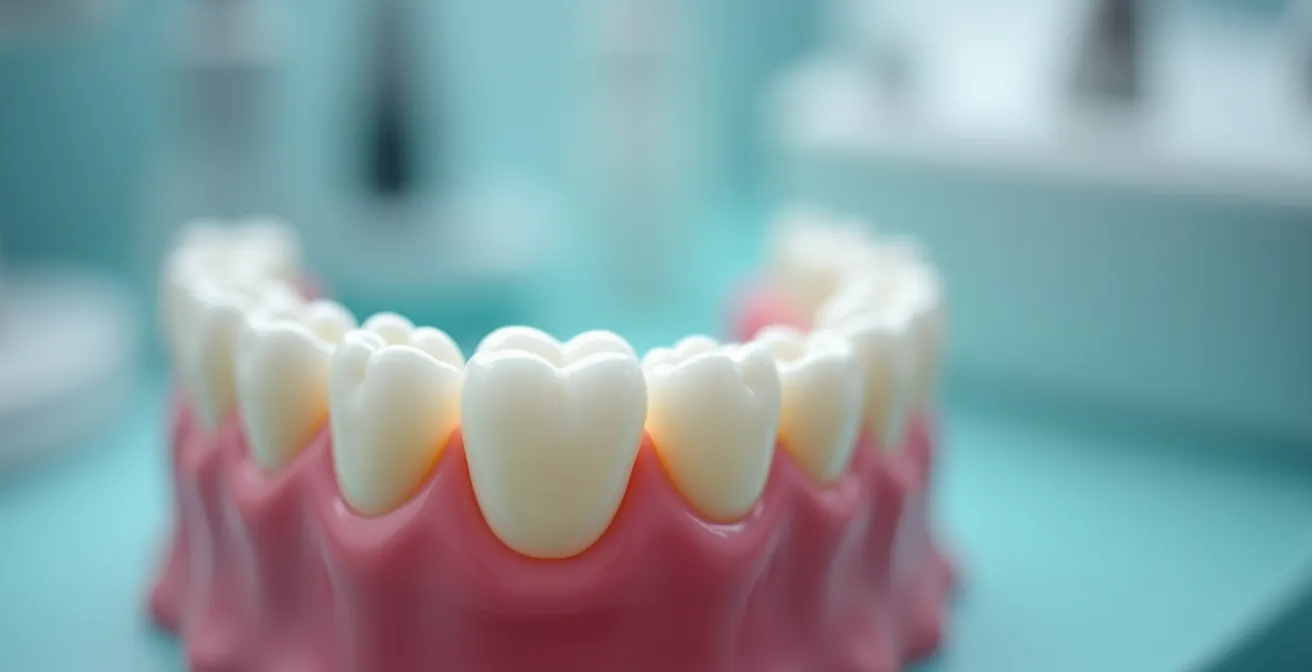
Yes, you can reverse the earliest stage of a cavity—the “white spot”—by actively managing your mouth’s “mineral budget” at home.
- Early decay is a chemical imbalance where minerals leave the tooth faster than they are deposited. You can tip the scales back in your favour.
- Success depends on supplying bio-available minerals (like nano-hydroxyapatite or fluoride) and creating the right environment for them to work, especially at night.
Recommendation: If you see a physical hole or feel sensitivity, the window for home repair has closed. It’s time to consult your Montreal dentist.
That faint, chalky white spot on your tooth—it’s the first whisper of a cavity. For many Montrealers, the immediate thought is of the dental drill and the associated cost. The common advice is often a mix of well-meaning but vague tips like “cut down on sugar” or folk remedies like oil pulling. But what if the solution wasn’t about generic advice or unproven trends? What if you could treat your tooth enamel like a bank account, a “mineral budget” that you can actively manage?
The truth is that tooth decay isn’t a one-way street; it’s a dynamic process of demineralization (minerals leaving) and remineralization (minerals returning). A cavity only forms when the withdrawals consistently outpace the deposits. The key to healing that initial white spot lies in understanding the specific biochemical factors that control this budget and taking scientifically-proven steps to push your enamel back into a state of surplus.
This guide moves beyond the basics. We’ll explore the critical point where home care is no longer enough. We’ll examine how your diet, your saliva, and even your nighttime habits directly impact your teeth’s ability to repair themselves. We will compare the cutting-edge tools at your disposal—from Japanese nano-hydroxyapatite to the gold standard of fluoride—and provide a realistic framework for winning the battle against early decay, right from your Montreal home, before the drill becomes inevitable.
To help you navigate this process, we have structured this guide to address the most critical questions about natural tooth remineralization. The following sections provide a comprehensive roadmap for understanding and acting on early signs of decay.
Summary: A Montrealer’s Guide to Reversing Early Tooth Decay
- White Spots vs. Holes: When Is It Too Late to Remineralize?
- Which Foods Block Calcium Absorption and Stall Your Tooth Repair?
- Is Japanese Nano-Hydroxyapatite Better Than North American Fluoride?
- Why Saliva Production Drops at Night and How It Affects Repair?
- Why You Shouldn’t Rinse Your Mouth With Water After Brushing?
- Why Do You Keep Getting Cavities Despite Brushing and Flossing?
- Is a $200 Sonic Toothbrush Really Better Than a $5 Manual One?
- White Spots vs. Holes: When Is It Too Late to Remineralize?
White Spots vs. Holes: When Is It Too Late to Remineralize?
The ability to heal a cavity at home hinges entirely on one factor: has the enamel surface been breached? Think of it as the difference between a stained patch of lawn and a hole dug in the ground. The first stage of a cavity, known as an incipient lesion or a “white spot,” is essentially demineralized enamel. The underlying structure is still intact, but it has lost minerals, making it look chalky and opaque. This is your window of opportunity. At this stage, the enamel can be remineralized, effectively “healing” itself with the right support.
However, once that demineralization progresses and the surface layer collapses, you have a “cavitated” lesion—a physical hole. At this point, no amount of special toothpaste or diet change can rebuild the lost tooth structure. The battle for home repair is over, and professional intervention is non-negotiable. Ignoring a physical hole allows bacteria to penetrate deeper into the tooth’s dentin layer, leading to pain, infection, and the need for more complex and expensive treatments.
The financial incentive to act early is significant. In Montreal, the cost for a simple restoration is substantial. According to Quebec dental fee guidelines, a single white composite filling can range from $131 to $411 depending on the number of surfaces involved. By successfully remineralizing a white spot, you are not just avoiding the drill; you are saving a considerable amount of money. The key is to be a proactive patient who recognizes that a white spot is not a stain to be ignored, but a crucial warning sign to be addressed immediately.
Which Foods Block Calcium Absorption and Stall Your Tooth Repair?
Winning the remineralization battle isn’t just about adding minerals; it’s equally about removing the roadblocks that prevent your body from using them. You might be consuming plenty of calcium, but certain dietary components, known as “anti-nutrients,” can bind to these essential minerals in your gut, preventing them from ever reaching your bloodstream and, ultimately, your teeth. The most significant of these is phytic acid.
Phytic acid is the primary storage form of phosphorus in many plant tissues, especially in the bran or hull of grains, nuts, and legumes. While it has some health benefits, its dark side is its strong binding affinity for minerals like calcium, magnesium, iron, and zinc. When you consume foods high in phytic acid, it can form insoluble complexes with these minerals, blocking their absorption. A diet high in unfermented whole grains and legumes can inadvertently sabotage your efforts to strengthen your teeth.
Furthermore, mineral absorption isn’t a solo act. As a comprehensive study on foods that support cavity healing highlights, other vitamins act as crucial co-factors. Your body needs Vitamin D3 to effectively transport calcium from your blood to your teeth, and Vitamin K2 (found in grass-fed dairy, egg yolks, and fermented foods like natto) works in synergy with Vitamin D3 to ensure that calcium is deposited in your bones and teeth, not in your soft tissues. A deficiency in either of these vitamins can stall your tooth repair, even with adequate calcium intake, an important consideration for Canadians who may have lower Vitamin D levels during long winters.
Even common beverages can have a major impact on your enamel’s mineral balance. The acidity of many popular drinks can directly erode enamel, counteracting your remineralization efforts. This is especially relevant in a Canadian context.
| Beverage Type | pH Level | Impact on Teeth | Recommendation |
|---|---|---|---|
| Tim Hortons Coffee | ~5.0 | Acidic, can erode enamel | Use straw, rinse after |
| Canada Dry Ginger Ale | ~2.7 | Highly acidic, promotes decay | Limit consumption |
| Milk | ~6.7 | Neutral, provides calcium | Beneficial for teeth |
| Green Tea (unsweetened) | ~7.2 | Alkaline, contains fluoride | Helpful for remineralization |
Is Japanese Nano-Hydroxyapatite Better Than North American Fluoride?
For decades, fluoride has been the undisputed champion of cavity prevention in North America. It works by integrating into the enamel’s crystal structure, forming a more acid-resistant compound called fluorapatite. However, a powerful alternative, nano-hydroxyapatite (n-HAp), has gained significant traction, particularly from its origins in Japan. So, is this newcomer a better choice for remineralizing your teeth?
Nano-hydroxyapatite is a synthetic, nanoparticle form of the very mineral that naturally makes up about 97% of your tooth enamel and 70% of your dentin. Its mechanism is fundamentally different from fluoride. Instead of just reinforcing the existing structure, n-HAp acts as an “enamel scaffolding.” The nanoparticles directly fill in the microscopic pores of demineralized enamel, bonding with the tooth to restore its integrity and smoothness. It is a biomimetic approach—it rebuilds the tooth using a material that mimics its natural composition.
This approach isn’t just theoretical; it’s backed by solid research. As a systematic review published in the Canadian Journal of Dental Hygiene points out, n-HAp has proven to be a highly effective agent in preventing tooth decay.
Hydroxyapatite is an active biomimetic crystallite that has been shown to prevent caries in the primary dentition with similar results to fluoridated toothpaste.
– Canadian Journal of Dental Hygiene, Biomimetic hydroxyapatite and caries prevention: a systematic review
The choice between fluoride and n-HAp isn’t necessarily about one being “better” for everyone. Fluoride is a proven, cost-effective, and widely available public health tool. However, for individuals seeking a fluoride-free option or those particularly focused on rebuilding enamel with its native material, n-HAp offers a compelling, scientifically-validated alternative that you can find on the shelves of many Montreal health stores and pharmacies.
Ultimately, both are powerful tools in your remineralization arsenal. The best choice depends on your personal philosophy, dental history, and what you can consistently incorporate into your daily routine. The key is that you have effective, science-backed options available.
Why Saliva Production Drops at Night and How It Affects Repair?
You can have the best toothpaste and the perfect diet, but if your mouth is dry, your teeth are fighting a losing battle. Saliva is the unsung hero of oral health. It’s your body’s natural cleaning agent, constantly rinsing away food debris and neutralizing the acids produced by plaque bacteria. More importantly, saliva is supersaturated with the calcium and phosphate ions that your teeth need to remineralize. When saliva flow decreases, this critical supply line is cut off, creating the perfect storm for decay.
This risk skyrockets at night. During sleep, your body’s systems slow down, and saliva production naturally plummets. This creates what could be called the “nighttime acid tide”—an eight-hour period where acids can accumulate unchecked and the remineralization process stalls. For Montrealers, this universal problem is often made worse by local environmental and lifestyle factors. During Quebec’s long, cold winters, indoor heating systems create incredibly dry air, which can exacerbate nocturnal dry mouth (xerostomia).
Furthermore, lifestyle choices can compound the issue. Dehydrating substances like alcohol from the SAQ or cannabis from the SQDC, both of which are known to cause dry mouth, further reduce your protective salivary flow. This combination of naturally low nighttime saliva, dry indoor air, and lifestyle habits leaves your teeth incredibly vulnerable while you sleep. Managing this nighttime environment is therefore one of the most critical aspects of preventing and reversing early cavities.
Your Action Plan: Nighttime Oral Care for Montreal Residents
- Humidifier Use: Run a humidifier in your bedroom during winter to combat the dry air from indoor heating systems.
- Topical Hydration: Apply an over-the-counter oral moisturizing gel like Biotene or GUM Hydral, available at Jean Coutu or Pharmaprix, right before bedtime to coat and protect oral tissues.
- Bedside Water: Keep a glass of water by your bedside for quick hydration if you wake up with a dry mouth during the night.
- Medication Review: Discuss dry mouth side effects with your Quebec pharmacist, as common medications for allergies or blood pressure can reduce saliva flow.
- Pre-Sleep Routine: Avoid consuming alcohol or cannabis for at least 2-3 hours before sleep to minimize their dehydrating effects on your oral environment.
Why You Shouldn’t Rinse Your Mouth With Water After Brushing?
It’s a habit ingrained in most of us since childhood: brush your teeth, then rinse your mouth thoroughly with water. It feels clean and final. However, if your goal is to remineralize early cavities, this is one of the most counterproductive things you can do. Rinsing with water immediately after brushing washes away the very ingredients you’ve just spent two minutes trying to apply.
Whether you’re using a Canadian Dental Association (CDA)-approved fluoride toothpaste or a more expensive nano-hydroxyapatite (n-HAp) product, these active ingredients need time to work their magic. They need to remain in contact with the tooth surface to be absorbed into the enamel or to form a protective layer. When you rinse with water, you are effectively diluting and flushing away the vast majority of these crucial minerals before they have a chance to do their job. It’s like applying a medicinal cream and immediately washing it off.
As experts in oral health formulation emphasize, maximizing contact time is essential for the effectiveness of active ingredients like nano-hydroxyapatite.
Avoid rinsing with water immediately after brushing to allow n-Ha to coat teeth
– B.WEISS Health, Nano Hydroxyapatite Toothpaste FAQs
The correct technique is to simply spit out the excess toothpaste and be done. It might feel strange at first, leaving a slight residue in your mouth, but this residue is a concentrated bath of beneficial minerals working to repair your enamel. This “spit, don’t rinse” method is a small change in habit that can dramatically increase the efficacy of your toothpaste and supercharge your remineralization efforts. Here’s how to integrate this into a powerful nightly routine, tailored for a Quebecer:
- Brush for a full two minutes with your chosen CDA-approved fluoride or n-HAp toothpaste from a local store like Pharmaprix.
- Spit out the excess foam thoroughly, but do not rinse your mouth with water.
- Wait at least 30 minutes before eating or drinking anything, including your favourite Four O’Clock herbal tea, to give the minerals maximum contact time.
- This no-rinse rule is especially critical if your Quebec dentist has prescribed a high-concentration fluoride toothpaste for you.
Why Do You Keep Getting Cavities Despite Brushing and Flossing?
It’s one of the most frustrating dental dilemmas: you brush twice a day, you floss diligently, yet at every check-up, your dentist finds another cavity. If you’re doing everything “right,” what’s going wrong? The answer often lies beyond simple hygiene and deep within your body’s systemic health and oral microbiome. Your mouth is not a sterile environment; it’s a complex ecosystem of billions of bacteria, and recurring cavities are often a sign that this ecosystem is out of balance.
This imbalance, known as oral microbiome dysbiosis, is a primary driver of recurring decay. Research from Canadian institutions, including McGill’s Faculty of Dental Medicine, has shown that certain systemic health conditions create an oral environment that favors acid-producing, cavity-causing bacteria (like *Streptococcus mutans*) over the neutral, protective species. Conditions that are prevalent in Canada, such as diabetes and GERD (acid reflux), constantly lower the pH of your mouth, giving these harmful bacteria the acidic environment they need to thrive and attack your enamel.
This internal environment can be further compromised by nutritional deficiencies that affect your “mineral budget.” A diet high in phytic acid from grains and sugars, common in many Western diets, not only feeds harmful bacteria but also hinders the absorption of essential minerals like calcium. Combined with a potential Vitamin D deficiency, this creates a situation where your teeth are both under constant attack and starved of the resources needed for repair. Simply scrubbing the surface isn’t enough when the underlying biological and chemical environment is primed for decay. True prevention requires restoring a healthy, balanced microbiome so that the nutritive benefits of minerals can actually begin to repair the damage.
The solution isn’t to brush harder, but to look deeper. It involves managing systemic health conditions, optimizing your diet for bio-available minerals, and potentially using probiotics to help restore balance to your oral ecosystem. It’s about shifting focus from just cleaning your teeth to cultivating a healthy oral environment from the inside out.
Is a $200 Sonic Toothbrush Really Better Than a $5 Manual One?
When you’re fighting to remineralize your teeth, effective plaque removal is non-negotiable. Plaque is the biofilm of bacteria that produces the acid that leaches minerals from your enamel. This raises a common question: is a high-tech, $200 sonic toothbrush from Canadian Tire a necessary investment, or is a simple $5 manual brush just as good? The answer lies in the difference between “possible” and “probable.”
It is entirely possible to achieve excellent plaque removal with a manual toothbrush, but it requires perfect technique, every single time. You need to consistently use the correct angle (the 45-degree Bass method), pressure, and timing, which very few people do. A sonic toothbrush, on the other hand, makes superior plaque removal much more probable. It does most of the work for you. The high-frequency vibrations (often over 30,000 strokes per minute) create a dynamic fluid action that cleans not only the surfaces it touches but also reaches slightly between teeth and below the gumline. Studies consistently show a modest but significant advantage for powered brushes. For instance, a meta-analysis found that a sonic toothbrush removes about 10% more plaque than a manual one.
While a 10% improvement might not sound dramatic, over the course of a year, it can make a significant difference in preventing demineralization. For a Montreal resident, the decision can also be viewed through a cost-benefit lens. A single filling can easily cost more than the toothbrush itself.
| Option | Initial Cost | Annual Maintenance | Potential Savings |
|---|---|---|---|
| Manual Toothbrush | $5 | $20 (4 replacements) | Baseline |
| Philips Sonicare (Canadian Tire) | $200 | $60 (brush heads) | Avoid 1 filling = save ~$271 |
| Professional Filling Cost | $131-411 | N/A | Per cavity prevented |
A sonic toothbrush is not a magic wand, but it is a tool that can make your hygiene efforts more consistent and effective. For someone actively trying to reverse early decay, that consistency can be a worthwhile investment, paying for itself by helping you avoid just one future filling.
Key Takeaways
- Remineralization is only possible at the “white spot” stage, before the enamel surface has collapsed into a physical hole.
- Your diet is crucial: avoid phytic acid that blocks mineral absorption and ensure you have enough Vitamin D3 and K2 to transport calcium to your teeth.
- The “spit, don’t rinse” method after brushing is a simple but powerful habit change that maximizes the effectiveness of your toothpaste.
White Spots vs. Holes: When Is It Too Late to Remineralize?
We’ve explored the science, the tools, and the techniques. Now, let’s bring it all together to answer the ultimate question with absolute clarity. The entire possibility of healing a cavity at home rests on your ability to accurately assess the stage of decay. You are the frontline observer, and knowing the point of no return is the most critical piece of knowledge you can have.
A chalky, opaque white spot with no surface roughness is your green light. This is demineralization in action, but the structure is intact. This is the time to deploy every strategy we’ve discussed: optimize your diet for bio-available minerals, manage your nighttime oral environment, use a high-quality remineralizing agent like n-HAp or fluoride, and adopt the “spit, don’t rinse” habit. Your body, given the right resources and environment, has a remarkable capacity to repair this early-stage damage.
However, the moment you can feel a “catch” with your fingernail, notice a slight roughness, or see a shadow or a distinct brown or black spot, the game has changed. If you experience sensitivity to hot, cold, or sweet things, it’s a strong signal that the decay has passed through the enamel and is nearing the more sensitive dentin layer. A visible pit or hole is the final, unambiguous sign that the window for home care has closed. The structural damage is done, and only a dentist can clean out the decay and restore the tooth with a filling.
Being a proactive patient means being both hopeful and realistic. By understanding these clear visual and sensory cues, you can confidently take control of your oral health, intervening effectively when you can and seeking professional help precisely when you need to. Your next step is to perform an honest self-assessment and choose your path: aggressive home remineralization or a call to your Montreal dentist.