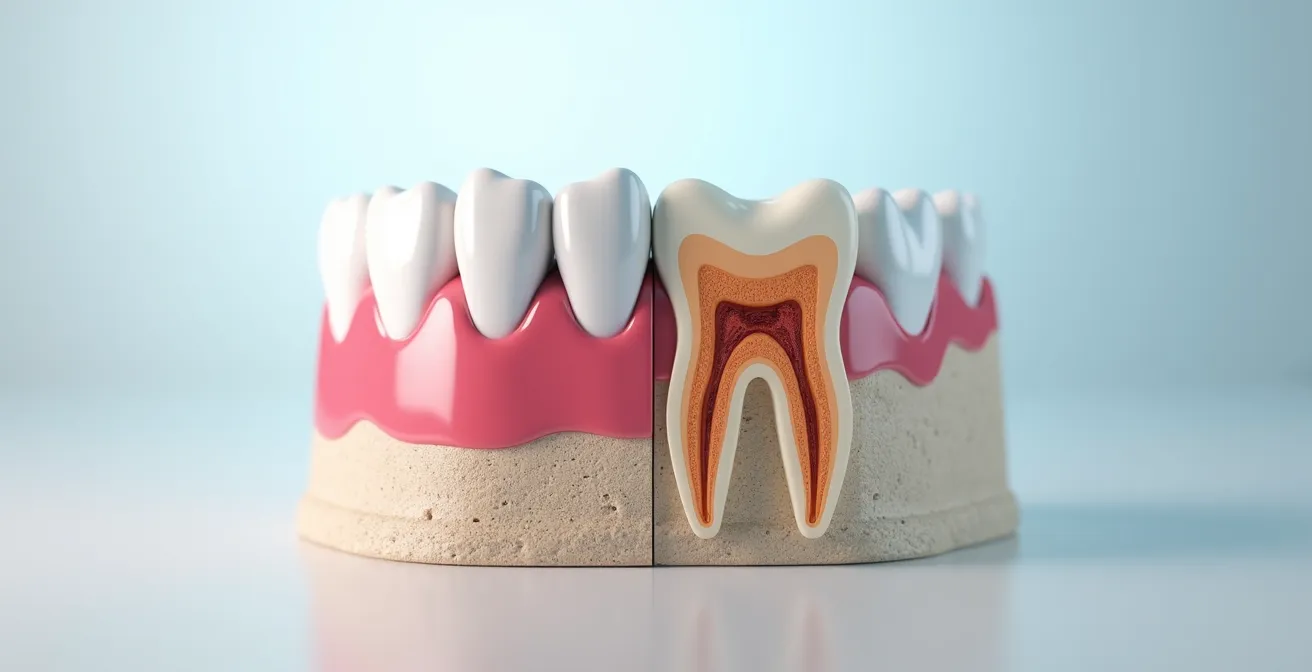
Hearing you have bone loss from periodontal disease can be frightening. While you can’t magically regrow bone that has been permanently lost, the modern approach to periodontitis is not about a simple reversal. It’s about aggressively halting the disease’s progression to achieve periodontal stability. This article provides a clear path forward, explaining how treatments available in Montreal can stop further damage and, in specific cases, strategically regenerate bone to save your teeth.
The moment a dentist mentions “deep pockets” or “bone loss,” a wave of concern is understandable. You immediately wonder if your teeth are destined to be lost and if there’s any way to turn back the clock. The internet is filled with simple advice about brushing and flossing, but for the stage where bone is already disappearing, this is critically insufficient. You may have been told you need a “deep cleaning,” but what does that really mean for the foundation of your teeth?
The common perception of “reversing” a disease implies a complete return to a previous, healthy state. For periodontal disease, this isn’t the right framework. The bacteria have already caused permanent structural damage. Therefore, the key isn’t a miraculous reversal, but a fundamental shift in strategy. The true goal is to achieve disease arrest—stopping the destructive process in its tracks—and creating a state of long-term stability. This requires moving beyond basic hygiene and into active therapeutic management.
This guide, written from the perspective of a periodontal specialist, will walk you through what this modern approach means for a patient in Montreal. We will explore the critical link between your gums and overall health, compare advanced surgical options, decode what a “5mm pocket” truly signifies for your tooth’s future, and provide a clear, actionable framework for managing your condition and preserving your smile.
This article provides a comprehensive overview of managing advanced gum disease. The following sections will detail the systemic health implications, modern treatment comparisons, and the practical realities of long-term periodontal care in Quebec.
Summary: A Guide to Managing Periodontal Bone Loss
- Why Cardiologists Want You to Fix Your Gum Disease Immediately?
- Laser vs. Traditional Gum Surgery: Which Offers Faster Healing?
- What Does a “5mm Pocket” Mean for the Survival of Your Tooth?
- Why Do Smokers Fail Periodontal Treatment 3x More Often?
- Why “Perio Maintenance” Costs More Than a Regular Cleaning?
- Could Your Bleeding Gums Be the Reason for Your High Blood Pressure?
- Why Does Plaque Come Back 12 Hours After a Cleaning?
- Laser vs. Traditional Gum Surgery: Which Offers Faster Healing?
Why Cardiologists Want You to Fix Your Gum Disease Immediately?
The connection between your mouth and your heart is no longer a fringe theory; it’s a cornerstone of modern medicine. Cardiologists are increasingly insistent that patients address periodontal disease because it’s a significant source of chronic inflammation. The bacteria in diseased gum pockets don’t just stay in your mouth. They can enter the bloodstream, triggering an inflammatory response throughout your body. This systemic inflammation is a known driver of atherosclerosis, the hardening and narrowing of arteries, which can lead to heart attack and stroke.
Think of active periodontal disease as a chronic, open wound in your mouth. This constant state of infection increases your body’s total inflammatory load. For a patient with existing cardiac risk factors, reducing this load is a top priority. Treating the gum disease effectively reduces the amount of inflammatory bacteria and proteins circulating in your system, thereby lowering a key risk factor for cardiovascular events. In Montreal, the medical community is actively bridging this gap.
Leading institutions like the Montreal Heart Institute and the McGill University Health Centre (MUHC) are increasingly aware of this bi-directional link. They understand that a healthy mouth contributes to a healthier heart. This integrated approach is crucial for managing overall patient health, not just isolated symptoms.
Your Action Plan: The Montreal Collaborative Care Pathway
- Request a periodontal screening during your next cardiac check-up at the MUHC or Montreal Heart Institute.
- Obtain a referral letter from your cardiologist that specifically mentions your inflammatory markers (e.g., C-reactive protein levels).
- Contact a periodontist who accepts RAMQ coverage for the initial consultation to have your periodontal status officially diagnosed.
- Ensure your periodontist and cardiologist can share your treatment plan and progress notes through Quebec’s Digital Health Record (DSQ).
- Coordinate antibiotic prophylaxis with your periodontist if it’s required for your specific cardiac condition before any dental procedure.
Laser vs. Traditional Gum Surgery: Which Offers Faster Healing?
When non-surgical treatments aren’t enough to control periodontal disease, surgery becomes the necessary next step. For a patient, the decision often comes down to two primary options: traditional “flap” surgery or modern laser-assisted procedures like LANAP (Laser-Assisted New Attachment Procedure). While both aim to reduce pocket depth and remove diseased tissue, the patient experience—particularly healing time and comfort—is dramatically different.
Traditional flap surgery involves cutting the gum tissue with a scalpel to create a flap, providing access to clean the tooth roots and reshape the bone. The flap is then repositioned and secured with sutures (stitches). This process, while effective, is invasive and typically involves a recovery period of two to four weeks, with associated swelling, discomfort, and a need for several days off work.
In contrast, laser therapy is a minimally invasive alternative. A specialized dental laser targets and removes only the diseased tissue and bacteria from the pocket, leaving healthy tissue unharmed. There are no scalpels and no sutures. This precision leads to significantly less pain, minimal swelling, and a much faster recovery, often as little as 24 hours. Most patients can return to work the very next day. This difference in healing is a primary reason why patients who are good candidates opt for laser therapy.
What Does a “5mm Pocket” Mean for the Survival of Your Tooth?
Hearing your dentist call out numbers during a periodontal exam can be confusing, but one number is a critical threshold: 5 millimetres. A healthy gum pocket measures 1-3mm. A 4mm pocket is a warning sign. But a 5mm pocket signifies a crucial turning point where the disease has progressed from manageable to serious. It means you’ve lost a significant amount of the bone and ligament that anchor your tooth in place.
Why is 5mm the magic number? At this depth, routine brushing, flossing, and even a standard dental cleaning can no longer reach the bottom of the pocket to remove the bacterial biofilm. The pocket becomes a protected reservoir for harmful bacteria to thrive and continue their destruction. This is the point where non-surgical scaling and root planing (“deep cleaning”) may start to become less effective, as it’s physically difficult for instruments to fully clean a pocket this deep without direct vision.
Therefore, a 5mm pocket is a definitive signal that the disease is active and requires more aggressive intervention to prevent further bone loss and, ultimately, tooth loss. It’s the gateway to more advanced therapies. Ignoring a 5mm pocket is not an option if you want to save your tooth. It represents the line between conservative management and the need for surgical intervention to arrest the disease. Early detection is crucial, as treating a 5mm pocket is far less extensive and more predictable than treating a 7mm or 8mm pocket later on.
Why Do Smokers Fail Periodontal Treatment 3x More Often?
The link between smoking and periodontal disease is absolute and unforgiving. While many factors can contribute to gum disease, smoking is one of the most significant risk factors for its development, progression, and failure of treatment. In fact, research confirms that smokers are up to 7 times more likely to develop gum disease than non-smokers. But more critically, smoking actively sabotages the very treatments designed to save your teeth.
This happens through a two-pronged attack on your body’s defenses. First, nicotine is a vasoconstrictor, meaning it constricts the tiny blood vessels in your gums. This reduces the blood flow, starving the tissues of the essential oxygen and nutrients needed to fight infection and heal. A key warning sign of gum disease is bleeding gums, but in smokers, this sign is often masked because the reduced blood flow prevents bleeding, giving a false sense of health while the disease rages silently below the surface.
Smoking is a significant risk factor as toxins from tobacco harm the immune system, making it harder to fight infection. Additionally, smoking reduces blood flow to gums, which may cause bone loss.
– Sierra Dental Calgary, Periodontitis and Bone Loss Study
Second, the thousands of toxins in cigarette smoke impair the function of your immune cells. Your body’s ability to mount an effective defense against periodontal bacteria is severely compromised. This means that even after a periodontist performs a deep cleaning or surgery, a smoker’s body cannot heal and respond to the treatment as effectively as a non-smoker’s. The result is poorer outcomes, persistent deep pockets, and a much higher rate of treatment failure.
Why “Perio Maintenance” Costs More Than a Regular Cleaning?
One of the most common questions from patients who have completed active periodontal therapy is why their follow-up appointments, called “periodontal maintenance,” are more frequent and more expensive than the “regular cleanings” they used to have. The answer lies in the fundamental difference between prevention and therapy. A regular cleaning, or prophylaxis, is a preventative procedure performed on a healthy mouth to remove plaque and calculus from above the gumline.
Periodontal maintenance, however, is a therapeutic procedure. It is designed for a patient who has already been diagnosed and treated for periodontal disease. The disease is now under control, but it is not cured; it can reactivate at any time. The goal of maintenance is to prevent this recurrence. These appointments involve meticulously cleaning the deep pockets below the gumline where the disease was previously active, disrupting the bacterial colonies before they can cause more bone loss. The periodontist or hygienist must re-measure pocket depths at every visit, check for any signs of returning inflammation, and clean root surfaces that are not accessed in a regular cleaning. This requires more time, more skill, and specialized instruments.
In Montreal, the Association des Chirurgiens Dentistes du Québec (ACDQ) has specific codes and fees that reflect this difference in complexity and time, as shown in the table below. While a regular cleaning might be scheduled twice a year, periodontal maintenance is typically required every three to four months to keep the disease at bay.
This table breaks down the typical costs and frequencies for common dental services in the Montreal area, highlighting the distinction between preventative and therapeutic periodontal care.
| Service Type | ACDQ Code | Average Cost (Montreal) | Frequency | Annual Cost |
|---|---|---|---|---|
| Regular Prophylaxis | 11111 | $150-200 | 2x/year | $300-400 |
| Periodontal Maintenance | 49221 | $250-350 | 4x/year | $1,000-1,400 |
| Deep Cleaning (per quad) | 43421 | $300-400 | As needed | $1,200-1,600 |
| Dental Implant (single) | 27201 | $3,500-5,000 | One-time | N/A |
Your Action Plan: Maximizing Quebec Insurance for Perio Maintenance
- Contact your private insurer in January to understand your annual maximum for dental care and your specific periodontal coverage percentage.
- Ask your dental office to submit a pre-authorization for the full year of planned maintenance visits using ACDQ code 49221.
- Inquire about “coordination of benefits” if you and your spouse both have private insurance plans.
- Schedule your treatments strategically throughout the year to avoid exceeding your annual maximum before the benefit year resets.
- Keep all receipts for out-of-pocket costs, as you may be able to claim them on your tax return through the Medical Expense Tax Credit.
Could Your Bleeding Gums Be the Reason for Your High Blood Pressure?
The evidence is mounting: the health of your gums has a direct and measurable impact on your blood pressure. Several major studies have shown a significant link between moderate to severe periodontitis and hypertension. Individuals with active gum disease are more likely to have higher blood pressure and may find that their hypertension is more difficult to control with medication.
The mechanism is once again rooted in chronic inflammation. As explained by researchers, periodontitis creates a constant inflammatory state. This systemic inflammation can damage the lining of blood vessels (the endothelium), making them more rigid and less able to dilate properly. This vascular stiffness directly contributes to elevated blood pressure. Treating the periodontal disease—reducing the bacterial load and inflammation in the mouth—has been shown to have a positive, lowering effect on blood pressure, sometimes as much as a lifestyle change like reducing salt intake.
Both periodontitis and osteoporosis are bone disorders closely associated with inflammation and aging. Chronic inflammation is a cardinal risk factor for both local and systemic bone loss.
– McGill University Research Team, PMC Study on Periodontal-Systemic Links
This understanding is actively being implemented in Quebec’s local healthcare network. For example, many Montreal CLSCs (local community service centres) now include basic oral health questions and screenings during routine checkups for patients being monitored for hypertension. They have established direct referral pathways to local dentists and periodontists when signs of gum disease are present. This integrated protocol recognizes that managing blood pressure effectively may require a two-pronged approach: medical management from a physician and inflammatory control from a dental specialist.
Why Does Plaque Come Back 12 Hours After a Cleaning?
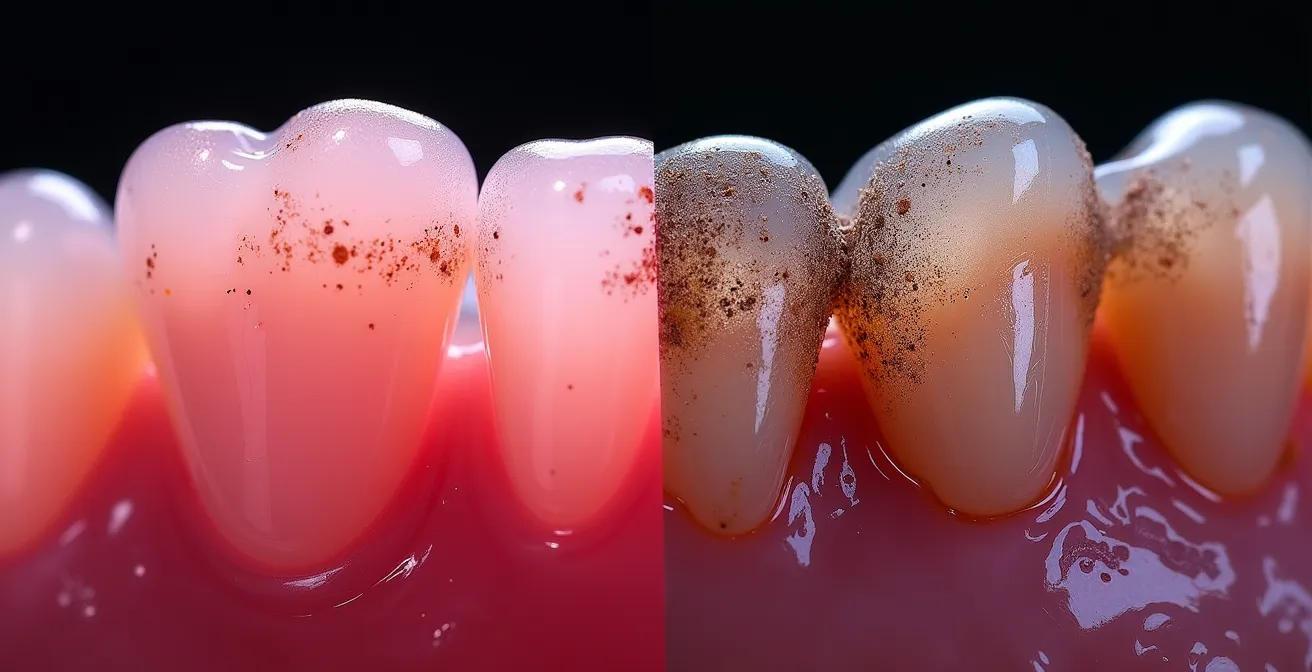
It’s a frustrating feeling: you leave the dental office with perfectly smooth, clean teeth, only to feel a fuzzy film returning by the next morning. This isn’t a sign that your cleaning was ineffective; it’s a demonstration of the incredible speed at which dental plaque, a biofilm of bacteria, re-establishes itself. Within minutes of a cleaning, a protein layer from your saliva called the “pellicle” forms on your teeth. This layer is the perfect sticky surface for bacteria to attach to.
Within a few hours, colonies of bacteria begin to multiply rapidly, forming a complex, organized community. By the 12-hour mark, this biofilm is already well-established. If it’s not disrupted by effective brushing and flossing, it continues to mature. The real danger begins as it sits undisturbed. According to dental research, within just 24 to 72 hours, this soft plaque begins to harden into tartar (or calculus) as it absorbs minerals from your saliva. Once tartar forms, it cannot be removed with a toothbrush or floss; it requires professional instruments.
This rapid reformation is why your home care routine is the most critical component of periodontal stability. Professional cleanings remove the hard deposits and disrupt the deep-seated biofilm, but the 12-hour window between then and the next morning is where the patient takes over. The goal of brushing and flossing isn’t to sterilize your mouth—that’s impossible—but to consistently disorganize this bacterial biofilm before it can mature and cause inflammation and bone loss. It is a constant battle, and consistency is the only way to win.
Key Takeaways
- The primary goal for periodontal bone loss is not reversal, but achieving long-term disease stability to save your teeth.
- The link between gum inflammation and systemic health, particularly heart disease and blood pressure, is scientifically proven and recognized by Montreal’s healthcare community.
- Modern treatments like laser therapy offer significant benefits in healing and comfort, while ongoing perio maintenance is a crucial therapeutic investment in your health.
Laser vs. Traditional Gum Surgery: A Deeper Look at Outcomes
While the immediate healing experience is a compelling reason to consider laser surgery, a deeper analysis of the clinical and financial outcomes is essential for making an informed decision. The long-term success of periodontal surgery is measured by its ability to create a stable oral environment and, ideally, to regenerate some of the lost supportive structures. This is where laser therapy, specifically the FDA-cleared LANAP protocol, shows a distinct clinical advantage.
Traditional flap surgery is primarily a resective procedure; it aims to reduce pocket depths by trimming away some of the gum and bone tissue. While effective at improving cleanability, its potential for true regeneration of the lost ligament and bone is limited. The LANAP protocol, however, is specifically designed to be regenerative. The unique wavelength of the PerioLase MVP-7 laser helps to form a stable fibrin clot in the pocket, which acts as a natural scaffold, creating an environment that encourages the body’s own stem cells to regenerate new bone, cementum, and periodontal ligament.
From a financial perspective in Montreal, the initial sticker price of laser surgery may be higher per quadrant. However, the overall cost-benefit analysis often favors the laser when considering factors like missed work days and reduced need for pain medication. Furthermore, while private Quebec insurance plans may cover a slightly lower percentage for laser procedures, the potential for true bone regeneration can prevent the need for much more expensive future treatments, like bone grafts and dental implants. This makes it a strategic long-term investment in your oral health.
This comparative analysis provides a clear overview of not just the initial cost, but the overall value proposition of each surgical option available to patients in the Montreal market.
| Treatment Aspect | LANAP Laser (Montreal) | Traditional Flap Surgery |
|---|---|---|
| Average Cost (per quadrant) | $1,200-$1,800 CAD | $800-$1,200 CAD |
| Recovery Time | 24-48 hours | 2-4 weeks |
| Pain Level | Minimal to none | Moderate to severe |
| Insurance Coverage (typical Quebec plans) | 50-60% coverage | 70-80% coverage |
| Work Days Missed | 0-1 day | 3-5 days |
| Sutures Required | No | Yes |
| Bone Regeneration Potential | FDA-cleared for regeneration | Limited regeneration |
Ultimately, the choice of treatment must be personalized. A thorough consultation with a periodontist is the critical next step to determine if you are a candidate for laser surgery and to develop a comprehensive plan to stabilize your disease and secure the long-term health of your teeth.
Frequently Asked Questions About Periodontal Treatment in Quebec
What ACDQ code covers the diagnosis of a 5mm pocket?
The diagnosis is part of a complete examination. The relevant code is 01202, which represents a “Complete periodontal examination,” including the crucial measurement of pocket depths across your entire mouth.
Which treatment codes apply for 5mm pockets in Quebec?
For non-surgical treatment of 5mm pockets, the primary codes are 43421 for “Scaling and root planing, per quadrant” and sometimes 43411 for “Subgingival curettage.” The specific codes used will depend on your individual treatment plan.
What’s the typical insurance coverage for these codes in Quebec?
Most private dental insurance plans in Quebec cover between 60% and 80% of the cost for these major periodontal treatment codes. However, it is crucial to check your plan’s details, as coverage is always subject to an annual maximum, which typically ranges from $1,500 to $2,500 per year.