Children’s Dental Health
The foundation for a lifetime of healthy smiles begins long before a child’s first day of school—it starts with the very first tooth. Children’s dental health encompasses far more than simply avoiding cavities; it’s an intricate journey that involves prevention, habit formation, developmental monitoring, and timely intervention. For parents in Montreal and across Canada, understanding this comprehensive approach can mean the difference between reactive dental emergencies and proactive, confident care that supports not just oral health, but overall physical development and well-being.
From the moment that first tiny tooth emerges through the gums, parents become the primary guardians of their child’s oral ecosystem. The decisions made during these early years—from hygiene routines to dietary choices, from addressing thumb-sucking to recognizing growth patterns—create ripple effects that extend well into adolescence and adulthood. This resource brings together the essential knowledge areas that every parent and caregiver should understand, connecting early preventive care with developmental monitoring and intervention strategies that work together to support optimal outcomes.
Building the Foundation: Early Dental Care for Infants and Toddlers
The earliest months and years of a child’s life represent a critical window for establishing oral health habits and creating positive associations with dental care. Many parents are surprised to learn that dental care actually begins before teeth appear, and that their own oral health plays a direct role in their child’s future.
When to Start and the “Happy Visit” Approach
The Canadian Dental Association recommends that children have their first dental visit within six months of the first tooth erupting, or by their first birthday—whichever comes first. This early introduction serves a dual purpose: it allows the dental team to assess development and identify potential concerns, while simultaneously creating a positive, non-threatening first impression. The “Happy Visit” concept, widely embraced by pediatric dental practices throughout Montreal, focuses on familiarization rather than treatment during these initial appointments.
Think of these early visits as dress rehearsals rather than opening night performances. The child sits in the chair, perhaps counts teeth with the dentist, and receives gentle praise—all without the stress of actual procedures. This approach builds trust gradually, much like introducing a child to swimming by first playing at the pool’s edge rather than diving into the deep end. Parents who prioritize these early, positive experiences often find that their children approach dental care with curiosity rather than anxiety as they grow.
Home Hygiene Essentials for the Youngest Patients
Before teeth emerge, parents can gently wipe their infant’s gums with a clean, damp cloth after feedings. Once that first tooth appears, brushing becomes a twice-daily ritual using a soft-bristled infant toothbrush and a rice-grain-sized amount of fluoride toothpaste. This quantity increases to a pea-sized amount around age three, when most children develop better control over swallowing.
The key challenges during this stage include:
- Establishing consistency despite resistance or busy schedules
- Positioning the child comfortably for thorough cleaning (the “knee-to-knee” position works well for infants)
- Reaching back molars that emerge around 12-18 months
- Transitioning from parent-led brushing to guided independence
Many Montreal parents find that creating a bathroom routine with songs or timers helps establish this habit as a non-negotiable part of the day, similar to getting dressed or eating meals.
Understanding Parental Influence on Oral Bacteria
One of the most surprising aspects of early dental health is the role of bacterial transmission. The bacteria that cause tooth decay—primarily Streptococcus mutans—aren’t present in a newborn’s mouth. They’re introduced through saliva sharing, which happens through common behaviors like sharing spoons, cleaning pacifiers with your mouth, or kissing a child on the lips.
This doesn’t mean parents should avoid showing affection, but rather that maintaining their own oral health becomes an act of protection for their child. Parents with untreated cavities or gum disease harbor higher levels of harmful bacteria, which can colonize their child’s mouth earlier and more aggressively. Regular dental care for caregivers, therefore, becomes a family health strategy rather than just an individual concern.
Preventing and Detecting Tooth Decay in Children
Childhood cavities remain one of the most common chronic diseases affecting young Canadians, yet they’re largely preventable with awareness and appropriate interventions. Understanding both the early warning signs and the protective treatments available empowers parents to act before minor concerns become major problems.
Recognizing the Early Warning Signs
Cavities don’t appear overnight as dark holes; they announce themselves through subtle changes that attentive parents can spot. The earliest sign is often white chalky spots near the gumline on front teeth—these represent demineralization where acids have begun weakening the enamel. At this stage, the process can still be reversed through improved hygiene and fluoride application.
As decay progresses, these spots may turn yellow or brown, and teeth might become sensitive to temperature changes or sweet foods. Children may start favoring one side when chewing or become reluctant to brush certain areas because of discomfort. Catching decay at these early stages—before pain develops—is the goal of regular dental check-ups, typically recommended every six months for children.
Protective Treatments: Sealants and Fluoride
Two cornerstone preventive treatments have dramatically reduced childhood cavities in recent decades: dental sealants and professional fluoride applications. Dental sealants are thin, protective resin coatings applied to the chewing surfaces of back molars, where the majority of childhood cavities develop. These grooves and pits are naturally difficult to clean thoroughly with a toothbrush, making them vulnerable spots even in children with good oral hygiene.
The application process is quick and painless—the tooth surface is cleaned, prepared with a conditioning solution, and the liquid sealant is painted on and hardened with a special light. Most dentists recommend sealants as soon as the permanent molars emerge, typically around ages six and twelve. While concerns about BPA in dental materials occasionally surface in parent communities, current research and regulatory oversight from Health Canada support the safety of these materials, with the benefits far outweighing theoretical risks.
Fluoride treatments work through a different mechanism, strengthening enamel at the molecular level and making teeth more resistant to acid attacks from bacteria. Professional applications—available as varnishes, gels, or foams—deliver a concentrated dose that exceeds what’s available in toothpaste or drinking water. The frequency of application depends on individual risk factors; children with a history of cavities, dry mouth conditions, or orthodontic appliances may benefit from treatments every three to six months.
For children with sensory sensitivities who struggle with the taste or texture of fluoride treatments, dental teams can offer alternative application methods, flavoring options, or even natural remineralization approaches, though these typically provide less robust protection. Communication between parents and the dental team about these concerns ensures that appropriate accommodations can be made.
Managing Oral Habits and Their Long-Term Impact
Certain oral behaviors—while completely normal in infancy and toddlerhood—can create lasting consequences if they persist beyond appropriate developmental stages. Understanding when habits become problematic, and how to address them compassionately, helps parents navigate this common challenge without unnecessary stress.
Pacifiers, Thumbs, and Developmental Concerns
Sucking is an instinctive comfort mechanism for infants, serving important emotional regulation functions during the early years. Most dental professionals consider pacifier and thumb-sucking benign until around age three or four, when the permanent teeth begin developing beneath the gums. Beyond this point, sustained pressure from these habits can begin reshaping the palate, pushing front teeth forward, or creating an open bite where the upper and lower teeth don’t meet properly when the mouth closes.
Interestingly, the specific impact depends on several factors: the intensity and duration of sucking, the position of the thumb or pacifier, and the child’s individual growth patterns. A passive thumb-rester will cause less deformation than an active, vigorous sucker. Parents often notice related concerns as well—persistent habits may correlate with speech development delays, particularly affecting sounds that require the tongue to contact the roof of the mouth, like “t,” “d,” and “l.”
Strategies for Breaking Harmful Habits
The approach to habit correction should always begin with understanding the underlying emotional trigger. Does the child suck their thumb primarily when tired, anxious, or bored? Addressing the root need—whether it’s additional comfort, stress management tools, or engaging activities—creates more sustainable change than simply removing the habit without replacement.
Effective strategies typically combine several elements:
- Positive reinforcement: Celebrating habit-free days with stickers, privileges, or special time together
- Awareness building: Gently reminding the child when the behavior occurs, as it’s often unconscious
- Physical reminders: Band-aids on the thumb, bitter-tasting (but safe) nail solutions, or even socks over hands at night
- Gradual reduction: Limiting the habit to specific times or places before eliminating it entirely
The debate between “cold turkey” cessation and gradual weaning doesn’t have a universal answer—it depends on the child’s temperament, age, and the intensity of their attachment to the habit. For children who’ve relied on these behaviors for years, abrupt removal can increase anxiety and potentially lead to substitute behaviors, while gradual approaches allow for adaptation and skill-building in alternative coping mechanisms.
Understanding the Orthodontic Consequences
When oral habits persist beyond the critical developmental window, they can create specific orthodontic challenges. The constant pressure from a thumb or pacifier acts like an orthodontic appliance in reverse, pushing the upper front teeth forward and the lower teeth backward—a condition called an overjet. Simultaneously, the tongue adapts by thrusting forward during swallowing to create a seal around the thumb, which can perpetuate the problem even after the habit stops.
The narrow, high-arched palate that sometimes results from prolonged habits may require palatal expansion treatment to create adequate space for permanent teeth and proper tongue posture. Beyond the physical changes, school-age children who continue these habits may face social challenges. The awareness of peer judgment often becomes a powerful motivator for change around ages five to seven, and sensitive conversations that acknowledge these social realities—without shaming—can support the child’s own desire to stop.
Supporting Proper Jaw and Facial Development
Children’s faces aren’t simply smaller versions of adult faces—they’re dynamic, growing structures that respond to both genetic blueprints and environmental influences. Monitoring this development and intervening at strategic moments can prevent complex problems and sometimes eliminate the need for more extensive orthodontic treatment later.
Monitoring Skeletal Growth Patterns
During routine dental examinations, dentists assess much more than just teeth. They evaluate how the upper and lower jaws relate to each other, the width of the palate, the position of developing permanent teeth visible on X-rays, and the overall facial proportions. Certain warning signs prompt closer monitoring or referral to an orthodontic specialist:
- A narrow, V-shaped palate instead of a broad U-shape, often accompanied by crowding of teeth
- Mouth breathing, which can indicate airway issues affecting facial development
- Asymmetry in jaw growth or facial proportions
- Early or late loss of baby teeth, which may indicate spacing issues for permanent teeth
Think of skeletal monitoring like tracking a child’s height on a growth chart—individual measurements matter less than the pattern over time and how that pattern compares to expected developmental norms.
Interceptive Orthodontics: Why Timing Matters
Interceptive orthodontics refers to early interventions, typically performed while a child still has a mix of baby and permanent teeth (roughly ages 7-11). Unlike comprehensive braces treatment in adolescence, these focused interventions address specific skeletal or developmental issues during the growth phases when bones are most responsive to guidance.
Common interceptive treatments include palatal expanders to widen a narrow upper jaw, partial braces to create space for crowded permanent teeth, or appliances that guide jaw growth. The Canadian Association of Orthodontists recommends that all children have an orthodontic evaluation by age seven—not because all children need treatment at that age, but because it’s the optimal time to identify issues where timing-specific intervention could make a significant difference.
For example, correcting a crossbite (where upper teeth bite inside the lower teeth) becomes urgent rather than elective when it’s causing asymmetric jaw growth. Addressed early, this might require a simple expander worn for several months. Left until adolescence, the same problem could require jaw surgery because the growth opportunity has passed.
The Role of Diet and Function in Development
Emerging research highlights how dietary texture and chewing function influence jaw development. Children who regularly chew harder, more fibrous foods—raw vegetables, crusty breads, tougher cuts of meat—appear to develop broader dental arches and stronger jaw muscles compared to those who consume primarily soft, processed foods. While genetics remain the primary driver of facial structure, environmental factors like chewing work can optimize the expression of that genetic potential.
Another consideration is the management of early tooth loss. When baby molars are lost prematurely due to decay or trauma, the teeth on either side tend to drift into the empty space, potentially blocking the path for the permanent tooth waiting to emerge. Space maintainers—small appliances that hold this space open—represent a simple, proactive solution that can prevent significant orthodontic complications and the need for tooth extraction later to create space.
Children’s dental health is ultimately an investment that compounds over time. The attention paid to early hygiene, the habits corrected in toddlerhood, the protective treatments applied to new molars, and the developmental monitoring throughout the growing years all work together to support not just healthy teeth, but proper facial development, clear speech, confident smiles, and the foundation for lifelong oral health. For Montreal families navigating these various aspects of pediatric dental care, building a trusting relationship with a dental team who understands child development—and partnering with them from that very first tooth—creates the optimal pathway for success.

Will Thumb Sucking Cause Permanent “Buck Teeth” After Age 4?
Prolonged thumb sucking after age four isn’t just a habit; it’s actively reshaping your child’s jaw and setting the stage for significant orthodontic issues. The constant pressure creates an open bite and narrows the upper palate, affecting teeth, speech, and…
Read more
How to Stop Tongue Thrusting from Ruining Your Child’s Bite?
Tongue thrust is a sign of incorrect muscle function, not just a ‘bad habit’, and it actively shapes your child’s facial growth and bite alignment. It’s often a symptom of an underlying issue, like airway obstruction from allergies—a common concern…
Read more
Is Fluoride Varnish Safe for Toddlers Who Might Swallow It?
For cautious Montreal parents, the key takeaway is that fluoride varnish is exceptionally safe due to its targeted application, with the real question being not about safety, but about personalized necessity. The amount of fluoride is minuscule and adheres directly…
Read more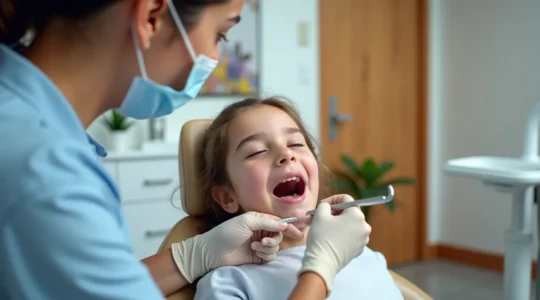
Are Dental Sealants Worth the Cost for Children’s Permanent Molars?
For a Montreal parent, dental sealants are a time-sensitive investment that prevents over 80% of molar cavities, offering a significant financial return by avoiding costly future fillings. The key to success is applying them within the first few months of…
Read more
Why Does My Child’s Jaw Click When They Chew?
That clicking sound is not the problem; it’s a critical warning signal that your child’s facial structure isn’t developing properly. Jaw clicking and popping often point to an underlying imbalance in your child’s “structural blueprint”—the foundational growth of their jaws…
Read more
When Should a Child Have Their First Dentist Visit in Montreal?
For new Montreal parents, the conflicting advice around a child’s first dental visit can be a source of real anxiety. The key isn’t just picking an age, but understanding that this first appointment is the start of a lifelong oral…
Read more