Dental Technologies & Innovations
The landscape of dental care has undergone a remarkable transformation in recent years. What once meant silver amalgam fillings, uncomfortable impressions, and weeks of waiting for crowns has evolved into an era of digital precision, biocompatible materials, and same-day solutions. For patients in Montreal and across Canada, these innovations aren’t just about convenience—they’re fundamentally changing what’s possible in terms of comfort, aesthetics, and long-term oral health outcomes.
Understanding these technologies empowers you to make informed decisions about your dental care. Whether you’re considering treatment options, curious about what your dentist recommends, or simply want to know what modern dentistry can offer, this comprehensive overview will walk you through the most significant innovations reshaping the field. From the materials that go into your mouth to the imaging that guides precise treatment, each advancement serves a purpose: better results with less discomfort and more predictability.
Modern Dental Materials: From Mercury to Biocompatible Composites
The shift away from traditional amalgam fillings represents one of dentistry’s most visible evolutions. While silver fillings served patients for over a century, contemporary tooth-colored composite resins offer compelling advantages that extend beyond aesthetics.
The Science Behind Composite Bonding
Unlike amalgam, which relies on mechanical retention (requiring more tooth structure removal), composite materials actually bond chemically to tooth enamel and dentin. This bonding mechanism allows dentists to preserve more of your natural tooth structure—a critical factor in long-term tooth health. The process involves etching the tooth surface to create microscopic pores, applying a bonding agent, then layering the composite resin that’s hardened with a special curing light. Think of it like creating a molecular handshake between your natural tooth and the restoration material.
Shade-Matching and Aesthetic Considerations
Modern composites come in dozens of shades, allowing dentists to match your natural tooth color with remarkable precision. For patients concerned about appearance—particularly for front teeth or visible molars—this technology means restorations that are virtually undetectable. In Montreal’s diverse, image-conscious professional environment, this aesthetic advantage has made composites the preferred choice for many working adults.
Durability and Sensitivity Management
Early composite materials faced criticism regarding durability, but formulations have improved significantly. Today’s nano-hybrid composites offer excellent wear resistance, though they may still not match amalgam’s lifespan in high-stress areas for some patients. Post-operative sensitivity—a common concern—has been addressed through better bonding agents and layering techniques. Most patients experience only minimal discomfort that resolves within days. Your dentist should discuss the cost implications and insurance coverage, as composite fillings may carry different fee structures than traditional amalgam, though many Canadian dental plans now cover tooth-colored restorations in all teeth.
Clear Aligner Technology: Invisible Orthodontics for Modern Lifestyles
Clear aligner systems have revolutionized orthodontics, offering a discreet alternative to traditional braces that fits seamlessly into adult lifestyles. For professionals in Montreal’s business districts who need to maintain a polished appearance during client meetings, this technology has made teeth straightening accessible when it previously seemed impractical.
How the Movement Actually Happens
Clear aligners work through controlled, incremental force applied to specific teeth. Using advanced 3D modeling, orthodontists map out your entire treatment digitally, then manufacture a series of custom aligners—each one moving your teeth a fraction of a millimeter. You typically wear each set for one to two weeks before progressing to the next. Small tooth-colored “attachments” (composite bumps bonded to teeth) give aligners the grip needed to achieve complex movements like rotations.
Lifestyle Adaptation and Brand Considerations
The removability of aligners is both an advantage and a responsibility. You’ll need to wear them 20-22 hours daily, removing them only for meals and oral hygiene. This requires discipline but allows you to eat without restrictions and maintain normal brushing and flossing routines. When comparing providers—whether traditional brands or newer direct-to-consumer options—consider the level of professional supervision included. Complex cases benefit from in-person monitoring by an experienced orthodontist who can adjust the treatment plan as needed. Some systems now incorporate technologies to accelerate tooth movement, potentially reducing treatment time from months to weeks in select cases.
Digital Dentistry: Same-Day Restorations and CAD/CAM Systems
Perhaps no innovation exemplifies modern dentistry’s efficiency more than chairside CAD/CAM technology. Systems like CEREC (Ceramic Reconstruction) enable dentists to design, mill, and place crowns, inlays, or veneers in a single appointment—eliminating temporary restorations and multiple visits.
The Digital Workflow Explained
The process begins with a digital scan of your prepared tooth using an intraoral camera—no messy impression putty required. The dentist then designs your restoration on a computer, adjusting the shape and bite relationship in real-time. This digital design is sent to an in-office milling machine that carves your crown from a solid ceramic block in approximately 10-15 minutes. After final adjustments and polishing, the restoration is bonded into place. What traditionally took two weeks and two appointments now happens in about two hours.
Material Quality and Precision Considerations
Pre-fabricated ceramic blocks used in chairside milling are industrially manufactured under controlled conditions, ensuring consistent quality. However, they come in limited shade variations, which may present aesthetic challenges for front teeth requiring complex color layering. The precision of digital scanning and milling generally equals or exceeds traditional analog methods, though the skill of the operator remains crucial. For urgent situations—a broken tooth before an important presentation or a wedding—same-day dentistry can be invaluable.
Environmental and Economic Factors
Digital dentistry reduces the environmental footprint by eliminating impression materials, shipping to labs, and the energy costs of external manufacturing. Time savings translate to fewer missed work hours for patients—a significant consideration in Montreal’s busy professional landscape. While the initial investment in equipment is substantial for dental practices, many patients find the convenience justifies comparable or slightly higher costs compared to traditional lab-fabricated restorations.
Advanced Diagnostic Imaging: Seeing What the Eye Cannot
Diagnostic technology has evolved far beyond traditional X-rays, giving dentists unprecedented visibility into oral structures and helping patients truly understand their dental conditions.
Intraoral Cameras: Visual Education and Documentation
Intraoral cameras are small, pen-sized devices that capture high-resolution images inside your mouth, displayed on a chairside monitor. This technology serves multiple purposes: it helps you visualize problems like cracks, worn fillings, or gum recession that you couldn’t see in a mirror; it creates documentation for insurance claims; and it tracks changes over time. Many patients report that seeing their dental issues firsthand builds trust with a new dentist and motivates better home care habits. The educational value cannot be overstated—understanding why treatment is necessary makes you an active participant in your oral health rather than a passive recipient of care.
CBCT Scans: Three-Dimensional Surgical Planning
Cone Beam Computed Tomography (CBCT) provides 3D imaging that’s revolutionized complex procedures like implant placement, wisdom tooth extractions, and endodontic treatment. Unlike traditional 2D X-rays, CBCT reveals the exact position of nerve pathways, sinus cavities, and bone density—allowing surgeons to plan with millimeter precision. This technology can detect hidden infections, assess bone structure, and identify anatomical variations before treatment begins.
Radiation exposure from CBCT is higher than conventional dental X-rays but significantly lower than medical CT scans—typically equivalent to a few days of natural background radiation. The diagnostic benefits usually far outweigh the minimal risk, particularly for complex cases. As digital workflows become standard in Canadian dental practices, CBCT integration with implant planning software enables virtual surgery before the actual procedure, improving predictability and outcomes.
Science-Based Prevention: Remineralization and At-Home Care
Prevention has evolved beyond “brush and floss” to include scientifically validated strategies for actually reversing early tooth decay before it requires drilling and filling.
Understanding Reversible Lesions
Tooth decay exists on a spectrum. The earliest stage—white spot lesions—represents demineralization where minerals have leached from enamel but the surface remains intact. At this stage, the process is reversible through remineralization. Your saliva naturally contains calcium and phosphate, but you can enhance this repair process through targeted products and behaviors. Diet plays a crucial role: frequent sugar and acid exposure shifts the balance toward demineralization, while limiting snacking and acidic beverages gives your mouth time to remineralize between meals.
Hydroxyapatite and Advanced Toothpaste Technology
Hydroxyapatite toothpastes—common in certain markets and gaining traction in Canada—provide the exact mineral that comprises tooth enamel. Unlike fluoride (which helps enamel incorporate minerals), hydroxyapatite directly supplies the building blocks for repair. Your night routine is particularly important because saliva flow decreases during sleep, making teeth more vulnerable. Using remineralizing products before bed maximizes their contact time with enamel.
Be aware of product interaction warnings: some ingredients can interfere with others. For example, using certain mouthwashes immediately after fluoride toothpaste may rinse away the protective layer before it’s fully absorbed. Consult your dentist about the optimal sequence for your specific products.
Smart Oral Hygiene Tools: Electric Brushes and Water Flossers
While manual brushing and traditional floss remain effective when used correctly, technology can enhance results for many people—particularly those with dexterity limitations, orthodontics, or dental implants.
Sonic Toothbrush Technology and Fluid Dynamics
Sonic toothbrushes vibrate at frequencies (typically 30,000+ strokes per minute) that create fluid dynamics in your mouth—the bristles don’t just scrub, they create microscopic bubbles and fluid currents that disrupt bacteria beyond where bristles touch. Pressure sensors prevent aggressive brushing that can damage gums and enamel, teaching you optimal technique. Most models signal when to replace brush heads (typically every three months) and feature battery indicators for consistent power delivery. For children, many brands offer age-appropriate models with smaller heads and gentler settings that make brushing more engaging.
Water Flossers: Hydro-Kinetics for Hard-to-Reach Areas
Water flossers use a pulsating stream of water to remove debris and bacteria from between teeth and below the gumline. They’re particularly effective around dental implants, where traditional floss may be difficult to use, and for people with braces or permanent retainers. Common concerns about mess can be addressed by leaning over the sink with your mouth partially open, allowing water to drain continuously rather than holding it in.
Pressure settings typically range from 10 to 100+ PSI; start at lower settings and gradually increase as your gums adapt. Some units offer antimicrobial tank additives, though research on their added benefit remains mixed—water alone is generally effective. Interestingly, water flossers can assist with tonsil stone removal for those who experience these calcified deposits, though this is an off-label use worth discussing with your dentist or physician.
The innovations covered here represent just a snapshot of how technology is reshaping dental care. As these tools become more accessible in Montreal and throughout Canada, the gap between what’s possible and what’s practical continues to narrow. The key is understanding which technologies address your specific needs and working with a dental team that stays current with evidence-based advancements. Your oral health journey is uniquely yours—these innovations simply provide more pathways to achieve the outcomes you’re seeking.
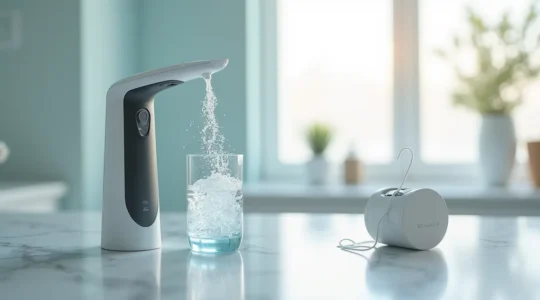
Water flosser vs. string floss: Which one is the truth?
Contrary to the “gold standard” myth, the best cleaning method is the one you’ll actually use consistently. For complex dental work like implants, a water flosser is not just an alternative, but often a superior tool for cleaning hard-to-reach areas….
Read more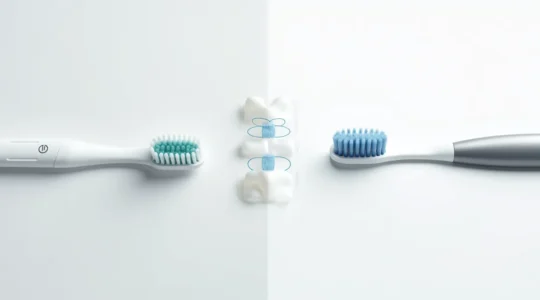
Is a $200 Sonic Toothbrush Really Better Than a $5 Manual One?
A $200 sonic toothbrush isn’t a luxury gadget; it’s a preventative tool with a measurable return on investment against expensive dental procedures common in Montreal. Its core technology cleans areas bristles can’t physically touch, reducing plaque that leads to cavities….
Read more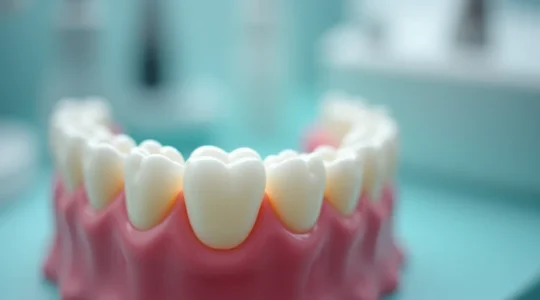
Can You Heal a Cavity at Home Before It Needs a Filling?
Yes, you can reverse the earliest stage of a cavity—the “white spot”—by actively managing your mouth’s “mineral budget” at home. Early decay is a chemical imbalance where minerals leave the tooth faster than they are deposited. You can tip the…
Read more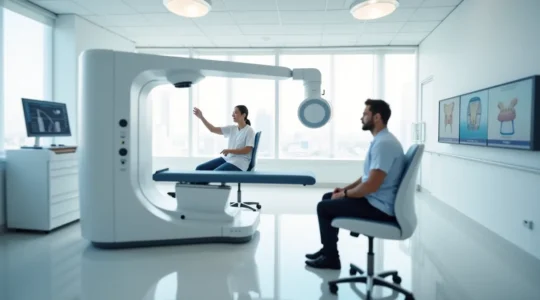
Is a 3D Dental Scan Necessary for Routine Implant Surgery? A Surgeon’s Perspective
A 3D CBCT scan is not an optional expense for a dental implant; it is the single most important risk mitigation tool to ensure a successful, one-time procedure. It reveals “anatomical blind spots” like critical nerve paths and poor-quality bone…
Read more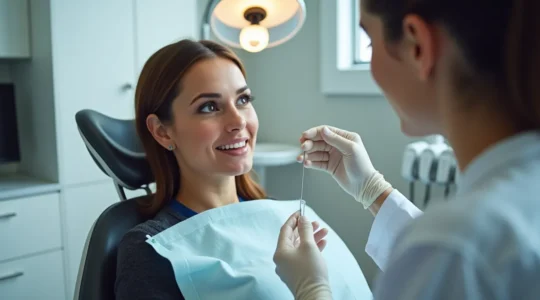
Why Seeing Your Tooth on a Screen Changes How You Treat It?
Seeing a high-definition image of your own tooth transforms you from a passive patient into an informed partner in your own dental care. It provides verifiable evidence for diagnoses, especially for issues you can’t feel, closing the “trust gap” with…
Read more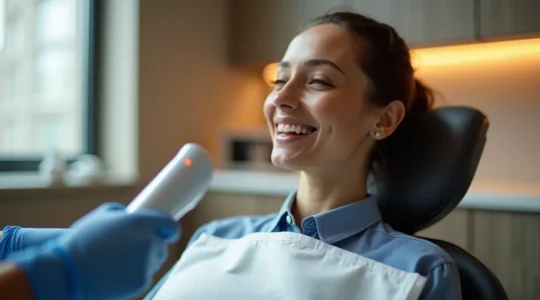
Broken Tooth? Get a Permanent Crown in 2 Hours in Montreal – Here’s How
Yes, you can walk out of a Montreal dental clinic with a permanent, high-quality crown in about two hours, and it’s often more affordable than in the United States. The process uses in-house CAD/CAM technology (like CEREC) to digitally design,…
Read more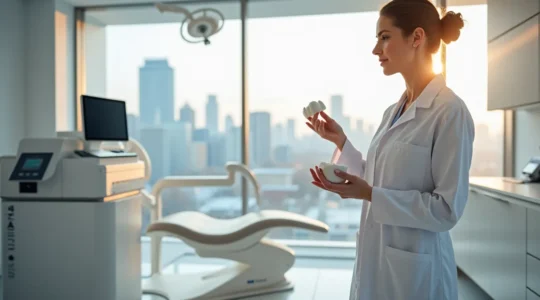
How Does One-Visit Dentistry *Really* Work in Montreal?
The speed of a one-visit crown isn’t a compromise on quality; it’s the result of a digitally superior process that eliminates common sources of error. Monolithic ceramic blocks, milled from a single piece, offer immense strength without the weak points…
Read more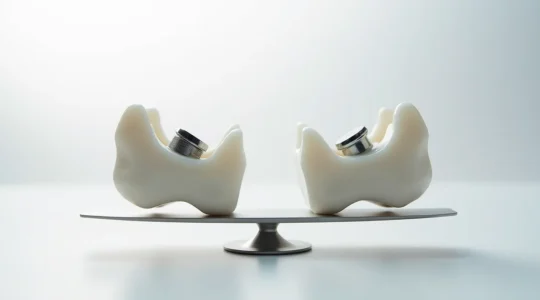
Titanium vs. Zirconia Implants: A Biocompatibility Guide for Montreal Patients
The decision between titanium and zirconia for sensitive patients is not about “metal vs. metal-free,” but about matching the right material’s properties to specific clinical needs. Zirconia offers superior aesthetics in thin gum tissue, eliminating the risk of greyish shadows…
Read more
How Can Montreal Professionals Straighten Their Teeth Without Looking Like a Teenager?
Achieving a perfect smile as a working adult is not just about invisible hardware; it’s about mastering a sophisticated daily routine under expert local guidance. Clear aligner success hinges on strict compliance and hygiene, especially in professional and social settings….
Read more
Why Are Montreal Dentists Phasing Out Silver Fillings for Composite Resins?
The city-wide shift from silver to white fillings isn’t just about aesthetics or mercury; it’s a fundamental change in dental philosophy toward preserving your natural tooth for a lifetime. Modern composite materials allow for minimally invasive techniques, meaning less drilling…
Read more