
For Montreal seniors on a fixed income, accessing dental coverage is not about a single plan, but about strategically layering different public programs.
- RAMQ coverage is extremely limited, mainly covering medically necessary oral surgeries performed in a hospital setting.
- The new federal CDCP adds coverage for routine care but acts as a secondary payer to any existing provincial benefits.
- Quebec-specific tax credits and low-cost university clinics are crucial tools for managing the costs of major procedures.
Recommendation: Shift from asking “Am I covered?” to “What combination of benefits can I activate?” based on your specific situation (income, health status, type of procedure).
For many Montreal seniors, understanding dental coverage feels like trying to solve a puzzle with missing pieces. You hear about government programs, see news reports about new federal plans, and yet, when you visit your local dentist, you’re often faced with a significant bill. The core of this confusion lies in the very limited scope of Quebec’s public health insurance plan, the RAMQ, for adult dental care. It was never designed to cover routine check-ups, cleanings, or fillings for the general adult population.
The conversation often stops there, leaving retirees on a fixed income feeling frustrated and believing that expensive private insurance is the only option. But what if the solution isn’t about finding one all-encompassing plan? The real key is to act as your own benefits navigator. It involves understanding the specific “eligibility triggers”—like an accident or receiving social assistance—that unlock RAMQ benefits, and then learning how to strategically layer these with other programs like the new Canadian Dental Care Plan (CDCP), provincial tax credits, and community resources. This guide is built to give you that roadmap. It moves beyond the simple “what’s covered” list to explain the system’s logic and provide a clear strategy for navigating dental care costs in Montreal.
To help you navigate this complex landscape, this article breaks down the key questions and provides a clear path forward. Explore the sections below to understand how each piece of the puzzle fits together.
Summary: A Practical Guide to Senior Dental Benefits in Montreal
- Why Is Surgery Free in the Hospital but Costly in the Clinic?
- What Exactly Is Included in the “Basic Coverage” for Assistance Recipients?
- How Does the New Canadian Dental Care Plan (CDCP) Interact with RAMQ?
- If You Break a Tooth in a Fall, Does the Province Pay?
- Why Isn’t Prevention Covered and How Can You Voice Your Opinion?
- What Does RAMQ Actually Cover for Adult Dental Care vs Private Insurance?
- How to Pay for $10,000 of Dental Work Without Going Broke?
- How Does the New Canadian Dental Care Plan (CDCP) Interact with RAMQ?
Why Is Surgery Free in the Hospital but Costly in the Clinic?
This is the most common point of confusion and the cornerstone of Quebec’s system. The RAMQ treats dental care through two different lenses: medical necessity versus routine care. An oral surgery performed in a hospital (like the MUHC or Jewish General) is considered a medically necessary procedure, similar to setting a broken arm. It’s part of the public health system because it often involves complex issues that require a hospital’s infrastructure and staff. This includes things like the surgical extraction of wisdom teeth, fracture repairs, or the removal of cysts and tumours.
In contrast, a dental clinic is a private business. Even for an identical procedure, like an extraction, the context is different. In a clinic, it’s considered routine dental care, which falls outside the scope of RAMQ coverage for most adults. The government funds the hospital system for medical interventions, not the day-to-day operations of private dental practices. Therefore, when you receive a bill from your dentist, you are paying for the practitioner’s time, the clinic’s overhead, and materials in a private healthcare setting. Accessing the hospital-based system requires a specific pathway.
- First, you need a referral from your Montreal-based general practitioner or dentist, often submitted through a dedicated portal like the one at the MUHC.
- Your case is then triaged by hospital staff to determine its urgency. Be prepared for a wait, as the waiting time is variable and based on the severity of the problem.
- If you are contacted, you will attend a screening examination to confirm your case is appropriate for the hospital setting.
- If accepted, the treatment is often provided by dental residents under the close supervision of specialists.
- You must present your valid RAMQ Health Insurance Card at the time of the surgery to ensure the procedure is covered.
What Exactly Is Included in the “Basic Coverage” for Assistance Recipients?
For seniors not receiving social assistance, RAMQ coverage for adults is virtually non-existent outside of hospital-based surgery. However, being a recipient of social assistance or solidarity programs acts as a crucial eligibility trigger that unlocks a set of basic dental services. This coverage is not immediate and is designed to be progressive, rewarding continuous participation in the program.

The system works on a timeline. According to the Government of Quebec, after you have been receiving benefits for 12 continuous months, you become eligible for a range of essential services at no cost at participating clinics. These include basic examinations, X-rays, fillings, and extractions. It’s important to note that the word “YES” must appear in the “Dental Care” box on your claim slip (carnet de réclamation) to prove your eligibility to the dental clinic’s administrative staff.
After 24 continuous months on assistance, the coverage expands further to include acrylic dental prostheses (dentures), though this requires pre-authorization from the government before the work begins. This tiered system is designed to provide a safety net for the province’s most vulnerable residents, ensuring they can maintain a basic level of oral health without facing prohibitive costs. It underscores that in Quebec, eligibility for dental care is often tied more to your financial situation and social program status than to your age alone.
How Does the New Canadian Dental Care Plan (CDCP) Interact with RAMQ?
The arrival of the Canadian Dental Care Plan (CDCP) has added a new, promising, but complex layer for Montreal seniors. The most important rule to understand is that the CDCP is designed to be a “payer of last resort” in provinces with existing public plans. In Quebec, this means the CDCP complements RAMQ; it does not replace it. The plan is specifically for Canadian residents who have an adjusted family net income of less than $90,000 and, crucially, do not have access to private dental insurance.
The interaction depends entirely on the type of service you need. For a procedure that RAMQ already covers—like a medically necessary oral surgery in a hospital—RAMQ is the first and only payer. The CDCP does not get involved. However, for the vast majority of services that RAMQ *does not* cover for general adults (like routine cleanings, fillings, root canals, or dentures), the CDCP steps in to fill the gap, provided you are enrolled and eligible. It will cover a percentage of the cost based on your income, with a co-payment required for those with incomes above $70,000. It’s also important to know that for more complex procedures, a new process is being put in place, with preauthorization for crowns and dentures available starting November 1, 2024.
This table from the Government of Canada clarifies the “who pays first” hierarchy, which is essential for Montreal seniors to understand before booking an appointment.
| Service Type | RAMQ Coverage | CDCP Coverage | Who Pays First? |
|---|---|---|---|
| Hospital oral surgery | Covered if medically necessary | Not applicable | RAMQ only payer |
| Routine cleaning | Not covered (except assistance recipients) | Covered with co-payment based on income | CDCP pays if eligible |
| Dentures after surgery | Covered for 24+ month assistance recipients only | May cover if not covered by RAMQ | RAMQ first if eligible, then CDCP |
| Emergency dental | Hospital emergency only | Covered at participating dentists | Depends on location of service |
If You Break a Tooth in a Fall, Does the Province Pay?
Yes, but under very strict conditions. This is another one of RAMQ’s specific “eligibility triggers.” If you fracture or lose a tooth due to a verifiable accident, RAMQ may cover the cost of restorative services. However, the burden of proof is entirely on you, and the process is inflexible. The key is that RAMQ must recognize the event as a traumatic accident, not a result of normal function. For example, falling on an icy Montreal sidewalk and breaking a tooth may be covered. Chipping a tooth while eating is not.
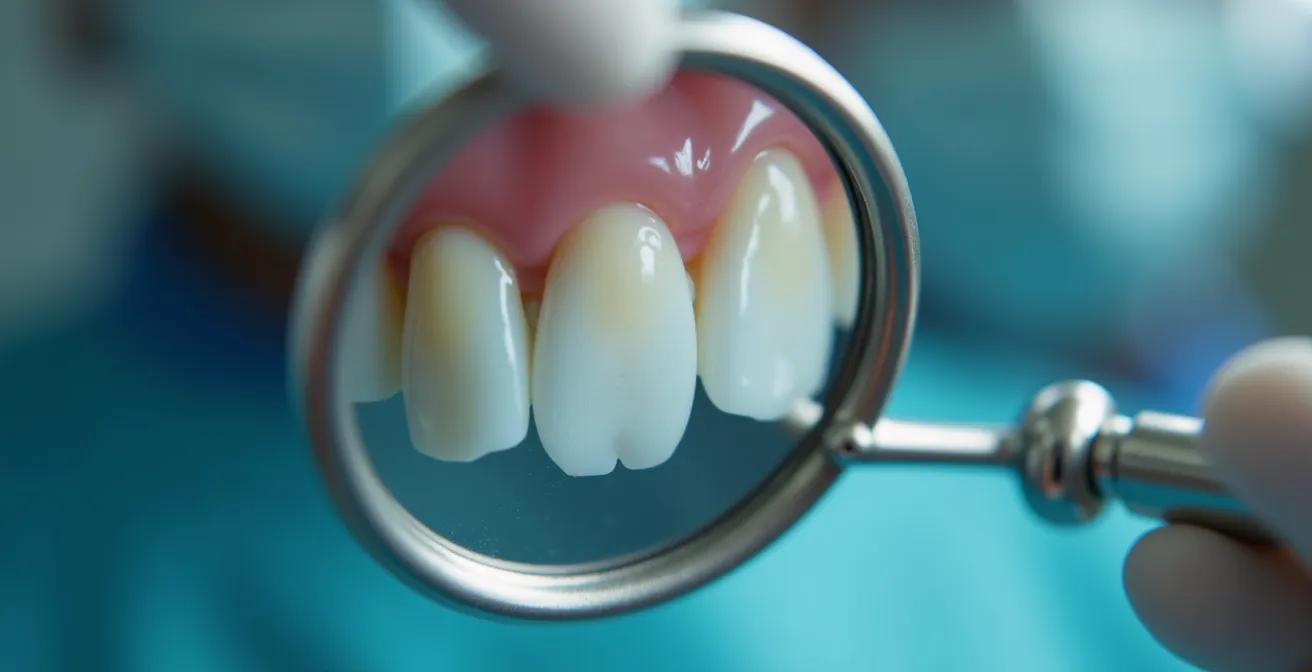
To successfully claim this benefit, you must follow a precise protocol immediately after the incident. Failure to document the event correctly will almost certainly lead to your claim being denied. The process involves seeking immediate medical attention at a hospital emergency room to have the trauma officially documented by a physician. This medical report is the most critical piece of evidence. Without it, it is nearly impossible to prove to RAMQ that the dental injury was the result of a specific accident. You must then submit this documentation to RAMQ within their strict deadline.
Because the process is so unforgiving, following a clear checklist is essential to ensure you have all the necessary documentation for your claim.
Your Action Plan: Documentation Checklist for Accident-Related Dental Claims in Montreal
- Go immediately to a Montreal hospital emergency room (MUHC, Jewish General, CHUM) after the accident.
- Obtain a detailed medical report from the emergency physician documenting the trauma.
- Ensure the report specifies the accident was traumatic (e.g., a fall) and not from a routine activity (e.g., biting food).
- Request a dental referral from the emergency physician for any necessary follow-up treatment.
- Submit your claim to the RAMQ within the strict deadline with all supporting documentation.
Why Isn’t Prevention Covered and How Can You Voice Your Opinion?
The simple answer is historical. Quebec’s public health insurance system was founded on a philosophy of treating illness and injury, not preventing them. When the system was created, dental care was largely seen as separate from general medicine, and public funding was directed toward urgent, medically necessary procedures like hospital-based surgeries. As a result, preventative care—such as cleanings, fluoride treatments, and routine check-ups that form the backbone of modern dentistry—was left to the private sector. This model has remained largely unchanged for adults for decades.
This creates a difficult situation for seniors on a fixed income, who are often forced to wait until a problem becomes severe (and potentially requires a covered surgery) rather than addressing it early and affordably. Many community health advocates in Montreal and across Quebec are working to change this. They argue that this lack of preventative coverage is a false economy, leading to worse health outcomes and higher long-term costs for the healthcare system. As Houda Feguery of the Fight for Health Committee at the Clinique communautaire de Pointe-Saint-Charles notes, a major barrier is simply understanding the system.
The vocabulary used in dentistry is really confusing to ordinary folk. We hope this tool will facilitate a better understanding of this complex universe.
– Houda Feguery, Clinique communautaire de Pointe-Saint-Charles
If you want to add your voice to the call for better coverage, you are not alone. Organizations like FADOQ, Quebec’s largest seniors’ network, are actively lobbying the government. They were instrumental in helping to clarify CDCP eligibility for Quebec seniors and provide resources to their members. Getting involved can be as simple as becoming a member of FADOQ, staying informed through their updates, and participating in advocacy efforts coordinated by groups like the Réseau Aînés de Montréal. Voicing your opinion to your MNA (Member of the National Assembly) is another direct way to signal that preventative dental care for seniors should be a provincial priority.
What Does RAMQ Actually Cover for Adult Dental Care vs Private Insurance?
When you strip away the exceptions for accidents and social assistance, RAMQ’s coverage for the average senior is extremely narrow: medically necessary oral surgery in a hospital. For everything else—cleanings, fillings, root canals, crowns, dentures—you are on your own. This is the “coverage gap” that most Montrealers must fill, either by paying out-of-pocket or through private insurance. Private dental insurance is designed specifically to cover these routine and major restorative services.
However, private plans come at a cost, with monthly premiums and annual coverage limits. For a senior on a fixed income, the key question is whether the premium is worth the potential benefits. Policies vary wildly, but most operate on a co-insurance model, where the plan covers a percentage of the cost (e.g., 80% for basic services, 50% for major work like crowns) up to an annual maximum. The new CDCP operates similarly but without the monthly premium, making it a more accessible option for those who qualify based on income.
The following table provides a stark comparison of the potential out-of-pocket costs for a major procedure like a root canal and crown in Montreal under different coverage scenarios. This data, based on a cost comparison for dental work in Quebec, illustrates the financial reality of each option.
| Coverage Type | Root Canal Cost | Crown Cost | Total Out-of-Pocket | Annual Premium |
|---|---|---|---|---|
| RAMQ Only (non-assistance) | $1,500 | $1,500 | $3,000 | $0 |
| CDCP (income under $70,000) | $300 (20% co-pay) | $300 (20% co-pay) | $600 | $0 |
| Private Insurance (PolicyMe) | $300 (80% coverage) | $750 (50% coverage) | $1,050 | $1,392/year |
| Top-tier Private (Sun Life Enhanced) | $150 (90% coverage) | $300 (80% coverage) | $450 | $1,877/year |
Key Takeaways
- RAMQ’s role in adult dental care is primarily for hospital-based surgeries and specific vulnerable populations.
- The federal CDCP is a crucial new layer of coverage for routine care, but it does not replace RAMQ’s specific mandates.
- Combining tax credits, university clinics, and strategic planning is the most effective way to manage the cost of major dental work for most seniors in Quebec.
How to Pay for $10,000 of Dental Work Without Going Broke?
Facing a quote for $10,000 in dental work is daunting for anyone, especially a retiree on a fixed income. Relying on a single program will not be enough. The solution lies in “benefit stacking”—a strategic approach to layering every available public, community, and financial resource in Montreal. This means moving beyond just RAMQ and the CDCP and incorporating other powerful tools like tax credits and low-cost clinical programs.
One of the most underutilized tools is the Quebec tax credit for medical expenses. You can claim dental expenses that exceed 3% of your family’s net income. This includes not just the amounts you paid out-of-pocket, but also any premiums you or your employer paid for a private health plan. By carefully choosing your 12-month claim period, you can maximize your return. Another key strategy is to seek treatment at university dental clinics, such as the one at McGill University, where costs can be 10-15% lower than private practices because work is performed by students under supervision.
Case Study: Full Mouth Reconstruction Strategy Using Montreal Resources
A 68-year-old Montreal senior was quoted $10,000 for extensive dental work. By using a benefit stacking strategy, they dramatically reduced their out-of-pocket cost. First, they had emergency extractions performed at the MUHC, which were fully covered by RAMQ. Next, the major restorative work was done at the McGill dental clinic, saving over 10% on private rates. They enrolled in the CDCP, which covered a portion of the eligible services with a 40% co-payment. Finally, they claimed the remaining $4,000 in out-of-pocket expenses on their Quebec tax return, resulting in a credit of approximately $1,000. Through this strategic use of all available programs, the final cost was reduced from $10,000 to roughly $3,500.
This approach transforms an overwhelming expense into a manageable plan. It requires diligence and planning, including making the most of the provincial tax system.
- First, choose an optimal 12-month period for your claim that ends in the current tax year; it doesn’t have to be the calendar year.
- Combine all eligible family dental and medical expenses, especially if the total exceeds 3% of your family’s net income.
- Don’t forget to include any employer-paid private plan premiums found in box J of your RL-1 slip.
- Claim the total amount on line 381 of your Quebec tax return for the non-refundable credit.
- Finally, as detailed by Revenu Québec, you can also claim the refundable tax credit on line 462 if you are eligible based on your income.
How Does the New Canadian Dental Care Plan (CDCP) Interact with RAMQ?
Now that we’ve established the different roles of RAMQ and the CDCP, the final step is understanding how to manage them in practice. As a benefits navigator, your mindset should be one of coordination. Think of RAMQ as the specialist for very specific, pre-defined situations (hospital surgery, accidents, social assistance), and the CDCP as your generalist for everything else. This means your first question when considering a procedure should always be: “Is this one of the rare situations RAMQ covers?”
If the answer is yes, you follow the RAMQ pathway exclusively. If the answer is no, which it will be for most routine and restorative care, you then turn to the CDCP. The practical challenge for Montreal seniors is finding dentists who have enrolled to be providers for the CDCP. As the program is new, not all clinics are participating. The CDCP website provides a list of participating providers, and it’s essential to confirm with the clinic when you book your appointment that they will bill the CDCP directly.
This coordination is not a one-time event but an ongoing process. As both the provincial and federal governments adjust their programs, the rules of interaction may evolve. Staying connected with advocacy groups like FADOQ is an excellent way to receive timely updates. The key takeaway is to treat these programs as a toolkit. You must select the right tool for the right job, confirm your eligibility before starting work, and understand that you are ultimately responsible for navigating the intersection between these two distinct systems.
Your journey to affordable dental care starts with this strategic mindset. Begin today by evaluating your eligibility for the CDCP and identifying the combination of resources—from tax credits to community clinics—that best fits your personal situation.