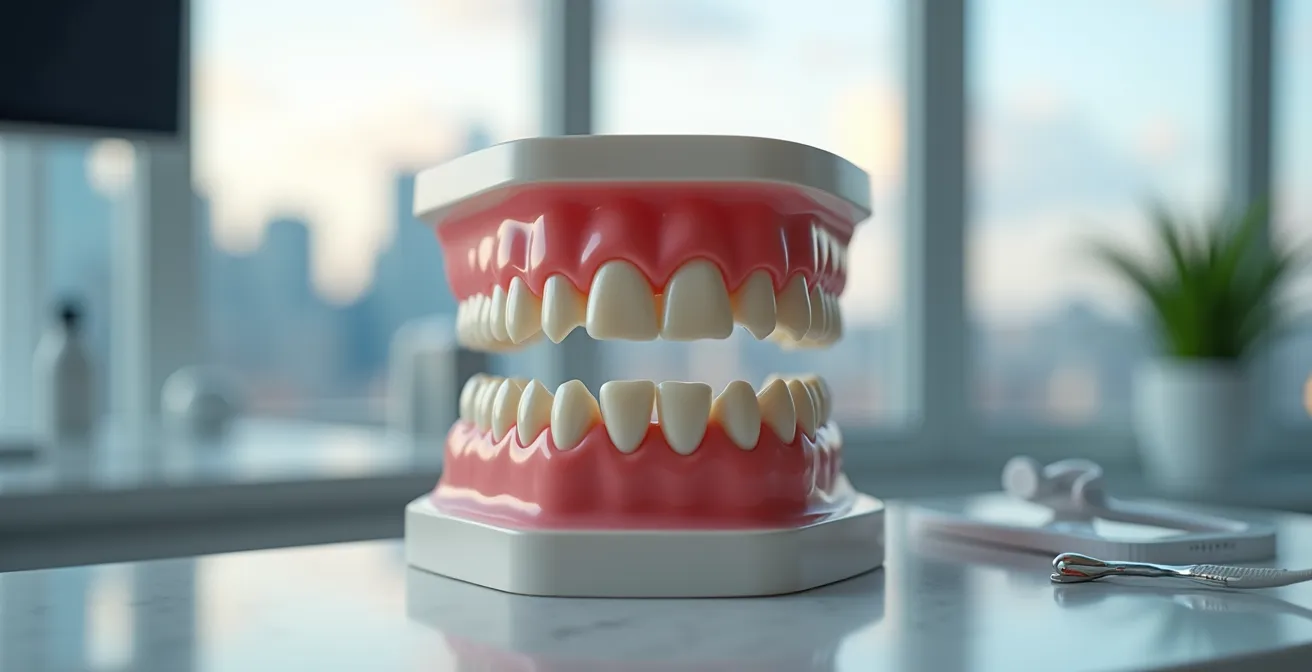
The most natural-looking veneer is not determined by ‘prep’ or ‘no-prep,’ but by whether the right amount of space is created for the porcelain to look like a real tooth.
- “No-prep” often means adding bulk, which can look unnatural. It is only ideal for small teeth or closing minor gaps.
- Traditional preparation involves minimal, precise enamel removal—the “biological cost”—to create room for perfectly contoured, translucent porcelain.
Recommendation: Shift your focus from fearing preparation to discussing the necessary biological cost with your dentist to achieve your specific aesthetic goals. A trial smile is essential to visualize this outcome before committing.
The decision to get porcelain veneers often begins with a single, pervasive fear: the thought of having your natural teeth “shaved down” into tiny stumps. This anxiety makes “no-prep” veneers sound like the perfect, risk-free solution. The marketing is compelling, promising a beautiful new smile without the irreversible step of altering your teeth. But this simple “prep vs. no-prep” debate misses the most important point. As a conservative cosmetic dentist, my focus is on honesty about the trade-offs involved.
The real conversation isn’t about avoiding preparation; it’s about understanding the precise biological cost required to achieve a truly natural and lasting aesthetic result. Sometimes, the most natural-looking outcome—one that isn’t bulky, has lifelike translucency, and sits flush with your gum line—requires a subtractive approach. This means performing a minimal, calculated removal of enamel to create the necessary space for the dental ceramist to work their magic. This is not destructive grinding; it is a highly controlled step in an engineering process.
This article will guide you through this more nuanced understanding. We will move beyond the marketing and explore how factors like tooth shape, material science, and modern planning tools used in Montreal clinics help determine the right approach for you. We will reframe “preparation” not as damage, but as a necessary investment for an outcome that looks, feels, and functions like it truly belongs in your smile.
To help you navigate this important decision, we’ve broken down the key considerations. This guide will walk you through everything from aesthetic planning to the practical realities of the procedure in Montreal, ensuring you can have an informed and confident conversation with your dentist.
Summary: Prep vs. No-Prep Veneers: Which One Looks More Natural?
- How to Choose a Tooth Shape That Matches Your Face?
- What Causes a Veneer to Pop Off While Eating?
- Can You Still Drink Red Wine with Porcelain Veneers?
- Why You Should Never Commit to Veneers Without a Trial Smile?
- How Long Will Your Teeth Be Sensitive to Cold After Veneer Prep?
- How to Plan a Full Smile Makeover in Montreal Before a Major Event?
- How Does “One-Visit Dentistry” Actually Work in Montreal Clinics?
- Why You Should Never Commit to Veneers Without a Trial Smile?
How to Choose a Tooth Shape That Matches Your Face?
The foundation of a natural-looking smile makeover is not the material, but the design. Choosing a tooth shape that harmonizes with your facial features, personality, and gender is the critical first step. This isn’t about picking a “perfect” smile from a catalog; it’s about creating teeth that look like they belong to you. Your dentist should analyze your face shape (oval, square, heart, round) to recommend complementary tooth shapes. For instance, a square face can be softened by more rounded teeth, while a round face may be elongated by more squared or rectangular shapes.
Beyond geometry, your personality plays a role. Are you aiming for a bold, confident look or a softer, more approachable one? The subtle details—like rounded versus sharp canines—can convey different characteristics. This is a collaborative process where your input is essential. You should communicate exactly what you like and dislike about your current smile and bring reference photos of smiles you admire. This conversation defines the aesthetic goal, which in turn dictates the technical requirements.
Advanced Montreal clinics utilize sophisticated technology to aid this process. Tools like Digital Smile Design (DSD) use advanced electronic imaging to create a digital mock-up of your new smile on a photo of your face. This allows you to visualize the final outcome and make adjustments before any physical work begins, ensuring the “biological cost” of the procedure is directly tied to an aesthetic you have already approved.
Your Consultation Checklist: Designing Your Perfect Smile in Montreal
- Communicate your goal: Clearly state what you want in your new smile. Do you want it brighter, longer, or a different shape?
- Identify specific problems: Point out the exact issues you see when you smile (e.g., a crooked tooth, a gap, discoloration).
- Bring visual references: Collect photos of smiles you find particularly attractive to serve as a concrete starting point for discussion.
- Ask about visualization technology: Inquire if the clinic uses Digital Smile Design or similar technology so you can preview your results.
- Discuss your personality: Share aspects of your personality to ensure the final smile design feels authentic to you, not just technically correct.
What Causes a Veneer to Pop Off While Eating?
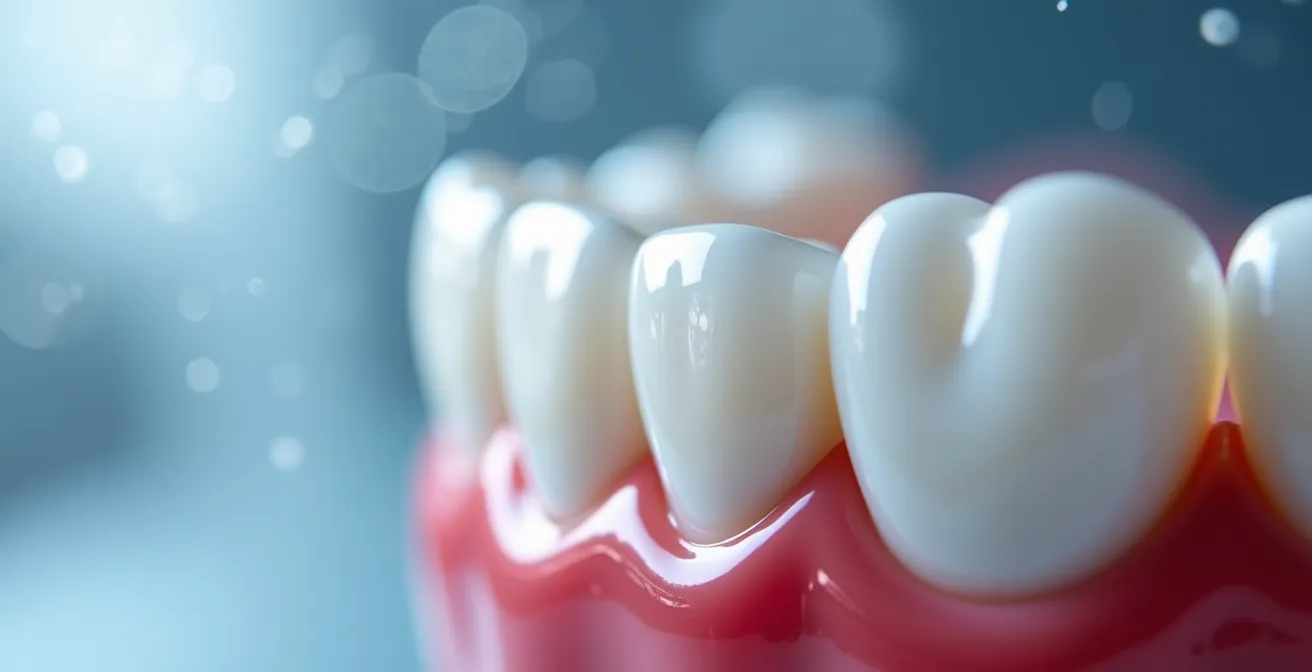
One of the most unsettling events for a veneer patient is having one come loose or “pop off.” This failure is rarely random; it almost always points to a breakdown at the bonding interface. A porcelain veneer is only as strong as its bond to the underlying tooth. For that bond to be permanent and robust, two conditions must be met: a pristine, properly prepared enamel surface and a flawless bonding technique from the clinician.
The bonding process is a microscopic chemical fusion between the tooth, a resin cement, and the etched porcelain. If the tooth surface is not adequately prepared—meaning there isn’t enough clean, healthy enamel for the bond to grip—the connection will be weak. This is a key reason why a “no-prep” veneer placed on an ill-suited tooth can fail; without the space created by preparation, the veneer may have a weak edge or be bonded partially to dentin, which provides a less reliable bond than enamel.
Furthermore, the material choice is critical. While composite bonding is excellent for small chips, a full smile alteration often demands the strength of porcelain. As highlighted by Montreal’s Dr. Manuela Barsan, for extensive smile makeovers involving multiple teeth, porcelain is the material of choice for its durability and longevity. An attempt to use a less robust material or a compromised bonding protocol to save time or avoid preparation is often the root cause of a veneer that fails under the normal pressures of chewing.
Can You Still Drink Red Wine with Porcelain Veneers?
A common concern for patients investing in a new smile is whether they’ll have to give up lifestyle habits like drinking coffee, tea, or red wine. The good news is that with high-quality porcelain veneers, you don’t have to. The key lies in the material’s properties. Unlike natural tooth enamel, which is porous and can absorb pigments over time, modern dental porcelain is exceptionally dense and non-porous.
As the experts at a leading Montreal dental clinic state, this quality makes it highly resistant to staining. The team at Smile Montreal explains:
High-quality porcelain is non-porous like glass, making it highly resistant to stains from coffee, tea, or red wine.
– Smile Montreal Dental Team, Smile Montreal Veneer Services
This is a significant advantage over both natural teeth and composite veneers. Composite resin, while an excellent material for many applications, is inherently more porous than porcelain. Over time, it is more susceptible to picking up stains, requiring more frequent polishing or eventual replacement to maintain its colour. Porcelain, on the other hand, maintains its shade and lustre for many years with simple, routine care.
The following table illustrates the difference in maintenance and longevity, showing why porcelain is often considered the premium choice for a long-term, stain-free smile.
| Material Type | Stain Resistance | Lifespan | Maintenance Required |
|---|---|---|---|
| Porcelain Veneers | Excellent (non-porous) | 10-15+ years | Regular cleaning, non-abrasive paste |
| Composite Veneers | Moderate (more porous) | 5-7 years | More frequent polishing needed |
Why You Should Never Commit to Veneers Without a Trial Smile?
Committing to porcelain veneers is a significant decision, both financially and biologically. Once the final veneers are bonded to your teeth, the process is permanent. This is precisely why the “trial smile” is the single most important and non-negotiable step in the entire journey. It serves as a crucial insurance policy against buyer’s remorse and ensures that the “biological cost” of tooth preparation is paid for an outcome you absolutely love.
A trial smile is a physical mock-up of your proposed new smile, crafted from a temporary material and placed directly over your unprepared teeth. This allows you to see, feel, and “test drive” your new look in three dimensions—something a digital image alone cannot provide. You can assess the length, shape, colour, and overall feel of the veneers in your own mouth. It’s your opportunity to provide real-time feedback to your dentist, requesting adjustments until the design is perfect.
This phase is about more than just aesthetics; it’s about building confidence and eliminating uncertainty. Leading Montreal clinics have integrated this step as standard practice. For example, a case study from Doctor Wisdom clinic in Montreal shows they place temporary veneers during the first appointment specifically so patients can wear the mock-up, take photos, and get feedback from friends and family. This ensures complete patient satisfaction before the final, irreversible bonding of the porcelain veneers takes place. Skipping this step is like buying a car without a test drive—a risk you shouldn’t take.
How Long Will Your Teeth Be Sensitive to Cold After Veneer Prep?
For the patient who fears dental work, the prospect of post-procedure sensitivity is a major concern. It’s important to be honest: after the teeth are prepared for traditional veneers, some level of temporary sensitivity to cold is normal and expected. The preparation process involves removing a thin layer of enamel, which can make the underlying tooth structure more responsive to temperature changes. However, this sensation is almost always transient.
This sensitivity typically lasts from a few days to a few weeks. While your temporary veneers are in place, they provide a protective barrier that significantly reduces discomfort. Once your final porcelain veneers are bonded, they act as a new, durable outer layer, effectively sealing the tooth and resolving the sensitivity for good. Think of it as a brief, manageable phase of healing—the final part of the “biological cost” before you can enjoy the final result.
Montreal clinics are acutely aware of patient anxiety and prioritize comfort throughout the process. For those with significant dental fear, options like conscious sedation are available to make the experience stress-free. As one nervous patient from Montreal shared about their experience:
They offer conscious sedation which was a Godsend for me when I needed a long root canal procedure. Took almost 3 hours felt like 5 minutes.
– A Montreal dental patient
This focus on comfort management ensures that the fear of temporary sensitivity doesn’t become a barrier to achieving the smile you desire. The discomfort is a short-term, manageable part of the process, not a sign of long-term damage.
How to Plan a Full Smile Makeover in Montreal Before a Major Event?
Planning a smile makeover for a significant life event like a wedding or reunion requires careful timing. The process for porcelain veneers is not a one-day affair; it is a multi-stage journey that requires several weeks to months to complete properly. Rushing the process can lead to compromises in quality and aesthetic outcome. A well-structured timeline is essential for a stress-free experience and a perfect result on your big day.
A realistic timeline starts with an initial consultation at least four to six months before your event. This first month is dedicated to discussion, diagnosis, and treatment planning, including the crucial trial smile phase. The second month may be used for any necessary preparatory work, such as professional cleanings, addressing cavities, or gum contouring. The third month is typically when the tooth preparation and placement of high-quality temporary veneers occur. You will live with these temporaries for several weeks while your final porcelain veneers are meticulously hand-crafted by a ceramist.
The fourth month involves the exciting appointment where your final veneers are bonded into place. However, the process doesn’t end there. The final one to two months before your event are crucial for minor adjustments, follow-up appointments, and, most importantly, giving you time to get comfortable and confident with your new smile. This buffer period is vital. In terms of financial planning, it’s also wise to get a clear quote early on. In Montreal, cost can be a significant factor, and 2024 data shows the average cost for porcelain veneers is around $583 per tooth, which is notably more affordable than in other major Canadian cities like Toronto.
How Does “One-Visit Dentistry” Actually Work in Montreal Clinics?
“One-visit dentistry,” often powered by CEREC® technology, offers the enticing promise of a complete crown or veneer in a single appointment. This process eliminates the need for temporary restorations and multiple visits. It works by using an in-office digital scanner to capture an image of the prepared tooth, which is then sent to a milling machine that carves the restoration out of a solid block of ceramic. The new veneer is then bonded in place, all within a couple of hours.
This technology is an excellent solution for single-tooth repairs or for patients with extreme time constraints. However, it’s crucial to understand the aesthetic trade-offs, especially when it comes to a full smile makeover. The “engineered naturalness” of a world-class smile often comes from the subtle, hand-layered details a master ceramist builds into traditional porcelain veneers. This includes delicate variations in colour, translucency, and surface texture that mimic natural enamel—details that are difficult to replicate with a machine milling from a monochromatic block.
As seen in Montreal practices like Doctor Wisdom, there’s a place for both. They offer same-day options alongside traditional porcelain veneers, recognizing they serve different needs. The table below outlines the key differences to help you understand which might be better for your specific goals.
One-Visit vs. Traditional Veneers Comparison
| Aspect | One-Visit (CEREC/Composite) | Traditional Porcelain |
|---|---|---|
| Time to Completion | Single appointment | 2-3 visits over 2-6 weeks |
| Customization Level | Good | Excellent (hand-layered by ceramist) |
| Color Variations | Limited | Subtle, natural variations possible |
| Best For | Single tooth repairs | Full smile makeovers |
While one-visit dentistry is a remarkable technological advance, achieving the highest level of aesthetics for a full smile makeover often still relies on the artistry of the traditional, multi-visit approach.
Key Takeaways
- The goal is not “no-prep” but the “right prep.” Natural results require creating space for the porcelain.
- A “trial smile” is a non-negotiable step to test drive your new look and ensure you love the final outcome before it’s permanent.
- High-quality porcelain is extremely stain-resistant, but achieving a non-bulky, natural look with it often requires minimal tooth preparation.
Why You Should Never Commit to Veneers Without a Trial Smile?
We’ve established that the trial smile is your safeguard against regret, but how do you maximize its value during your consultation process in Montreal? This phase is your active opportunity to co-design your smile. When your dentist places the temporary mock-up, your job is to be a critical observer. Take photos and videos in different lighting conditions—inside, outside, in the evening. Smile, laugh, and speak naturally to see how the new teeth affect your facial expressions and phonetics.
This is the time to be specific with your feedback. Don’t just say “I don’t like it.” Instead, articulate what feels off. Are the teeth too long? Too short? Too square? Do they feel too thick on your lip? An experienced cosmetic dentist will welcome this feedback and can often make real-time adjustments to the mock-up, trimming or adding material until you are completely satisfied. This collaborative process is what dials in the final blueprint for the ceramist.
Before you even begin, ask your prospective Montreal dentist a few critical questions. Is the physical trial smile included in the veneer quote, or is it an extra charge? How long can you wear the mock-up before making a final decision? Do they use DSD technology to complement the physical trial? Seeing before-and-after photos of previous patients from that specific clinic can also provide immense confidence in their ability to deliver on the proposed design. The trial smile empowers you to be the final arbiter of your own aesthetic outcome.
Ultimately, the choice between prep and no-prep veneers is a false one. The real, empowering choice is to find a conservative, skilled dentist and have an honest conversation about your goals. By focusing on the concept of “biological cost,” you can move past the fear of preparation and see it as a calculated investment in a predictable, beautiful, and truly natural-looking result that will last for years to come. Your next step is to schedule a consultation, not to ask for a specific technique, but to begin designing the smile that is authentically yours.