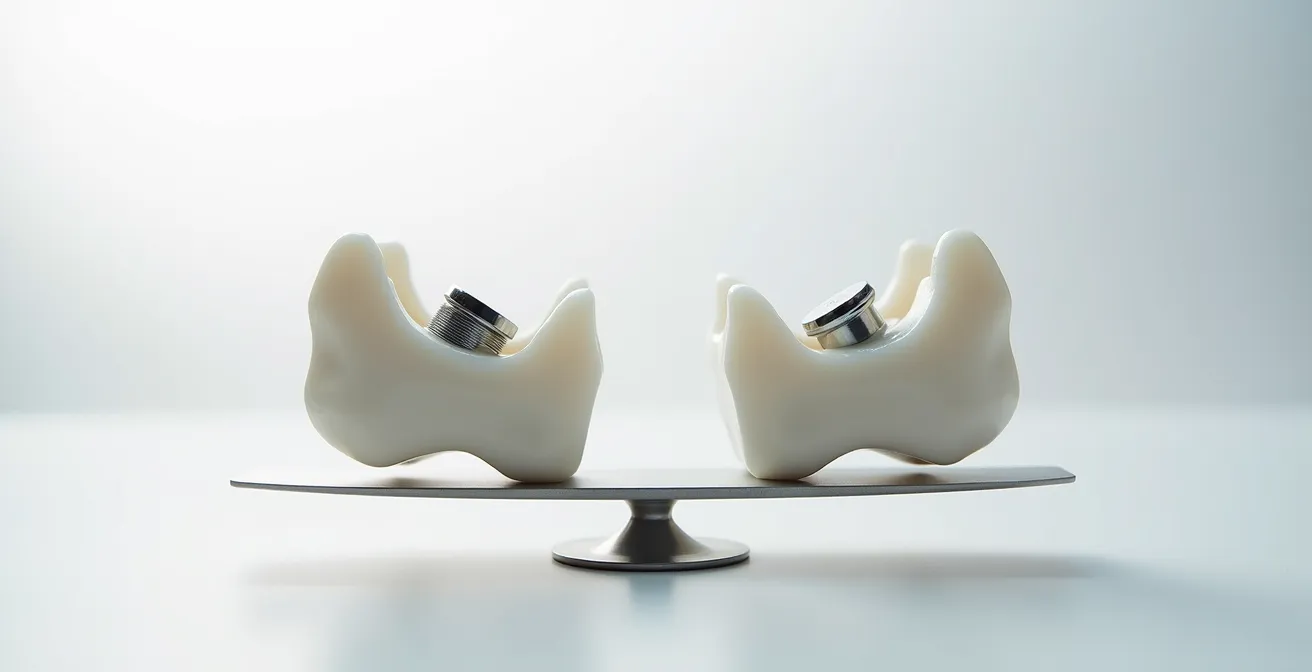
The decision between titanium and zirconia for sensitive patients is not about “metal vs. metal-free,” but about matching the right material’s properties to specific clinical needs.
- Zirconia offers superior aesthetics in thin gum tissue, eliminating the risk of greyish shadows that can occur with titanium.
- Modern zirconia is exceptionally strong, with proven long-term success rates for molar implants, but requires a specifically trained clinician for placement.
Recommendation: The best choice requires a “biocompatibility cascade”: start with sensitivity testing, assess your gingival biotype, and discuss material properties with a qualified Montreal specialist.
For a patient in Montreal navigating the world of dental implants, especially with pre-existing metal allergies or a preference for holistic health, the choice of material is a primary concern. The conversation often simplifies into a binary debate: titanium, the long-established standard, versus zirconia, the “metal-free” alternative. This surface-level comparison, however, overlooks the nuanced clinical science that should guide such a critical decision for your long-term health and well-being.
While titanium’s decades of successful use are undeniable, concerns about hypersensitivity, corrosion, and aesthetic compromises are valid and deserve a thorough, evidence-based exploration. Similarly, while zirconia’s white colour and inertness are attractive, questions about its long-term durability and fracture resistance, particularly in high-stress molar areas, must be addressed with scientific data, not just marketing claims. The feeling of uncertainty can be significant when you are trying to make the safest possible choice for your body.
This guide moves beyond the platitudes. The key to a successful and biocompatible outcome is not simply choosing a material, but engaging in a clinical decision-making process—a biocompatibility cascade. This process involves a sequence of evaluations, from objective sensitivity testing to a detailed analysis of your unique anatomy and functional needs. It transforms the choice from a guess into a calculated, personalized, and scientifically-backed decision made in partnership with your dental expert.
This article will walk you through this evidence-based process. We will examine how to properly test for sensitivities, why the properties of zirconia are critical for aesthetics, whether ceramics can truly handle the forces of chewing, and the real costs and local considerations here in Montreal. By the end, you will be equipped with the knowledge to have a more informed conversation with your dentist.
Summary: A Biocompatibility Guide for Montreal Implant Patients
- How to Test for Titanium Sensitivity Before Implant Surgery?
- Why Zirconia Posts Are Better for Front Teeth With Thin Tissue?
- Is Ceramic Really as Strong as Metal for Back Molar Implants?
- Why “Metal-Free” Dentistry Is Gaining Popularity in Montreal?
- Does Choosing Zirconia Implants Increase the Cost of Treatment?
- How Do You Know If Your Dentist’s Tools Are Truly Sterile?
- Are Dental Implants a Safe Option for Seniors Over 70 in Montreal?
- How to Test for Titanium Sensitivity Before Implant Surgery?
How to Test for Titanium Sensitivity Before Implant Surgery?
The foundational step in the biocompatibility cascade for any patient with metal sensitivity concerns is objective testing. It’s crucial to distinguish between a true, rare Type IV allergy to pure titanium and a more common hypersensitivity to other metals, such as nickel, which can be present in trace amounts in certain titanium alloys (like Grade 5). A generalized fear of “metal” is not a sufficient basis for clinical decisions; verifiable data is essential.
Traditional patch testing has limitations in detecting titanium sensitivity. More advanced methods, such as lymphocyte transformation tests (e.g., MELISA®), are considered more effective. These blood tests measure the reaction of your white blood cells to specific metals. In fact, specialized research into metal allergies found that 37.5% of patients with clinically suspected titanium sensitivity showed positive reactions when evaluated with MELISA testing. This underscores the importance of using the right diagnostic tool to get a clear answer before any surgical procedure.
Discussing these options with an allergist in Montreal is a critical pre-surgical step. A clear diagnosis not only guides the choice between titanium and zirconia but also provides the necessary medical documentation for your dental specialist and potentially for insurance purposes. Going into the implant process with this data provides peace of mind and a solid foundation for your treatment plan.
Your Action Plan: Questions for a Montreal Allergist
- Clarify the Difference: Ask about the distinction between a true titanium allergy (Type IV hypersensitivity) and sensitivity to nickel, which may be present in some Grade 5 titanium alloys.
- Explore Quebec Testing Options: Inquire about the specific tests available in Quebec, comparing the MELISA blood test against traditional patch testing for detecting metal sensitivities.
- Understand the Logistics: Ask about the testing timeline and whether blood samples need to be sent to specialized labs outside of Montreal for analysis.
- Discuss Material Grades: Discuss the different Health Canada-approved titanium grades (e.g., commercially pure Grade 4 vs. Grade 5 alloy) and their specific compositions.
- Request Formal Documentation: Ensure you receive a formal, written report of your test results to share with your dental implant specialist for their records and treatment planning.
Why Zirconia Posts Are Better for Front Teeth With Thin Tissue?
Beyond biocompatibility, aesthetics are a major factor in implant selection, especially in the “aesthetic zone”—the front teeth that are visible when you smile. One of the significant aesthetic drawbacks of titanium implants can be a visible greyish hue showing through the gums. This is not an issue for every patient, but it is a distinct risk for individuals with a thin gingival biotype, meaning thin gum tissue.
A thin gingival biotype lacks the thickness to fully mask the dark colour of the underlying titanium metal. This can result in a subtle but noticeable grey shadow at the gum line, which can compromise an otherwise perfect smile. The issue is significant enough that research on implant aesthetics reveals that up to 29% of patients may experience these visible grey shadows with titanium implants in areas with thin gums. This can create a result that looks unnatural, even if the implant is perfectly functional.
This is where zirconia offers a clear and decisive advantage. As an inherently white, non-metallic ceramic, a zirconia implant and abutment (the post that connects the implant to the crown) will not create this greyish discoloration. Its tooth-like color provides a much more natural and stable aesthetic result, regardless of the thickness of the overlying gum tissue. For patients seeking the most predictable and aesthetically pleasing outcome for a front tooth, especially if a dentist identifies a thin gingival biotype, zirconia is often the superior clinical choice.
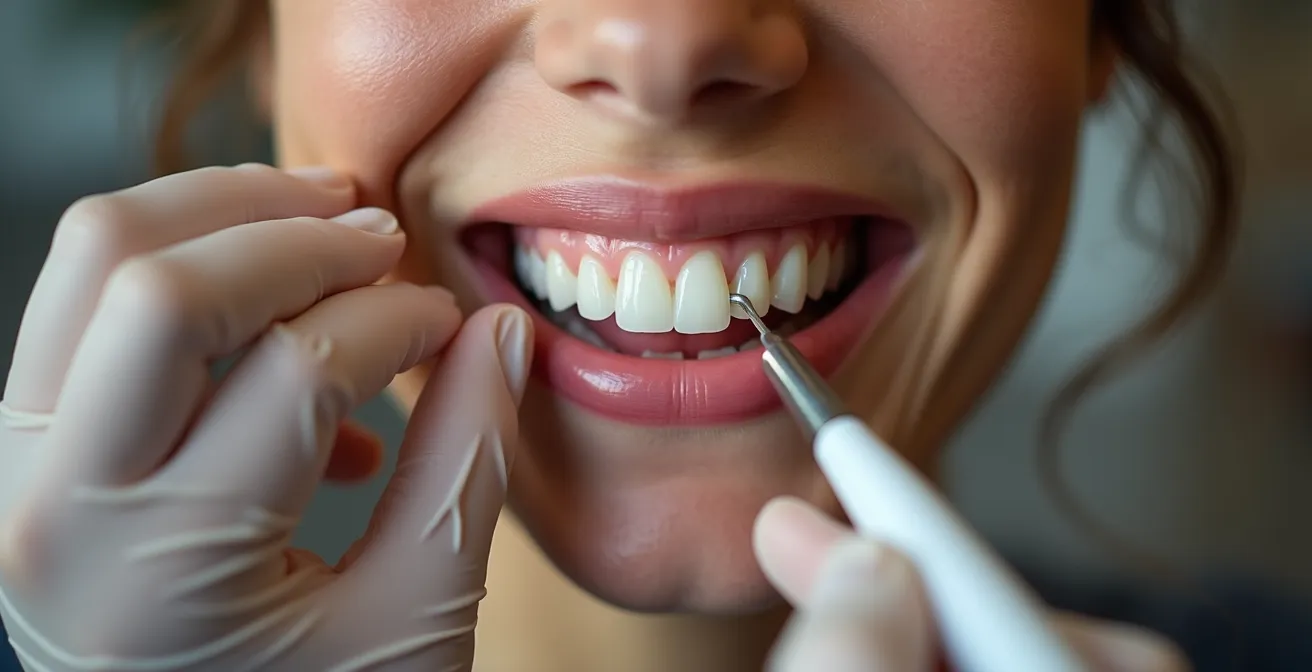
As shown in the assessment of a patient’s smile, the translucency and thickness of the gum tissue are critical factors. For a front tooth replacement, ensuring the final result is indistinguishable from the natural teeth is the ultimate goal, and material choice plays a pivotal role in achieving it.
Is Ceramic Really as Strong as Metal for Back Molar Implants?
A common and valid concern regarding zirconia implants is their strength and longevity, particularly for replacing molars in the back of the mouth where chewing forces (occlusal loads) are highest. For decades, titanium’s ductility and resistance to fracture have made it the undisputed choice for these high-stress applications. However, modern advancements in ceramic technology have significantly closed this gap.
Today’s dental zirconia is not the same as household ceramic. It is typically a Yttria-stabilized Zirconia Polycrystal (Y-TZP), an advanced material engineered for extreme strength and fracture resistance. When comparing its material properties directly to titanium, modern zirconia demonstrates remarkable performance, often exceeding titanium in key areas like compressive strength. A 2024 review of material properties provides a clear comparison of their mechanical capabilities.
This following table, based on data from recent materials science analyses, compares the key strength metrics of modern zirconia, titanium, and a natural tooth.
| Material Property | Titanium Grade 4 | Modern Zirconia (Y-TZP) | Natural Tooth |
|---|---|---|---|
| Flexural Strength (MPa) | 550-650 | 900-1200 | 130-160 |
| Fracture Toughness | Excellent (ductile) | Good (6-10 MPa·m^0.5) | Fair |
| Compressive Strength (MPa) | 680-750 | 2000-2500 | 384 |
| 10-Year Survival Rate | 95-98% | 94-96.7% | N/A |
These numbers show that while titanium’s fracture toughness (its ability to bend before breaking) remains superior, zirconia’s flexural and compressive strengths are significantly higher. Furthermore, long-term clinical data supports its use. A systematic review of two-piece zirconia systems showed success rates of approximately 96.7% at 9 years in molar regions. The key determinant of success, as the study notes, is the clinician’s specific training and experience with ceramic implant systems and proper case selection. For a suitable candidate, modern zirconia is a robust and reliable option for posterior restorations.
Why “Metal-Free” Dentistry Is Gaining Popularity in Montreal?
The growing interest in zirconia implants in cities like Montreal is part of a broader trend towards holistic and “metal-free” dentistry. This movement is driven by patients who are increasingly conscious of the materials placed in their bodies and seek to minimize exposure to metals, potential allergens, and corrosive materials. This philosophy aligns with a wellness-oriented lifestyle that is prominent in many Montreal communities, from the Plateau to Westmount.
Holistic dental practices often emphasize biocompatibility, using materials believed to have the most neutral interaction with the body’s systems. Zirconia fits perfectly into this paradigm. It is an oxide ceramic, meaning it is bio-inert and does not corrode or release ions into the surrounding tissue or bloodstream, a known issue with some metal alloys over time. This property also reduces the risk of peri-implantitis (inflammation of the gums around an implant), as the smooth surface of zirconia is less prone to bacterial plaque adhesion compared to titanium.
However, the term “metal-free” is a frequent point of confusion that requires scientific clarification. As one expert analyst in the field of cosmetic dentistry explains:
Zirconia is a ceramic derived from the metal Zirconium. Its benefit lies in being an inert, non-corrosive, bio-neutral oxide, not in having ‘zero metal atoms.’
– Dr. Beverly Hills LA Dentist, Zirconia Dental Implants Analysis
The key takeaway is that zirconia’s benefit comes from its stable, oxidized ceramic state (zirconium dioxide), not from an absence of metallic elements at an atomic level. This chemical stability is what makes it an excellent biocompatible choice for health-conscious patients in Montreal.
The serene and natural environment of a modern holistic dental clinic reflects the philosophy of this approach—focusing on overall wellness, biocompatibility, and minimally invasive procedures that work in harmony with the body.
Does Choosing Zirconia Implants Increase the Cost of Treatment?
A practical and unavoidable part of the decision-making process is the cost. It is a fact that zirconia implants represent a higher financial investment than their titanium counterparts. The primary reasons for this are the higher cost of the raw material and the more complex, precision-milled manufacturing process required to create the implant and its components. In the Canadian market, this difference is quite clear.
According to a Canadian dental implant cost analysis, zirconia implants can cost 20-40% more than traditional titanium implants. For a single implant, this could mean an additional cost of several hundred to over a thousand dollars. When planning for multiple implants, this differential can become a significant factor in the overall treatment budget. It’s important for patients in Montreal to receive a transparent, itemized quote that clearly separates the cost of the implant material from the surgical and restorative fees.
While private insurance in Quebec may cover a portion of the implant procedure, the surcharge for premium materials like zirconia is often an out-of-pocket expense. However, there are steps you can take to understand and potentially mitigate these costs. Being proactive with your dentist and insurer is key.
- Request a Pre-determination: Ask your Montreal dentist for a detailed pre-determination using the specific Ordre des dentistes du Québec (ODQ) procedure codes to send to your insurer.
- Highlight Medical Necessity: If you have a confirmed metal sensitivity, ensure this is highlighted in the pre-authorization submission to your private insurer (e.g., Desjardins, Sun Life, Manulife).
- Get an Itemized Breakdown: Ask for a quote that separates the costs of the implant body, the custom abutment, the final crown, surgical fees, and any associated lab costs.
- Inquire About Payment Plans: Many dental offices offer in-house payment plans or work with third-party financing to help manage the cost of treatment.
- Claim Tax Credits: Remember to keep all receipts, as significant dental procedures are eligible medical expenses for both Quebec and federal tax credits.
How Do You Know If Your Dentist’s Tools Are Truly Sterile?
For a patient concerned with biocompatibility and holistic health, the choice of implant material is only one part of the safety equation. The other is ensuring the absolute sterility of the entire surgical environment. A contaminated instrument can introduce bacteria and lead to infection or implant failure, regardless of how biocompatible the implant itself is. Therefore, understanding and verifying a clinic’s sterilization protocols is paramount.
In Quebec, all dental offices are mandated by the Ordre des dentistes du Québec (ODQ) to adhere to stringent infection prevention and control (IPAC) standards. These protocols are not optional. They involve a multi-step process for every instrument, including manual cleaning, ultrasonic debris removal, and finally, sterilization in a machine called an autoclave, which uses steam under pressure to kill all microorganisms. Offices must use chemical indicators on each package to show it has been through a cycle and conduct weekly biological spore tests to prove their autoclaves are functioning perfectly.
Transparency is a hallmark of a professional clinic. You should see your dentist or their assistant opening sealed, sterilized instrument pouches in front of you at the start of your appointment. Do not hesitate to ask about their protocols or even request to see their sterilization area. A confident and compliant Montreal clinic will be proud to demonstrate their commitment to your safety. The ODQ’s rigorous oversight ensures a high standard of care across the province. A recent ODQ audit found that 98% of Montreal dental offices were in full compliance with these critical sterilization standards, providing a high level of reassurance for patients.
Are Dental Implants a Safe Option for Seniors Over 70 in Montreal?
The question of safety for dental implants in seniors is not primarily a matter of age, but of overall health. For a healthy individual over 70, dental implants are an exceptionally safe and effective procedure with a very high success rate. The ability to properly integrate an implant (osseointegration) does not significantly diminish with age. The key considerations are a patient’s general health status, any chronic conditions, and the medications they are taking.
A thorough medical evaluation is the first step for any senior in Montreal considering implants. Conditions like uncontrolled diabetes, a history of radiation therapy to the jaw, or the use of certain bisphosphonate medications for osteoporosis can affect healing and must be carefully managed. However, for the vast majority of seniors, implants offer a life-changing improvement over traditional dentures. They restore chewing function, prevent bone loss, and improve confidence and quality of life.
The choice is not just between having an implant or not; there are several implant-supported options that can provide a significant upgrade from conventional dentures at varying price points. These “hybrid” solutions can offer the stability of implants with a more manageable cost. The table below compares the common options available to seniors, all of which are eligible expenses for medical tax credits in Quebec.
| Option | Initial Cost | Maintenance | Eating Ability | Tax Credit Eligible |
|---|---|---|---|---|
| Traditional Dentures | $2,000-5,000 | Relines every 2-3 years | 30-40% chewing efficiency | Yes |
| Implant-Retained Dentures | $7,000-15,000 | Minimal adjustments | 70-80% chewing efficiency | Yes |
| Full Individual Implants | $25,000-50,000 | Regular cleanings only | 95% chewing efficiency | Yes |
Ultimately, a collaborative approach between the patient, their dentist, and their family physician ensures that the treatment plan is safe and appropriate. Age itself is not a barrier to restoring a healthy, functional smile with dental implants.
Key Takeaways
- The choice between titanium and zirconia should be based on a “biocompatibility cascade” of testing and analysis, not just material preference.
- Zirconia’s superior aesthetics are a clinical advantage in the front of the mouth, especially for patients with thin gum tissue where titanium can cause a grey shadow.
- Modern zirconia is strong enough for molar implants, with success rates comparable to titanium, but requires a clinician with specific training in ceramic systems.
Building Your Pre-Surgical Plan: A Synthesis
You have now explored the critical factors in the biocompatibility cascade: the science of sensitivity testing, the aesthetic importance of gingival biotype, the proven strength of modern materials, and the practical realities of cost and sterilization protocols in Montreal. The decision is no longer an abstract “titanium vs. zirconia” debate. It has been transformed into a series of concrete data points and personal considerations that you can bring to your dental specialist.
The ultimate goal is to synthesize this information into a cohesive pre-surgical plan. This involves having a comprehensive consultation where you can discuss your test results, your aesthetic goals, your budget, and any lingering concerns. An experienced implantologist will be able to weigh these factors—for instance, recommending zirconia for a highly visible front tooth in a patient with thin gums, while perhaps suggesting a titanium implant for a back molar where aesthetics are less critical and the patient has no signs of sensitivity.
This collaborative approach ensures that the final choice is not just scientifically sound but also perfectly aligned with your personal health philosophy and expectations. You are no longer a passive recipient of a procedure, but an informed partner in your own healthcare. This empowerment is the true benefit of navigating the decision with diligence and a focus on evidence.
To apply this knowledge, the next logical step is to schedule a comprehensive consultation with a dental specialist in Montreal who is experienced in both titanium and zirconia implant systems. This will allow you to build a personalized treatment plan based on evidence and your unique clinical needs.
Frequently Asked Questions About Dental Implant Safety
What visible signs indicate proper sterilization protocols in a Montreal dental office?
Look for sealed sterilization pouches being opened in front of you, color-changing indicators on packages showing successful autoclave cycles, and staff using fresh gloves for each patient. The office should display their ODQ certification prominently.
Can I ask to see the sterilization area?
Yes, professional Montreal clinics welcome transparency. You can request to see their autoclave machines, ultrasonic cleaners, and sterilization monitoring logs which track each cycle’s effectiveness.
How can I verify my dentist follows Quebec regulations?
Check the Ordre des dentistes du Québec (ODQ) website for your dentist’s license status and any disciplinary actions. The ODQ mandates strict infection control standards based on IPAC Canada guidelines.