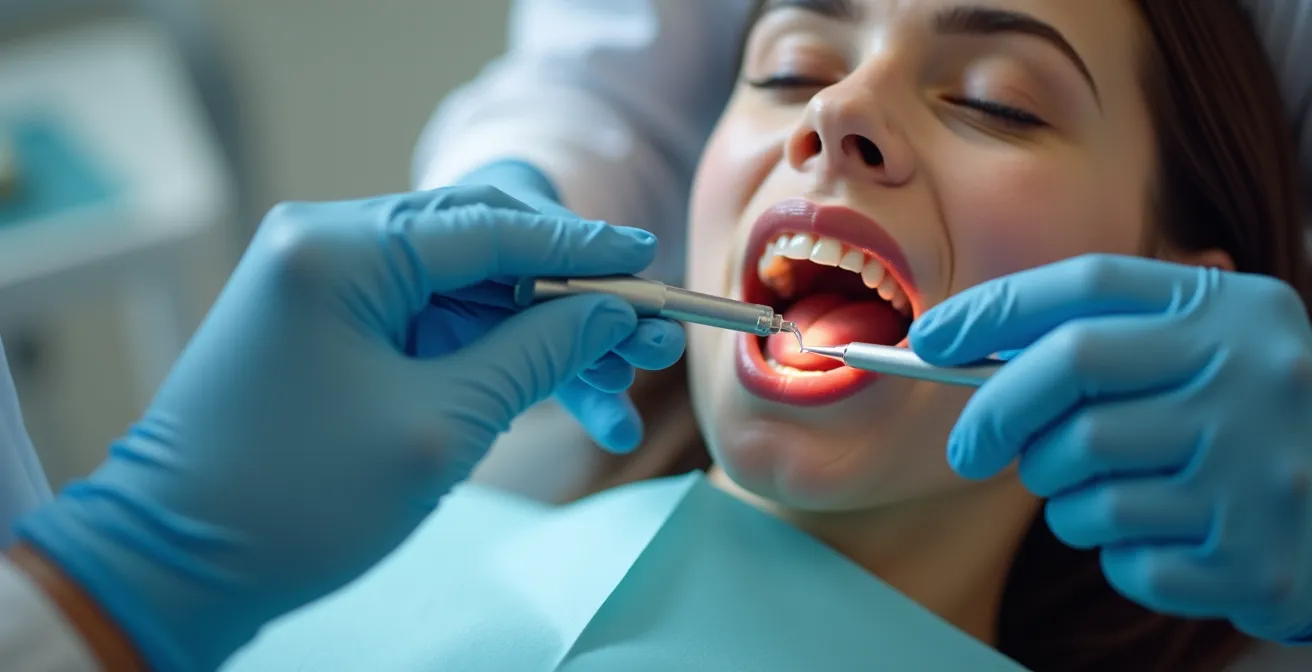
The critical difference between a Quebec Registered Dental Hygienist and a Dental Assistant is not their tasks, but their legal status: one is an autonomous, regulated health professional, while the other operates under direct delegation.
- A Registered Dental Hygienist is a member of a professional order (OHDQ), holds a 3-year diploma, and is legally accountable for their therapeutic and diagnostic actions.
- A Dental Assistant supports the dentist’s work and is not part of a professional order; legal responsibility for their actions falls to the supervising dentist.
Recommendation: As a patient, your safety and quality of care are directly linked to this regulatory framework. Always verify that your care is provided by licensed professionals within a clinic overseen by the Ordre des dentistes du Québec (ODQ).
When you settle into the chair at a Montreal dental clinic, you’re met by a team of professionals. The uniforms may be similar, the environment consistently clinical, but the roles, responsibilities, and legal accountabilities of the individuals caring for you are fundamentally different. Many patients understandably assume a simple division of labour: one person assists the dentist, and another cleans your teeth. This perception, however, overlooks the most critical distinction that exists for your protection as a patient in Quebec.
The difference between a Registered Dental Hygienist (R.D.H.) and a Dental Assistant is not merely a matter of task lists. It is a profound legal and professional distinction rooted in education, autonomy, and direct accountability. A hygienist is an independent, regulated healthcare provider with a specific therapeutic scope of practice, governed by their own professional order. An assistant, while a vital part of the dental team, performs tasks delegated by a dentist and functions under their direct supervision and liability. Understanding this framework is not a technicality; it is the key to appreciating the level of care you receive and the safety nets that protect you.
This article will clarify these distinct roles as defined under Quebec’s healthcare regulations. We will explore the rigorous training that sets hygienists apart, their crucial diagnostic function, the mechanisms that ensure patient safety, and how you can become an active partner in your own oral health by engaging effectively with your hygienist.
Summary: The Scope and Responsibility of Quebec’s Dental Professionals
- Why Quebec Hygienists Are Among the Most Trained in North America?
- How Your Hygienist Spots 80% of Issues Before the Dentist Enters the Room?
- Gentle Touch vs. Deep Clean: Which Hygienist Style Suits Your Anxiety Level?
- The Infection Risk of ‘Discount’ Teeth Cleaning Centers Without ODQ Oversight
- How to Extract Personalized Home Care Tips From Your Hygienist in 10 Minutes?
- How Does the Order of Dentists Protect You If a Treatment Goes Wrong?
- Why Brushing the Tops of Your Teeth Misses the Most Critical Zone?
- How to Extract Personalized Home Care Tips From Your Hygienist in 10 Minutes?
Why Quebec Hygienists Are Among the Most Trained in North America?
The title “Registered Dental Hygienist” in Quebec is not earned through a short-term course; it signifies the completion of a demanding and comprehensive educational and regulatory journey. The foundation of this expertise is a three-year, full-time CEGEP diploma program in dental hygiene. These programs, such as the one at John Abbott College, are accredited by the Commission on Dental Accreditation of Canada (CDAC), ensuring they meet a stringent national standard. The curriculum is heavily science-based, covering subjects like anatomy, microbiology, pharmacology, and oral pathology, providing a deep understanding of the human body and disease processes.
Upon graduation, obtaining the right to practice requires mandatory membership in the Ordre des hygiénistes dentaires du Québec (OHDQ). This professional order is not a club; it is a regulatory body with a legal mandate to protect the public. Membership ensures the hygienist is licensed, insured, and adheres to a strict code of ethics. This commitment to public safety is ongoing. To maintain their license, every hygienist in Quebec must complete 45 hours of continuing education every three years, a mandate that ensures their skills and knowledge remain current with the latest advancements in dental science and patient care. As noted by educators at John Abbott College’s renowned program, it is this high level of preparedness that makes Quebec graduates so sought after.
How Your Hygienist Spots 80% of Issues Before the Dentist Enters the Room?
Before the dentist even begins their examination, your hygienist performs a critical series of diagnostic assessments that form the basis for your treatment plan. This is far more than a simple “look-around”; it is a systematic data collection process. In leading Montreal clinics, hygienists act as the first line of defense, conducting a comprehensive examination that includes periodontal charting, assessing bleeding points, and analyzing gum tissue texture and colour. This is where their specialized training becomes evident.
Using a specialized instrument called a periodontal probe, your hygienist measures the depth of the small pocket between your tooth and gum, known as the sulcus. These measurements, recorded in your chart, are a key indicator of gum health. Healthy pockets are shallow, while deeper pockets can signal the presence of gum disease. They meticulously check for early signs of gum disease, enamel demineralization (the first stage of a cavity), and calculus (tartar) buildup that you cannot see or feel yourself. This detailed screening allows them to present an evidence-based summary to the dentist, focusing their attention on specific areas of concern.
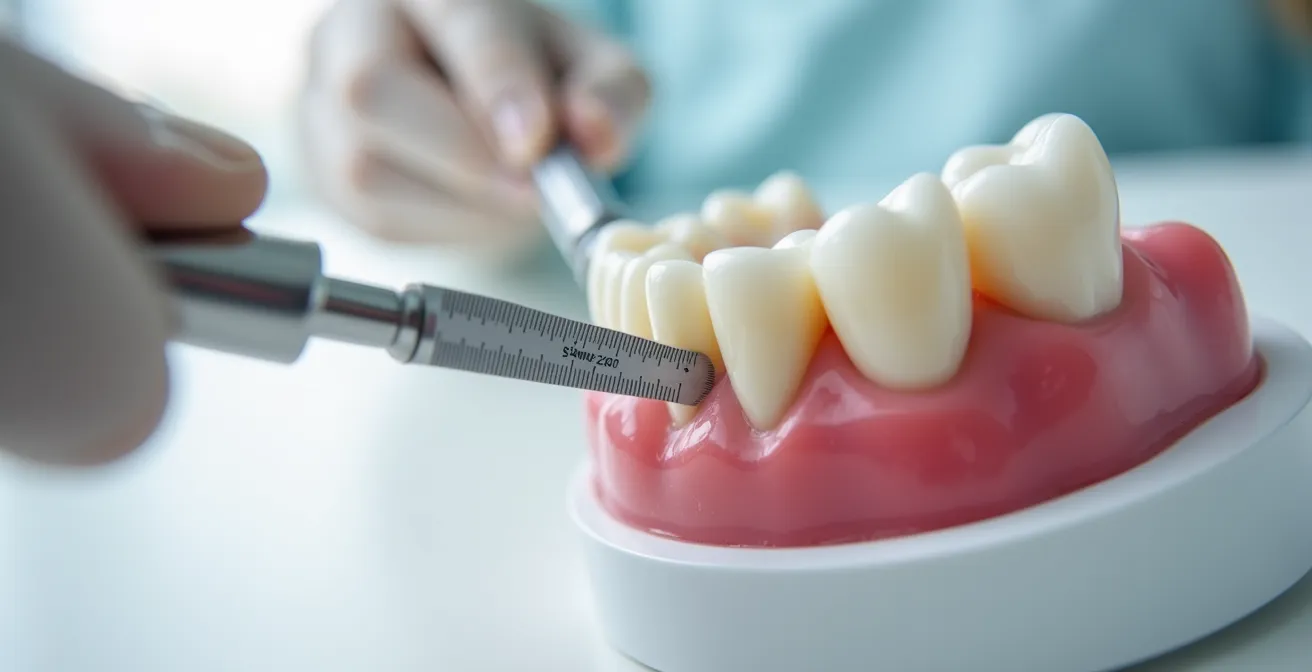
This process ensures that the dentist’s time is used most effectively and that subtle signs of potential problems are not missed. The hygienist’s role is not just to clean, but to assess, document, and identify risk factors, effectively spotting the vast majority of issues before the final diagnosis is confirmed.
Gentle Touch vs. Deep Clean: Which Hygienist Style Suits Your Anxiety Level?
For many patients, dental anxiety can be a significant barrier to care. Registered Dental Hygienists in Quebec are trained not only in clinical procedures but also in patient management techniques to ensure your comfort. A key strategy taught in CEGEP programs across the province is the “Tell-Show-Do” communication model. Your hygienist will first explain what they are going to do, then show you the instrument and how it works, and only then proceed with the action. This simple, respectful process demystifies the procedure and gives you a sense of control.
Furthermore, hygienists are adept at tailoring the cleaning to your specific needs and sensitivity. They have two main types of tools at their disposal: ultrasonic scalers and hand instruments. Ultrasonic scalers use high-frequency vibrations and a water spray to quickly and gently break down plaque and tartar, often being more comfortable for patients with generalized sensitivity. Hand instruments, on the other hand, allow for more precise, detailed work in specific areas. A skilled hygienist will often use a combination of both to achieve a thorough cleaning with minimal discomfort. While hygienists in Quebec cannot administer injectable local anesthesia, they are experts in using powerful topical anesthetic gels to numb the gums before a deep cleaning, a technique confirmed by Montreal-based resources like the Queen Elizabeth Health Complex dental services. Most importantly, you are always in control and can signal for a break at any time.
The Infection Risk of ‘Discount’ Teeth Cleaning Centers Without ODQ Oversight
In Quebec, your safety during any dental procedure is protected by a robust regulatory system. Every legitimate dental clinic operates under the license of a dentist who is a member of the Ordre des dentistes du Québec (ODQ). This oversight is not a formality; it ensures the entire facility, from its sterilization protocols to the professionals it employs, adheres to strict standards of practice and infection control. The ODQ’s role is to protect the public.
As the Ordre des dentistes du Québec states regarding its professional inspection program:
Through this program, the ODQ ensures that the dental care provided to the public complies with generally recognized standards of practice
– Ordre des dentistes du Québec, Regulation of Dentists
Services advertised at suspiciously low prices on platforms like Kijiji or Facebook Marketplace, often operating out of non-clinical locations, fall outside this protective umbrella. These “discount” services pose a significant risk of infection from improperly sterilized instruments and may be performed by individuals without the required training or license. Without ODQ oversight, there is no guarantee of competence, no accountability for errors, and no recourse if something goes wrong.
Checklist: How to Spot Unregulated Dental Services in Quebec
- Verify Licensing: Check for the visible posting of the dentist’s name and their ODQ license number within the facility.
- Assess Professionalism: Look for a professional clinic address on all advertisements and communications, not just a phone number or social media handle.
- Check Payment and Insurance: Be wary of cash-only payments with no official insurance receipts offered, as this is a common red flag.
- Confirm the Provider: Ensure descriptions of who performs the service are clear and mention a licensed dentist or hygienist by name.
- Evaluate Sterilization Measures: A legitimate clinic will be transparent about its sterilization protocols and infection control procedures. Ask about them.
How to Extract Personalized Home Care Tips From Your Hygienist in 10 Minutes?
Your dental hygiene appointment is more than just a cleaning; it’s a personalized coaching session for your oral health. To maximize its value, you need to move beyond general questions and ask for specific, actionable advice based on what your hygienist is observing in your mouth. They have just spent significant time meticulously examining every surface of your teeth and gums; this is your opportunity to tap into that fresh data.
Instead of just asking if you should floss more, get specific. A powerful question is, “Can you show me my periodontal chart and point out my one or two deepest pockets?” This turns an abstract concept into a tangible target. Follow up immediately with, “Could you watch my brushing or flossing technique on that exact spot and correct my form?” This real-time feedback is invaluable and far more effective than a generic demonstration on a plastic model. Challenge the status quo of your routine by asking, “Is my current toothbrush and toothpaste optimal for the conditions you’re seeing today, like staining or sensitivity?”
Finally, connect the clinical findings to your daily life in Montreal. You can ask, “What products do Quebec dental professionals recommend for lifestyle factors common here, like coffee staining or sensitivity from cold winters?” This transforms the conversation from a generic lecture into a collaborative strategy session, empowering you with a home care plan that is tailored precisely to your needs.
Key takeaways
- A Registered Dental Hygienist in Quebec is an autonomous, regulated healthcare professional with extensive, specialized training, not merely an assistant.
- The hygienist’s primary role is therapeutic and diagnostic, focusing on the prevention and treatment of oral disease by identifying issues before they become major problems.
- Patient safety in Quebec is ensured by a dual-protection system (OHDQ for hygienists, ODQ for dentists and clinics), a safeguard that is absent in unregulated services.
How Does the Order of Dentists Protect You If a Treatment Goes Wrong?
In Quebec, patient protection is built on a unique dual-system of professional oversight. Registered Dental Hygienists are accountable to the Ordre des hygiénistes dentaires du Québec (OHDQ), while dentists are accountable to the Ordre des dentistes du Québec (ODQ). If you have a concern about the professional conduct or quality of care provided by a hygienist, you can file a complaint directly with the OHDQ’s syndic (investigative office). If the concern is with a dentist, the process is the same but with the ODQ.
But what about dental assistants? Since they are not members of a professional order, they have no individual public accountability mechanism. This is where the system’s design is crucial for patient protection. A dental assistant works under the direct supervision and responsibility of a licensed dentist. Therefore, if an error is made by an assistant during a delegated task, the supervising dentist is held legally and professionally liable. Any complaint would be filed against the dentist through the ODQ’s syndic. This ensures that every act performed in a dental chair has a clear line of accountability back to a regulated professional.
The following table, based on information from official Quebec government resources, clarifies these lines of accountability:
| Professional | Regulatory Body | Complaint Process | Patient Protection |
|---|---|---|---|
| Dental Hygienist | OHDQ | Direct complaint to OHDQ syndic | License suspension/revocation possible |
| Dentist | ODQ | Direct complaint to ODQ syndic | Disciplinary council can impose sanctions |
| Dental Assistant | None (supervised by dentist) | Complaint filed against supervising dentist | Dentist held liable for delegated acts |
Why Brushing the Tops of Your Teeth Misses the Most Critical Zone?
Many people believe that a thorough brushing of the visible surfaces of their teeth is enough for good oral hygiene. While important, this focus misses the area where most dental diseases begin: the gingival sulcus. This is the tiny, v-shaped pocket of space between the surface of the tooth and the surrounding gum tissue. In a healthy mouth, it’s only 1 to 3 millimeters deep, but it’s a perfect, sheltered environment for harmful bacteria to thrive.
The sticky film of bacteria known as plaque constantly forms in this pocket. If not removed effectively, the minerals in your saliva cause it to harden into calculus (tartar), a rough deposit that cannot be removed by brushing or flossing at home. This calculus irritates the gums, causing inflammation (gingivitis), and allows even more plaque to accumulate, leading to deeper pockets and eventually periodontitis—the disease that destroys the bone supporting your teeth. The primary task of a dental hygienist is to perform periodontal therapy, which is centered on assessing and cleaning this critical, sub-gingival zone.
Using specialized instruments, your hygienist is able to reach deep into these pockets to remove the plaque and calculus that your toothbrush can’t. This is why a professional cleaning is not just about polishing stains, but is a therapeutic procedure essential for preventing and treating gum disease at its source.
How to Extract Personalized Home Care Tips From Your Hygienist in 10 Minutes?
Beyond the single appointment, the most significant value your hygienist provides is in building a long-term strategy for your oral health. To do this, you must think of them as a partner and data analyst, not just a service provider. The questions you ask should focus on trends, progress, and co-creating a plan for the months between your visits. This moves the conversation from a one-time cleaning to an ongoing health partnership.
Start by asking for a comparison. A powerful, forward-looking question is, “Based on my file, is my condition—like bleeding points or pocket depths—improving or declining since my last visit?” This prompts the hygienist to analyze your data over time and gives you a clear picture of whether your home care efforts are working. If a particular area isn’t improving, this is the perfect moment to establish a shared goal. You can say, “Let’s make it a goal to reduce the pocket depth in this specific area by the next visit. What is the single most important change I need to make to achieve that?”
This collaborative approach makes the advice more meaningful and you more accountable. It turns abstract advice like “floss more” into a concrete, measurable objective tailored to your unique oral landscape. By tracking progress together and setting specific goals, you transform your hygienist’s expertise into a personalized roadmap for lasting oral health.
Frequently Asked Questions About a Hygienist’s Role in Quebec
How do Montreal hygienists accommodate anxious patients?
Quebec hygienists are trained in the ‘Tell-Show-Do’ communication model to build trust. They use powerful topical anesthetics to numb the gums for comfort and always ensure the patient is in control, allowing them to signal for breaks at any time.
What’s the difference between ultrasonic and hand instruments?
Ultrasonic scalers use high-frequency vibrations and a water spray for a faster, often gentler cleaning that is well-suited for sensitive patients. Hand instruments offer precise control, allowing the hygienist to perform detailed work on specific areas of a tooth.
Can hygienists in Quebec administer local anesthesia?
No, Registered Dental Hygienists in Quebec are not permitted to administer local anesthesia via injection. However, they are experts in maximizing patient comfort through the application of effective topical anesthetics and advanced cleaning techniques.