The survival of a knocked-out tooth depends entirely on your actions within the first 60 minutes—it’s a cellular race against time.
- Immediately find the tooth, hold it by the crown (the white part), and gently rinse with milk or saline if dirty. Do NOT touch the root.
- Transport the tooth in a small container of milk, saline solution, or tucked inside your cheek. Never let it dry out.
Recommendation: Call a Montreal emergency dental clinic, like Alpha Dental at (514) 934-0404, while you are en route. Your immediate actions as a first responder are more critical than anything else.
The sudden, sharp impact of a hockey puck, an errant ball, or a fall from a bike is followed by a moment of shocked silence. Then, the grim realization: a gap exists where a permanent tooth used to be. Panic sets in. You know you need to find the tooth and get to a dentist, but what happens in that chaotic interval is the single most important factor in whether that tooth can be saved. Most people have heard vague advice about using milk, but few understand the real stakes.
This is not just a dental problem; it’s a biological crisis playing out in real-time. The success of reimplanting an avulsed (knocked-out) tooth is a cellular race against time. The delicate cells on the tooth’s root—the periodontal ligament—begin to die the moment they are exposed to air. This guide moves beyond generic advice to provide an urgent, focused first responder protocol for any player or parent facing this situation in Montreal. We will detail the science behind the “golden hour,” the correct way to handle and transport the tooth using resources available at any local arena or pharmacy, and what to expect from the emergency dental process.
This article will walk you through the critical steps that determine the fate of a knocked-out tooth. From the biological imperative of the first 60 minutes to the long-term options for repair and prevention, you will gain the knowledge needed to act decisively and effectively in a high-stress emergency.
Summary: Your Emergency Guide to a Knocked-Out Tooth in Montreal
- Why the First 60 Minutes Determine If You Keep Your Knocked-Out Tooth?
- How to Transport a Dislodged Tooth Without Killing the Root Cells?
- Bonding or Crown: Which Repair Holds Up Best for Active Athletes?
- The “Dead Tooth” Risk: Signs of Nerve Death Months After an Impact
- How a Custom Mouthguard Costs Less Than Replacing a Single Incisor?
- When Should You Insist on Seeing an Endodontist Instead of a General Dentist?
- Are Dental Implants a Safe Option for Seniors Over 70 in Montreal?
- Why the First 60 Minutes Determine If You Keep Your Knocked-Out Tooth?
Why the First 60 Minutes Determine If You Keep Your Knocked-Out Tooth?
When a permanent tooth is knocked out, a biological clock starts ticking with furious speed. The outcome of this emergency is almost entirely decided within the first 60 minutes, often called the “golden hour.” This isn’t an arbitrary deadline; it’s based on the lifespan of the highly specialized cells on the surface of the tooth’s root. These periodontal ligament (PDL) cells are responsible for reattaching the tooth to the jawbone. Once they dry out and die, the chance of successful, long-term reimplantation plummets.
Think of it as a life support system. As soon as the tooth is avulsed, its blood supply is severed, and the PDL cells are cut off from their source of nutrients and hydration. Exposed to the air, they begin to die rapidly. After 30 minutes, a significant portion of these cells are no longer viable. After 60 minutes, the damage is often irreversible. A tooth reimplanted with dead PDL cells may initially seem stable, but the body will eventually see it as a foreign object, leading to root resorption, where the root is eaten away, and the tooth is ultimately lost.
Your role as a first responder is to preserve the root viability. Every action you take—from how you pick up the tooth to the medium you store it in—is about keeping those crucial PDL cells alive until you can get to an emergency dentist in Montreal. This is why following a strict protocol is not just a suggestion; it’s the only way to win this cellular race. According to Montreal emergency dental clinics, immediate and correct action by the patient or parent is the number one predictor of saving the tooth. Therefore, your first call should be to an emergency service to let them know you are on your way.
How to Transport a Dislodged Tooth Without Killing the Root Cells?
Once you locate the knocked-out tooth, how you handle and transport it is the next critical step in preserving root viability. The primary goal is to keep the tooth moist in a solution that is biocompatible with the delicate root cells. Your choice of transport medium can make the difference between success and failure. Here is a practical guide based on what’s typically available in a Montreal sports or recreational setting.
First and foremost, never touch the root of the tooth. Handle it only by the crown (the white, chewing surface). If it’s dirty, gently rinse it for a few seconds with milk or a saline solution. Do not scrub it, and absolutely do not use tap water. The chlorine and different osmotic pressure in tap water can instantly kill the remaining periodontal ligament cells. The ideal transport solutions are, in order of preference:
- A Save-A-Tooth kit: While ideal, these are rarely on hand.
- Milk: This is your best and most accessible option. Its pH and osmolarity are compatible with the root cells. Grab a small carton from any arena canteen or corner dépanneur.
- Saline Solution: Contact lens solution is sterile saline and works well. Someone in your group might have some, or you can quickly buy it at a nearby Jean Coutu or Pharmaprix.
- Your own saliva: As a last resort, place the tooth inside your cheek, between your gums and cheek. Be very careful not to swallow it. This is better than letting it dry out. Do not use another person’s saliva.
The illustration below shows the simple, effective method of using milk for emergency preservation.

As the image demonstrates, a small, clean container with milk provides the perfect temporary environment to protect the tooth on your way to the emergency clinic. A guide for Montreal emergencies emphasizes that sugary sports drinks or plain water should be strictly avoided as they will actively damage the root cells you are trying so hard to save.
Bonding or Crown: Which Repair Holds Up Best for Active Athletes?
If a tooth is successfully reimplanted, the journey isn’t over. The tooth may have sustained chips or fractures during the impact, or it may require future restoration. For an active athlete in Montreal, choosing a repair that can withstand the rigors of sports is crucial. The two most common options for repairing a damaged front tooth are dental bonding and a full crown. Each has distinct advantages in terms of cost, durability, and suitability for an athletic lifestyle.
Dental bonding is a procedure where a tooth-coloured composite resin is applied and sculpted directly onto the tooth. It’s less invasive, typically completed in one visit, and more affordable. However, its durability is a concern for athletes. Bonding is more susceptible to chipping or staining and generally lasts 3 to 7 years before needing a touch-up or replacement. For a minor chip on a tooth not subject to heavy impact, it can be an excellent solution. For a hockey player, it might not be the most robust long-term choice.
A dental crown, on the other hand, is a cap that covers the entire tooth. It offers superior strength and protection. While more expensive and requiring at least two dental visits, its longevity is a significant advantage, often lasting 15 years or more. As a Quebec dental materials specialist from the Association des chirurgiens dentistes du Québec notes, “For a Montreal athlete who plans to keep playing, a monolithic zirconia crown offers superior fracture resistance to a puck or elbow compared to traditional porcelain-fused-to-metal.” This makes it the preferred option for restoring a tooth that has been traumatized and needs maximum protection.
The following table breaks down the key differences for a patient in Montreal.
| Treatment Option | Cost Range in Montreal | Durability for Athletes | Insurance Coverage |
|---|---|---|---|
| Dental Bonding | $200-$600 per tooth | 3-7 years with contact sports | Often covered as basic restoration |
| Zirconia Crown | $1,500-$2,500 per tooth | 15+ years, superior fracture resistance | Major restorative with co-pay |
| Porcelain Crown | $1,200-$2,000 per tooth | 10-15 years, moderate impact resistance | Major restorative coverage |
While bonding is a quicker fix, data suggests that for a Montreal athlete, investing in a high-strength zirconia crown is a more resilient and cost-effective decision in the long run.
The “Dead Tooth” Risk: Signs of Nerve Death Months After an Impact
Even if a knocked-out tooth is reimplanted successfully, the trauma can cause delayed complications. The most significant of these is pulp necrosis, or the death of the tooth’s nerve. The impact can sever the delicate blood vessels and nerves entering the tip of the root, causing the inner pulp tissue to die over weeks or months. A “dead tooth” is a serious issue that can lead to infection, abscess, and ultimately, the loss of the tooth if not treated.
The initial signs can be subtle. The most common symptom is a gradual darkening of the tooth, as it turns greyish or bluish. Other signs include pain when chewing, sensitivity to heat, or a pimple-like bump (a fistula) on the gum near the tooth’s root. However, sometimes a tooth can die without any pain at all. This is why a strict follow-up schedule with your dentist is non-negotiable after any dental trauma. Regular monitoring with X-rays and sensitivity tests is essential to catch nerve death early.
If the nerve is dying or dead, a root canal treatment becomes necessary. This procedure involves removing the dead pulp tissue, cleaning the inside of the tooth, and sealing it to prevent infection. In cases of reimplantation, an endodontist may proactively start this process. In fact, research indicates that root canal therapy beginning 7-10 days after reimplantation significantly increases the long-term success rate by preventing infection-related root resorption. Ignoring the signs of a dead tooth will inevitably lead to a painful abscess and the failure of the reimplantation.
Your Post-Trauma Tooth Viability Checklist
- Initial Triage: Confirm the tooth is a permanent adult tooth. Locate it without touching the root. Call an emergency Montreal clinic like Alpha Dental at (514) 934-0404.
- Preservation Protocol: Inventory your immediate options for transport—milk from an arena canteen, your own saliva, or a saline solution from a nearby Pharmaprix.
- Biological Coherence: Is the tooth being kept consistently moist and clean? Avoid tap water and sugary drinks at all costs as they damage the living root cells.
- Patient Assessment: Check the injured person for signs of shock or other head injuries. Is bleeding controlled? This determines if you head to a dental clinic or a hospital ER first.
- Action Plan: Prioritize getting to the clinic within the 60-minute golden hour. Account for Montreal traffic. If delayed, don’t give up, but inform the clinic of the extended time.
How a Custom Mouthguard Costs Less Than Replacing a Single Incisor?
After the stress and expense of saving a traumatized tooth, the conversation naturally turns to prevention. For anyone playing sports in Montreal—from amateur hockey leagues to weekend cycling—the single most effective piece of protective equipment for your smile is a custom-fitted mouthguard. While many opt for cheap, over-the-counter “boil-and-bite” mouthguards, they offer minimal protection and can even be a choking hazard. A custom mouthguard, made by a dentist from a precise impression of your teeth, is an investment in prevention that pales in comparison to the cost of replacing a lost tooth.
The cost of a single dental implant in Montreal is a sobering figure. As an analysis of local costs shows, the price can easily be in the range of $4,000 to $8,000 CAD per tooth once the implant, abutment, and crown are all accounted for. This doesn’t include potential additional costs for bone grafting if the jaw was damaged during the injury. A dental bridge, another replacement option, can cost thousands and requires grinding down two perfectly healthy adjacent teeth for support.
Now, compare that to the cost of a custom mouthguard. While prices vary, they typically range from $300 to $500 in Montreal. This investment, which often lasts for several seasons, provides a precise, comfortable fit that absorbs and distributes the force of an impact, drastically reducing the risk of tooth fracture or avulsion. For students, dental faculties at Université de Montréal and McGill University often offer them at a reduced cost.
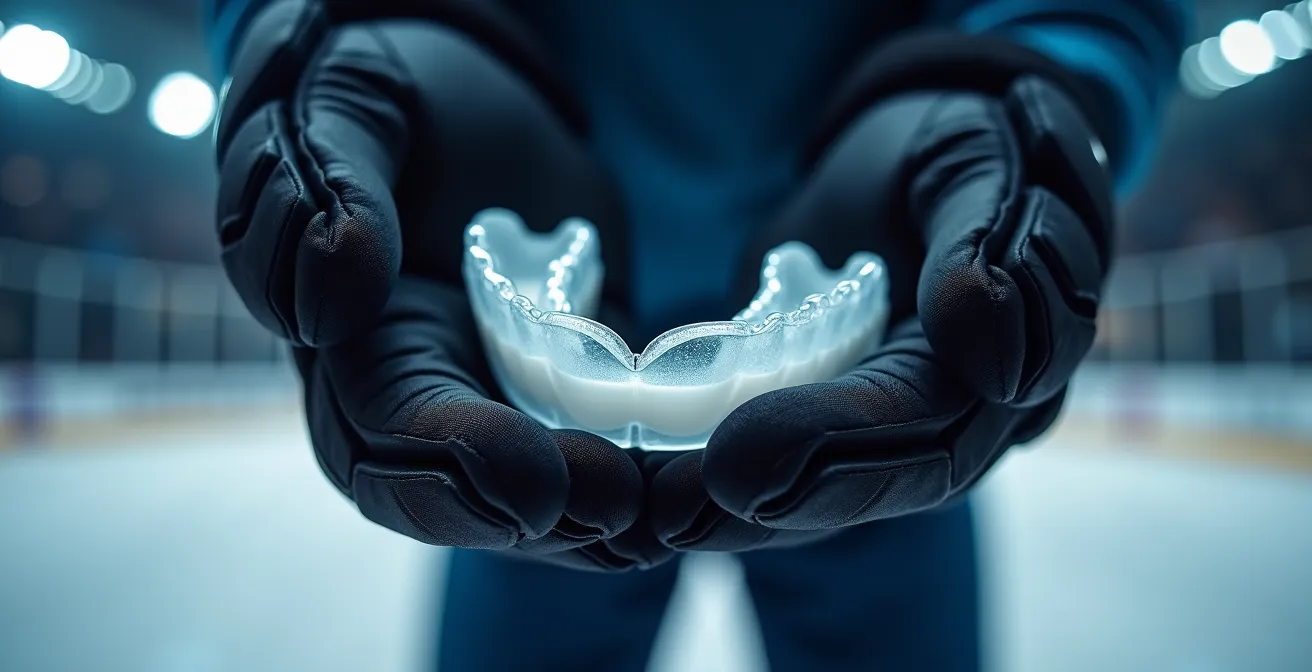
When you look at the numbers, the choice is clear. The one-time cost of a custom mouthguard is a tiny fraction of the financial—and emotional—cost of reacting to a dental emergency. It’s the difference between a minor inconvenience and a major, multi-stage surgical and restorative process.
When Should You Insist on Seeing an Endodontist Instead of a General Dentist?
While your general dentist is the primary point of contact for a dental emergency, certain complex trauma cases require the specialized expertise of an endodontist. Endodontists are dentists who have completed additional years of training focused on diagnosing tooth pain and performing root canal treatment and other procedures relating to the interior of the tooth (the pulp). In a trauma situation, their advanced knowledge and specialized equipment can be the key to saving a tooth that might otherwise be lost.
You should insist on a consultation with an endodontist in Montreal if you encounter any of the following red flags. First, if the tooth has been out of the mouth for an extended period, or if the root appears damaged, an endodontist is better equipped to manage the complex healing process. Second, if a reimplanted tooth becomes loose again after the initial splinting period, it may signal underlying issues with the root or bone that require a specialist’s diagnosis. Third, an endodontist should always be involved when the trauma is complex, involving multiple broken or knocked-out teeth, or a concurrent jaw fracture.
Perhaps most importantly, an endodontist is the definitive expert for performing the necessary root canal treatment following reimplantation. They use advanced techniques, including operating microscopes, to thoroughly clean and seal the root canal system, which is critical for preventing the types of infection that lead to root resorption. While a referral isn’t always legally required in Quebec, the Ordre des endodontistes du Québec advises that “While you don’t always need a formal referral to see an endodontist in Quebec, your general dentist’s report is crucial for your insurance claim.” Having your general dentist and an endodontist work as a team provides the highest standard of care for a severely traumatized tooth.
Are Dental Implants a Safe Option for Seniors Over 70 in Montreal?
While this guide focuses on sports injuries, the question of long-term tooth replacement is relevant to all age groups, including active seniors. A senior who loses a tooth—whether from a fall, a curling mishap, or other age-related issues—may wonder if dental implants are a viable option. The answer is overwhelmingly yes. Age itself is not a contraindication for dental implants. The deciding factors are the patient’s overall health and the quality of their jawbone, not their date of birth.
An ideal candidate for dental implants is any person in good general health. For a 75-year-old who plays tennis at IGA Stadium or curls in the West Island, their fitness level is far more important than their chronological age. The key considerations for a dentist or surgeon in Montreal will be whether there is sufficient bone density in the jaw to support the implant and managing any existing medical conditions. Uncontrolled diabetes or a history of radiation therapy to the jaw can affect healing, and medications like blood thinners must be carefully managed around the surgical procedure. However, for a healthy senior, implants offer a stable, comfortable, and long-lasting solution that is far superior to removable dentures.

The cost of dental implants is a significant consideration, but they represent a long-term investment in quality of life. In Montreal, the starting price of a single dental implant can be around $1,600, with the total cost including the crown often reaching several thousand dollars. Many seniors find this to be a worthwhile expense for the ability to eat, speak, and smile with confidence, free from the worries of loose dentures. Modern techniques and materials make the procedure safe and predictable, offering a renewed sense of normalcy and well-being.
Key Takeaways
- The “Golden Hour”: The first 60 minutes after a tooth is knocked out are absolutely critical for the survival of the root cells that enable reattachment.
- Proper Transport is Non-Negotiable: Use milk, saline solution, or the patient’s own saliva. NEVER use tap water and never let the tooth dry out.
- Prevention is Cheaper: A custom-fitted mouthguard made by a Montreal dentist costs a fraction of the thousands of dollars required for a single dental implant.
Why the First 60 Minutes Determine If You Keep Your Knocked-Out Tooth?
We’ve covered the science, the logistics, and the long-term consequences, but the entire outcome of this dental emergency hinges on one single, powerful concept: the 60-minute window. Let’s revisit this critical rule not as a piece of advice, but as your final action plan. Every second that a knocked-out tooth is dry, its chances of survival diminish. The cellular race is real, and you are the first and most important responder.
Your mindset must shift from “I need to get to a dentist” to “I need to preserve this living organ until a dentist can reimplant it.” This means acting with urgency and precision. It means knowing to grab milk from the arena canteen instead of a sports drink. It means knowing to call the emergency clinic while you’re in the car, factoring in Montreal traffic, to give them a head start. It means understanding that your calm, informed actions in these initial moments are the most powerful treatment you can provide.
The entire process, from impact to repair, is a chain of events. But the very first link—your response within the golden hour—is by far the strongest determinant of success. By internalizing this principle, you give yourself or your child the absolute best chance of saving a smile.
For any dental trauma in the Montreal area, do not hesitate. Following these steps and seeking immediate professional care is your best course of action. Contact an emergency dental clinic to ensure the highest chance of saving the tooth.