
If you’re meticulously brushing and flossing but still leaving dental check-ups with bad news, the problem isn’t your discipline—it’s your oral environment. The real culprits are often hidden factors like the frequency of your snacking, medication side effects creating dry mouth, and systemic vulnerabilities like Montreal’s non-fluoridated water. This guide moves beyond basic advice to investigate these root causes and give you the strategies to build a truly resilient defense against decay.
It’s a deeply frustrating experience. You brush twice a day, you floss diligently, you avoid obvious sweets, yet your dentist keeps finding new cavities. You start to wonder, “What am I doing wrong? Are my teeth just ‘soft’?” For many conscientious adults in Montreal, this cycle of decay despite best efforts can feel like a losing battle. The common advice—brush more, floss better, eat less sugar—starts to sound hollow when you’re already doing all of it.
The truth is, for those already practicing good oral hygiene, the key to stopping cavities rarely lies in simply improving technique. The focus must shift from the actions of brushing and flossing to the environment your teeth exist in for the other 23.5 hours of the day. This environment is under constant assault from hidden enemies: the biochemical process of frequent snacking, the saliva-reducing effects of common medications, and the lack of systemic protection in our local water supply.
But what if the narrative of “bad teeth” is a myth? What if understanding the science behind these hidden factors could empower you to finally break the cycle? This isn’t about blaming you for failing; it’s about equipping you with the right intelligence to fight back effectively. We’re moving beyond the platitudes to uncover the real cariology—the science of cavities—at play in your mouth.
This guide will investigate the unseen forces that contribute to tooth decay. We will explore why snacking frequency is more destructive than sugar quantity, how we detect damage you can’t see, and whether a cavity can truly be healed. We will also tackle the controversial “soft teeth” debate and provide you with actionable, Montreal-specific strategies to fortify your oral health for good.
In this detailed investigation, we will break down the complex factors contributing to tooth decay. The following sections offer a comprehensive look at everything from daily habits to the tools your dentist uses, providing you with the knowledge to take control of your oral health.
Summary: The Real Reasons for Persistent Cavities and How to Beat Them
- How Snacking Frequently throughout the Day Destroys Your Enamel?
- Why X-Rays Find Cavities That Your Dentist Can’t See directly?
- Can You Actually Heal a Small Cavity Without a Filling?
- How Medication Side Effects Are Rotting Your Teeth?
- Are “Soft Teeth” Real or Just an Excuse for Bad Habits?
- Can You Heal a Cavity at Home Before It Needs a Filling?
- Why Do 90% of Adult Cavities Start Between the Teeth?
- How Snacking Frequently throughout the Day Destroys Your Enamel?
How Snacking Frequently throughout the Day Destroys Your Enamel?
As a cariologist, the first question I ask a patient with recurring cavities is not “what do you eat?” but “how often do you eat?” The most destructive force against tooth enamel isn’t the amount of sugar you consume in one sitting, but the frequency of “acid attacks” throughout the day. Every time you eat or drink anything other than plain water, the bacteria in your mouth metabolize the carbohydrates and produce acid. This causes the pH in your mouth to drop, initiating a process called demineralization, where minerals are literally pulled out of your enamel.
Your body’s natural defense is saliva, which works to neutralize the acid and remineralize the tooth surface. However, this recovery process takes 20-30 minutes. If you have a coffee at 9 a.m., a handful of crackers at 11 a.m., and sip on a soda through the afternoon, your teeth never get the chance to recover. They exist in a near-constant state of acid attack. This is especially critical in Montreal, where the lack of water fluoridation means we don’t have that extra layer of systemic defense strengthening our enamel from the inside out. In fact, while fluoridation has ceased, analysis shows only 1% of drinking water produced at Montreal plants is consumed by humans, highlighting how targeted fluoride applications are now more important than ever.
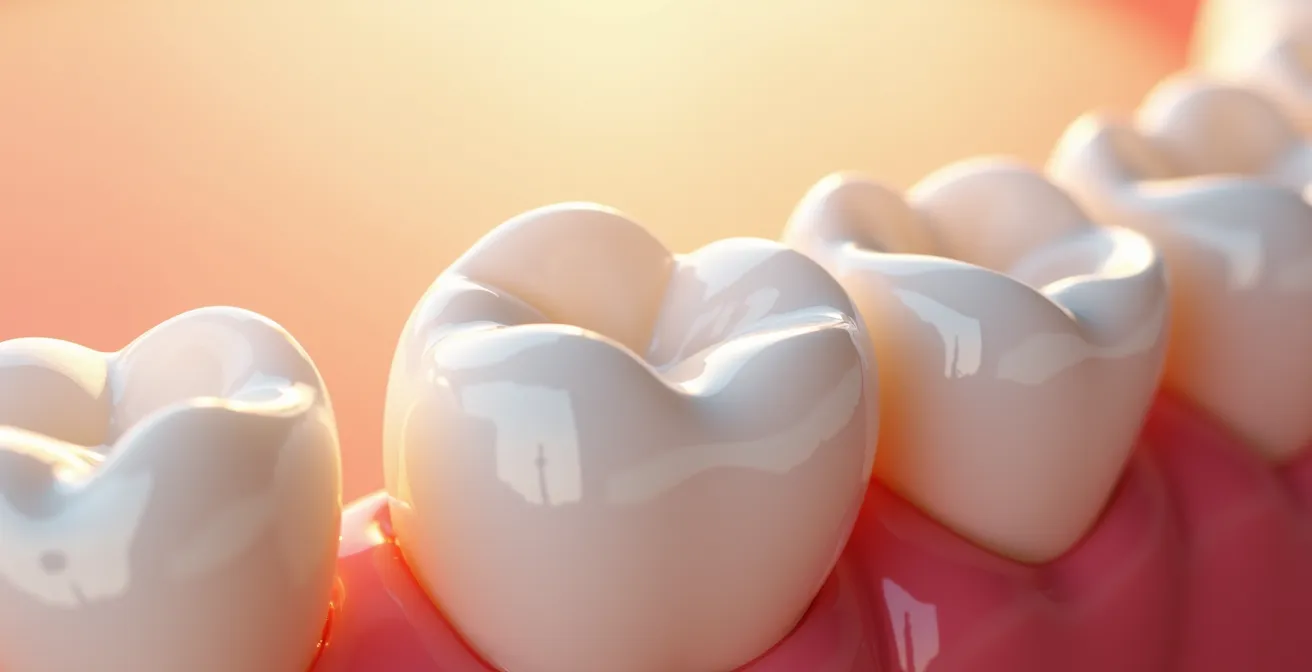
This microscopic view of enamel shows the crystalline structure that is vulnerable to these acid attacks. Constant exposure doesn’t give the surface a chance to rebuild, leading to weak spots that eventually become cavities. The key to prevention is not eliminating all treats, but consolidating them into mealtimes to give your saliva a fighting chance to do its job.
Your Action Plan: Smart Snacking in a Fluoride-Free City
- Consolidate Snacks: Instead of grazing, limit eating to specific meal times when saliva production is naturally at its peak. This gives your enamel hours of recovery time.
- Choose Smarter Options: If you must snack, replace sticky, sugary items with tooth-friendly foods. Cheese or yogurt from local Quebec dairies can actually help strengthen teeth.
- Rinse Immediately: After consuming acidic or sugary items like Tim Hortons coffee or post-work 5-à-7 drinks, rinse your mouth vigorously with plain water to help neutralize acids quickly.
- Leverage Xylitol: Chew sugar-free xylitol gum (widely available at Jean Coutu or Pharmaprix) after meals. Xylitol inhibits acid-producing bacteria, actively protecting your teeth.
- End the “Sip All Day” Habit: The mantra “sip all day, get decay” is true. Switch to plain water for hydration between meals to keep your oral environment neutral.
Why X-Rays Find Cavities That Your Dentist Can’t See directly?
It can be disconcerting to be told you have a cavity when you can’t see or feel a thing. This is precisely why dental X-rays (radiographs) are a non-negotiable diagnostic tool. Many of the most common cavities, especially in adults, start in the “interproximal” spaces—the tight contact areas between your teeth. These surfaces are impossible to inspect visually. A dental explorer can’t reach them, and by the time a cavity in this area is visible to the naked eye, it’s often very large and may require more extensive treatment like a root canal or crown.
Bitewing X-rays act as your dentist’s “x-ray vision,” allowing us to see through the enamel and into the underlying dentin. Decay appears as a darker, less dense spot on the radiograph, revealing a problem long before it creates a physical hole or causes sensitivity. This ability to detect decay in its earliest stages is the cornerstone of minimally invasive dentistry. An early interproximal lesion found on an X-ray might be reversible with intensive home care, whereas one left to grow will inevitably require a filling.
Modern digital X-rays, common in most Montreal clinics, use significantly less radiation—up to 90% less than old film-based systems—making them exceptionally safe. For complex cases, advanced tools like Cone Beam CT (CBCT) scans can provide a 3D view, essential for planning implants or assessing bone loss.
Case Study: The High Cost of Skipping X-Rays in Quebec
In Montreal, adult dental care, including X-rays, is not covered by the public RAMQ plan. While the new Canadian Dental Care Plan (CDCP) offers some relief, it creates a complex decision for patients. As the CDCP reimburses based on income, with 100% coverage for adjusted family net incomes under $70,000 and partial coverage up to $89,999, many middle-income families face significant out-of-pocket costs. The temptation to decline routine X-rays to save money is high, but it’s a dangerous gamble. In a city with non-fluoridated water, skipping this vital diagnostic step means small, reversible problems are allowed to grow into large, expensive, and painful ones, ultimately costing far more in the long run.
Can You Actually Heal a Small Cavity Without a Filling?
This is one of the most empowering concepts in modern dentistry: yes, you absolutely can heal a cavity in its earliest stage. A cavity isn’t a “hole” from the start. It begins as a microscopic weakening of the enamel called an “incipient lesion” or “demineralization.” At this stage, no drilling is needed. The battle between demineralization (losing minerals) and remineralization (gaining them back) is ongoing, and you have the power to tip the scales in favor of healing.
The key ingredient in this healing process is fluoride. When present in your mouth, fluoride incorporates into the enamel structure, creating a new, more acid-resistant surface called fluorapatite. It actively promotes the redepositing of calcium and phosphate ions that were lost during an acid attack. Research is unequivocal on this point; studies confirm that fluoride can reverse or stop early tooth decay. This is why finding these spots early on an X-ray is so critical—it gives you a window of opportunity to intervene non-invasively.
To win this battle, you need to arm yourself with the right tools. This involves both reducing the acid attacks (as discussed in the snacking section) and actively supplying your teeth with the minerals they need to rebuild. For a high-risk individual in Montreal, a standard over-the-counter toothpaste may not be enough. Your dentist can prescribe high-concentration fluoride products that provide a therapeutic dose to supercharge the remineralization process. Products containing other biominerals, like Calcium Phosphate (CPP-ACP) found in MI Paste, can also provide the raw building blocks for repair.
How Medication Side Effects Are Rotting Your Teeth?
You may be overlooking a major culprit in your battle against cavities: your medicine cabinet. Hundreds of common medications, including those for allergies (antihistamines), depression (antidepressants), high blood pressure, and anxiety, have a very significant side effect: xerostomia, or dry mouth. This isn’t just a minor discomfort; it’s the systematic disabling of your mouth’s most critical defense mechanism.
Saliva is a biological marvel. It doesn’t just moisten your mouth; it contains enzymes that begin digestion, proteins that lubricate tissues, and, most importantly, bicarbonate that acts as a powerful buffer to neutralize acids after you eat. It is constantly washing away food particles and fighting bacteria. When its flow is reduced, you lose this natural security system. The pH in your mouth stays acidic for much longer after meals, the demineralization process accelerates, and your risk for aggressive, fast-spreading decay skyrockets, particularly at the gum line.
If you’re on any long-term medication, it’s crucial to discuss the potential for dry mouth with your dentist and physician. You can’t simply stop your prescribed medication, but you must actively manage this side effect. This involves staying extremely well-hydrated, using products designed to stimulate saliva or act as a saliva substitute, and being even more vigilant about your diet. The combination of medication-induced dry mouth and frequent snacking is a perfect storm for rampant tooth decay.
The xylitol in X-PUR Gums & Pastilles and XyliMelts is the only one indicated by Health Canada to stimulate salivation, making it a high quality medicinal grade xylitol.
– Oral Science Canada, Oral Science Professional Resources
To combat this, focus on stimulating your natural saliva flow. Sucking on sugar-free candies or lozenges containing xylitol is highly effective. You can find a range of dry mouth relief products at Montreal pharmacies like Jean Coutu or Pharmaprix, including Biotene rinses, GUM Hydral sprays, and X-PUR lozenges. For severe cases, your dentist or doctor can prescribe medication like pilocarpine to increase saliva production.
Are “Soft Teeth” Real or Just an Excuse for Bad Habits?
The idea of having “soft teeth” that are inherently prone to decay is a common belief among frustrated patients. It’s a comforting explanation because it shifts the blame to something outside of one’s control. While there are rare genetic conditions like Amelogenesis Imperfecta that cause defective enamel, for over 99% of the population, the concept of “soft teeth” is largely a myth. The chemical composition and hardness of enamel are remarkably consistent across the human population.
So, why do cavities seem to run in families? It’s not usually the teeth themselves that are inherited, but a combination of environmental and behavioral factors. These can include:
- Shared Habits: Families often share dietary habits, including snacking patterns and preferences for sugary drinks.
- Microbiome Transmission: The specific strains of cavity-causing bacteria in your mouth are often passed from parents to children at a young age.
- Saliva Characteristics: You can inherit saliva that is less effective at buffering acid or has a lower flow rate, which is a genuine biological risk factor.
Your family medical history may play a role in how often you develop new cavities… While there’s not much anyone can do to reverse your genetics, it will give your dentist a better idea of how you should approach dental care.
– Fioritto Dental
Rather than “soft teeth,” it’s more accurate to talk about a higher systemic vulnerability. This is where living in Montreal becomes a critical factor. With the city’s water no longer being fluoridated, we’ve lost a key public health tool that helps overcome minor genetic disadvantages or suboptimal habits. This is a stark contrast to other areas, as only about 40% of Canadians have access to fluoridated water, making localized prevention strategies all the more important. Blaming genetics can lead to a sense of helplessness. The truth is more empowering: by controlling your oral environment—your diet, your hygiene, and your use of protective products like fluoride and xylitol—you can overcome almost any perceived genetic predisposition.
Can You Heal a Cavity at Home Before It Needs a Filling?
Building on the concept of remineralization, the answer is a definitive yes—provided you intervene early and aggressively. Healing an incipient lesion at home requires a multi-pronged strategy that transforms your mouth from a hostile, acid-prone environment into a therapeutic, healing one. This is not passive; it requires a conscious fortification of your daily routine. Think of it as a three-step home care protocol designed specifically for the high-risk environment of a city like Montreal.
First, you must neutralize your diet’s impact. This goes beyond just avoiding candy. It means being strategic about acidic and high-carbohydrate items. Enjoy your Quebec craft beers, ciders, and maple-sweetened treats, but relegate them to mealtimes only. This simple act of timing dramatically reduces the total duration of acid attacks on your enamel, giving it a chance to recover.
Second, you must upgrade your therapeutic toolkit. A standard fluoride toothpaste is good for prevention, but for active repair, you need higher concentrations. Ask your dentist for a prescription for a 5,000 ppm fluoride toothpaste like PreviDent 5000. Alternatively, a product like X-PUR CariØ, which combines fluoride with a high concentration (25%) of xylitol, offers a powerful dual-action approach. This specific formulation has shown remarkable results, with studies from a McGill University professor demonstrating 80% fewer cavitated lesions compared to a standard high-fluoride toothpaste. This is active dental therapy you can do at home.
Finally, saturate your environment with xylitol. Aim for a total intake of 6-10 grams per day, spread across multiple exposures. This is best achieved by chewing xylitol gum or using lozenges after every meal and snack. Xylitol not only stimulates protective saliva but also actively inhibits the growth of the most harmful cavity-causing bacteria, *Streptococcus mutans*. It’s a simple habit with a profound biochemical impact on your oral ecosystem.
Why Do 90% of Adult Cavities Start Between the Teeth?
The statistic is staggering but true: the vast majority of cavities in adults begin in the interproximal spaces. The reason is simple and mechanical. Your toothbrush bristles, no matter how advanced, cannot clean the tight contact points where two teeth touch. This area becomes a “plaque trap”—a sheltered, undisturbed zone where bacteria can thrive, form a sticky biofilm, and produce acid 24/7. Flossing and other forms of interdental cleaning are not optional extras; they are the only way to disrupt this biofilm in the most vulnerable area of your mouth.
Forgetting to floss is like brushing only 65% of your tooth surfaces. The plaque that remains between the teeth hardens over time into tartar (calculus), which can only be removed by a professional. This hardened deposit further irritates the gums and provides an even larger surface area for new, acidic plaque to accumulate. It creates a vicious cycle of inflammation and demineralization that inevitably leads to a cavity if left unchecked.
Choosing the right tool for the job is essential, as “one size fits all” does not apply to interdental cleaning. The best tool for you depends on the spacing of your teeth, your gum health, and your dexterity. Traditional floss is the gold standard for very tight contacts, but for those with wider gaps, braces, or bridges, other tools are far more effective. The goal is mechanical disruption of the plaque—if you’re not achieving that, you need a different tool.
This table outlines some of the most effective interdental cleaning tools available in Montreal, helping you choose the right one for your specific needs.
| Tool | Best For | Where to Buy | Price Range (CAD) | Effectiveness |
|---|---|---|---|---|
| Waterpik | Bridges, braces, wide gaps | Pharmaprix, Costco | $60-120 | Removes 99% plaque from treated areas |
| GUM Soft-Picks | Sensitive gums, beginners | Jean Coutu, Walmart | $5-10 | Gentle but effective for tight spaces |
| Sunstar GUM Brushes | Moderate to wide gaps | Most pharmacies | $8-15 | Superior to floss for larger spaces |
| Traditional Floss | Very tight contacts | Any pharmacy | $3-8 | Gold standard for tight teeth |
Key Takeaways
- Your oral health is an ecosystem; it’s not just about brushing. Cavities are often a symptom of an imbalanced environment.
- Frequency of eating, not quantity of sugar, is the primary driver of acid attacks that weaken enamel.
- You can reverse early cavities. This requires reducing acid exposure and using therapeutic products like high-fluoride toothpaste and xylitol.
How Snacking Frequently throughout the Day Destroys Your Enamel?
We’ve established that frequent snacking creates a hostile, acidic oral environment. Now, let’s synthesize this understanding into a master strategy. Think of snacking not as an isolated act, but as the master variable that magnifies every other risk factor we’ve discussed. If you have medication-induced dry mouth, each snack is exponentially more damaging because you lack the saliva to buffer the acid. If your weak spot is between your teeth, frequent snacking constantly feeds the plaque biofilm in those hard-to-reach areas.
Therefore, gaining control over your snacking habits is the single most impactful change you can make to protect your teeth. This is less about willpower and more about strategic planning. The goal is to create an environment where healthy choices are easy and destructive grazing is difficult. This means structuring your day to include satisfying meals that keep you full, and having a plan for the inevitable 3 p.m. slump.
Instead of reaching for crackers or a granola bar, have a “safe” snack ready, like a piece of cheese, a handful of nuts, or a sugar-free xylitol-sweetened yogurt. Immediately follow any snack or meal with a vigorous water rinse or, even better, by chewing a piece of xylitol gum. This isn’t just cleaning; it’s an active intervention to reset your oral pH back to a safe, neutral level as quickly as possible. By mastering the timing and composition of your intake, you are no longer a passive victim of your oral environment; you become its active architect.
This is not a message of deprivation, but of empowerment. By understanding the true science behind your cavities, you can move from frustration to action. The next logical step is a detailed caries risk assessment with your dentist to create a personalized prevention plan that targets your specific vulnerabilities.
Frequently Asked Questions about Cavity Prevention in Montreal
How often should I get X-rays given Montreal’s lack of water fluoridation?
There is no one-size-fits-all answer. Your dentist should perform a personalized risk assessment based on your diet, medical history, and past cavity experience to determine the ideal frequency. Given the lack of community water fluoridation, more frequent X-rays (e.g., annually) are often recommended for moderate to high-risk individuals to ensure early detection.
What modern X-ray technology is available in Montreal clinics?
Most modern clinics in Montreal have transitioned to digital radiography, which offers superior image quality and significantly lower radiation exposure. Many also offer advanced imaging like CBCT (Cone Beam Computed Tomography) scans, which provide a 3D view essential for complex procedures like dental implants, root canal therapy, and surgical planning.
Are low-radiation options available for X-rays?
Yes. Digital X-ray systems, which are the standard of care in most Montreal dental offices, can reduce radiation exposure by up to 90% compared to traditional film X-rays. This technology makes routine diagnostic imaging exceptionally safe and the benefits of early detection far outweigh the minimal risk.