
Those unexplained migraines and neck pains in your 40s are likely not random but a direct result of a long-term structural collapse in your jaw system.
- A misaligned bite forces your jaw joint and muscles into a constant state of strain, leading to cartilage wear, muscle fatigue, and referred pain manifesting as headaches.
- Visible signs like chipped front teeth are not just cosmetic; they are evidence of destructive forces that are also damaging the underlying jaw structure.
Recommendation: Instead of managing symptoms, seek a comprehensive neuromuscular dental evaluation in Montreal to diagnose the root structural cause and explore foundational correction.
If you’re in your 40s and battling chronic headaches, migraines, or neck pain that no specialist can seem to explain, the answer may be hiding in plain sight: your bite. It’s a connection often overlooked in conventional medicine, which tends to focus on managing symptoms with painkillers or attributing them to “stress.” While stress can be a factor, it often only aggravates an underlying structural problem. Many people live for decades with a slightly misaligned bite, unaware of the slow, cumulative damage it inflicts on their entire head and neck system.
The common advice to wear a generic night guard might offer temporary relief from grinding, but it doesn’t address the fundamental issue. It’s like patching a crack in a wall without fixing the failing foundation. The problem isn’t just about teeth; it’s a biomechanical chain reaction. An unbalanced bite forces the jaw muscles to work overtime, creating tension that radiates into the temporal muscles (causing migraines) and neck muscles. Over years, this constant strain leads to a structural collapse of the jaw joint itself.
But what if the key wasn’t to chase the pain, but to correct the structural source? This article takes a holistic view, connecting the dots between your oral architecture and your overall wellbeing. We will move beyond aesthetics to explore the functional breakdown caused by a misaligned bite. We’ll examine how this collapse manifests, from worn-down cartilage and chipped teeth to sleep disturbances, and outline the Montreal-specific pathways to achieving a true, foundational correction and lasting relief.
This guide will explore the specific mechanisms behind this connection and the advanced diagnostic and treatment options available to restore not just your smile, but your quality of life. Below is a summary of the key areas we will cover.
Summary: Uncovering the Link Between Bite Alignment and Chronic Pain
- How Does an Uneven Bite Wear Down Your Jaw Joint Cartilage?
- Why Are Your Front Teeth Looking Chipped and Shortened?
- Jaw Surgery or Braces: Which Is Necessary for a Severe Underbite?
- How Expanding Your Narrow Palate Can Improve Your Sleep Quality?
- Why Is a Retainer Non-Negotiable After Fixing a Crossbite?
- Why Does My Child’s Jaw Click When They Chew?
- Where to Start When You Need to Fix Every Single Tooth?
- Jaw Surgery or Braces: Which Is Necessary for a Severe Underbite?
How Does an Uneven Bite Wear Down Your Jaw Joint Cartilage?
Your jaw joint, or temporomandibular joint (TMJ), is designed to function like a well-oiled hinge, cushioned by a delicate disc of cartilage. When your bite is aligned, the forces of chewing are distributed evenly. However, with a malocclusion (a bad bite), your jaw is forced into an unnatural position every time you close your mouth. This constant micro-trauma places immense pressure on one or both joints, leading to a biomechanical chain reaction. The cartilage disc, which acts as a shock absorber, begins to compress, thin out, and eventually wear down or become displaced.
This isn’t a rare condition; studies show that temporomandibular disorders affect a significant portion of the population. The National Institute of Dental and Craniofacial Research indicates that an estimated 5% to 12% of the population experience symptoms related to TMJ disorders. For a person in their 40s, this gradual wear and tear, which may have been asymptomatic for years, finally reaches a tipping point. The result is inflammation, clicking, popping, and pain that can radiate to the temples and neck, triggering chronic migraines.
Case Study: The Neuromuscular Approach to Diagnosing TMJ in Montreal
At Smile Montreal, patients suffering from chronic migraines linked to misaligned bites don’t receive guesswork. Instead of opinion-based assessments, the clinic employs a neuromuscular approach. Advanced diagnostic tools are used to measure jaw position, muscle activity, and movement patterns to scientifically determine the optimal, most relaxed position for the jaw. This precise data reveals the true nature of the malocclusion, allowing for targeted treatment. Many patients who have suffered for years from migraines discover through this process that specialized neuromuscular dentistry in Montreal can finally provide an accurate diagnosis and a path to relief from their pain.
Identifying the extent of this cartilage damage is the first step toward foundational correction. It requires more than a standard dental X-ray. A comprehensive evaluation is key to understanding the root cause of your symptoms.
Your Action Plan: Getting a Definitive TMJ Diagnosis in Montreal
- Initial Consultation: Schedule an appointment with a Montreal-based dentist specializing in TMJ and neuromuscular dentistry, such as the team at Smile Montreal.
- Comprehensive Bite Analysis: Undergo a detailed analysis using advanced tracking systems that measure jaw movement and muscle function to identify imbalances.
- Advanced Imaging: Obtain a Cone Beam CT (CBCT) scan. This 3D imaging is crucial for visualizing the exact position of the jaw condyle and assessing the degree of cartilage loss.
- Diagnosis and Planning: Receive a clear diagnosis of the root causes of your pain and a detailed treatment plan with various options tailored to your specific condition.
- Phase One Treatment: If recommended, begin the first phase of treatment, often involving a custom-made orthotic device designed to reposition the jaw and decompress the joint.
Why Are Your Front Teeth Looking Chipped and Shortened?
If you’ve noticed your front teeth appearing shorter, flatter, or developing small chips and cracks, you are witnessing a clear external sign of a deeper structural problem. This isn’t just normal “wear and tear” from aging. It’s often the result of bruxism (teeth grinding or clenching), a condition heavily exacerbated by a misaligned bite. When your teeth don’t meet properly, your jaw muscles work to find a comfortable resting position that doesn’t exist. This leads to subconscious, forceful grinding, especially at night, as your neuromuscular system tries to eliminate the interferences.
Your front teeth, which are designed for cutting, bear the brunt of these destructive horizontal forces. This accelerated wear, known as attrition, not only affects your smile’s appearance but is also a red flag indicating that the same excessive forces are damaging your back teeth and jaw joints. Ignoring these signs is like seeing smoke and not looking for the fire. The cosmetic damage is merely the visible tip of the iceberg of a larger structural collapse.
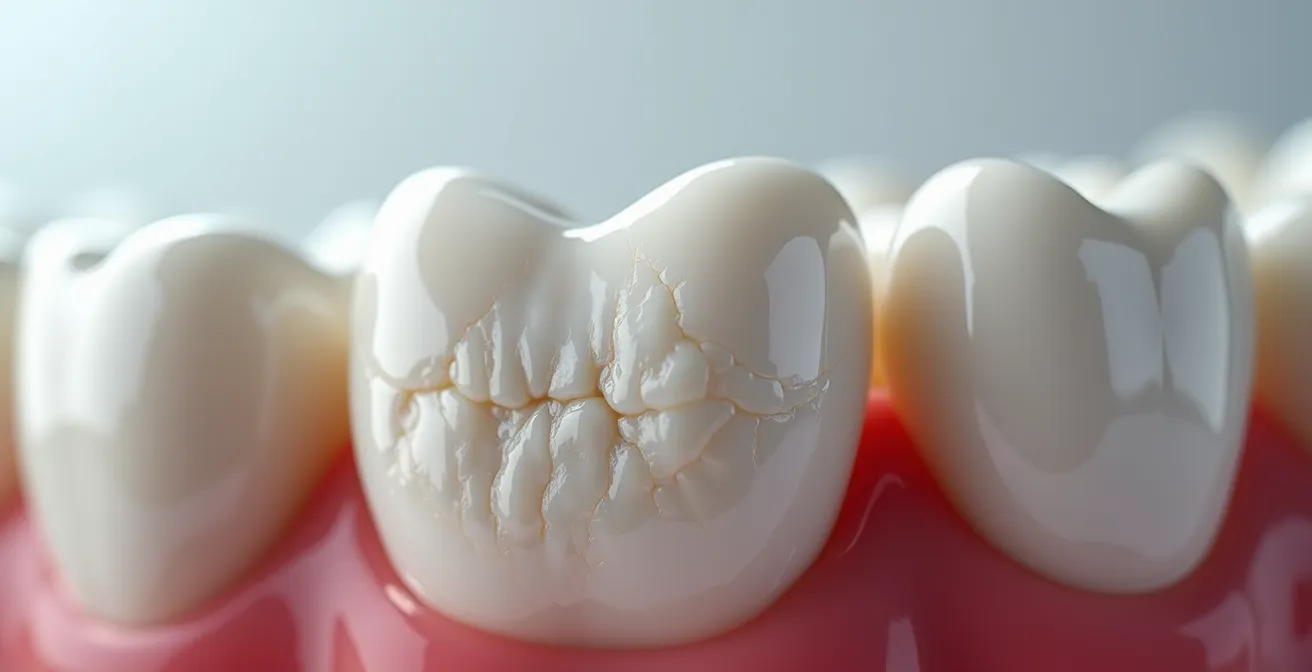
As the enamel wears away, the teeth become weaker, more sensitive, and prone to fracture. Delaying treatment doesn’t just lead to more complex dental issues; it also has significant financial implications. The cost of addressing the root cause with orthodontic or neuromuscular treatment early on is often far less than the cumulative cost of repeatedly repairing or replacing damaged teeth with crowns, veneers, or implants over the years.
This table illustrates the financial reality of delaying foundational treatment in Montreal, comparing proactive care with reactive repairs. Note that costs for major restorative work are not covered by the public Quebec health insurance plan (RAMQ) for adults.
| Treatment Type | Average Cost in Montreal | RAMQ Coverage | Private Insurance Coverage |
|---|---|---|---|
| Routine Cleaning | $200 | Not covered for adults | 80-100% |
| Crown Installation | $1,500-$3,000 | Not covered | 50-80% |
| Dental Implant | $3,000-$5,000 | Not covered | 0-50% |
| Orthodontic Treatment | $5,000-$8,000 | Never covered | Variable |
Jaw Surgery or Braces: Which Is Necessary for a Severe Underbite?
When a misaligned bite is severe, particularly in cases like a significant underbite (where the lower jaw protrudes past the upper jaw), simple treatments may not be enough. The decision between orthodontic treatment (braces) alone and a combination of braces and orthognathic (jaw) surgery depends on a crucial factor: is the problem dental or skeletal? If the teeth are simply crooked but the jaws are well-positioned, braces can often resolve the issue. However, if the jaws themselves are mismatched in size or position, surgery is typically required for a true foundational correction.
For an adult in their 40s, the jawbones are fully developed and can no longer be guided by orthodontics alone. In these cases, braces are used to align the teeth within each arch, and then a maxillofacial surgeon repositions the jaw itself to create a functional and stable bite. While this sounds intensive, for patients suffering from severe functional issues like difficulty chewing, speech impediments, and chronic pain from TMJ strain, the results can be life-changing.
Navigating the healthcare system in Quebec for this type of procedure is a specific process. While the surgery itself may be covered by the Régie de l’assurance maladie du Québec (RAMQ) if deemed medically necessary for functional reasons, the associated orthodontic work is not. This is a critical financial consideration, as stated directly by the provincial authority.
Orthodontic services are not covered, regardless of the reason for which the treatment is required.
– RAMQ Quebec, Régie de l’assurance maladie du Québec Official Guidelines
To determine the right path, a patient in Montreal must follow a clear pathway involving multiple specialists. The journey begins with a referral and thorough assessment to diagnose the skeletal nature of the problem, leading to a confirmation of RAMQ coverage for the surgical component and a clear understanding of the out-of-pocket costs for the mandatory orthodontic phase.
How Expanding Your Narrow Palate Can Improve Your Sleep Quality?
The connection between your oral structure and overall health extends beyond pain and into the very air you breathe, especially while you sleep. A narrow or high-arched upper palate (maxilla) can significantly reduce the volume of your nasal cavity, leading to restricted airflow. This forces you to become a “mouth breather,” particularly at night. Mouth breathing is less efficient and can contribute to a host of problems, including dry mouth, an increased risk of cavities, and, most importantly, sleep-disordered breathing like sleep apnea.
For an adult, especially one entering their 40s where tissues may lose some elasticity, a constricted airway becomes a more significant problem. It can lead to snoring and Obstructive Sleep Apnea (OSA), a serious condition where breathing repeatedly stops and starts during sleep. This results in poor sleep quality, daytime fatigue, and an increased risk of cardiovascular problems. By expanding the palate, we can increase the volume of the nasal passages, improve airflow, and encourage proper nasal breathing. This simple structural change can have a profound impact on sleep quality and energy levels.
While traditional palate expansion was thought to be effective only in children, modern techniques like Miniscrew-Assisted Rapid Palatal Expansion (MARPE) have shown remarkable success in adults. This approach provides a non-surgical method for widening the upper jaw. The effectiveness isn’t just theoretical; it’s backed by strong clinical evidence. A 2022 study demonstrated an 85% success rate with a 65.3% improvement in the Apnea-Hypopnea Index for adult OSA patients treated with MARPE, highlighting its power as a foundational treatment.

The outcome is more than just a wider smile; it’s the restoration of neuromuscular harmony, leading to deeper, more restorative sleep. The feeling of waking up truly refreshed after years of fatigue is a transformative experience, directly linking a corrected oral structure to a fundamental pillar of health.
Why Is a Retainer Non-Negotiable After Fixing a Crossbite?
After investing time and resources into correcting a crossbite or any other malocclusion with orthodontics or surgery, the treatment is not over when the braces come off. The retention phase is arguably one of the most critical parts of the entire process, especially for an adult patient. Your teeth have a “memory” of their old position, and the ligaments and bone that hold them are in a constant state of subtle flux. Without a retainer, your teeth will inevitably begin to shift back toward their original, misaligned state—a process called relapse.
For someone in their 40s, this risk of relapse is even more pronounced. The Canadian Association of Orthodontists highlights that physiological changes at this age can make this regression more aggressive. This is a crucial warning against complacency after active treatment.
Physiological changes in your 40s including slowing cellular turnover and potential decrease in bone density make orthodontic relapse more aggressive.
– Canadian Association of Orthodontists, Adult Orthodontic Treatment Guidelines
A retainer is the only thing that stands between your newly perfected bite and a gradual return to the very problems you sought to fix—including the return of jaw pain and migraines. It acts as a safeguard, holding the teeth in their new, correct position long enough for the surrounding bone to solidify. Forgoing a retainer is like building a house and leaving off the roof; you are leaving your investment completely exposed to the elements of natural dental drift.
Fortunately, modern retainers in Montreal offer a variety of options to suit different lifestyles and budgets, from clear, removable trays to permanent bonded wires. Choosing the right one is a small final step to protect a life-changing investment in your health.
| Retainer Type | Approximate Cost in Montreal | Pros | Cons |
|---|---|---|---|
| Vivera (Invisalign) | $600-$900 | Clear, removable, comfortable | Must remember to wear, can lose |
| Traditional Hawley | $300-$500 | Durable, adjustable | Visible wire, affects speech initially |
| Bonded Wire | $250-$400 | Permanent, no compliance needed | Harder to clean, may break |
Why Does My Child’s Jaw Click When They Chew?
As a parent, hearing a clicking or popping sound from your child’s jaw during meals or yawning can be alarming. While it’s not always a cause for immediate panic, it should be seen as an early warning sign that deserves attention. That sound often indicates that the small cartilage disc inside the jaw joint (TMJ) is temporarily slipping out of place as the jaw moves. This is known as an internal derangement or disc displacement. While research suggests that up to 50% of the population experiences TMJ sounds at some point, it’s the persistence and accompanying symptoms that matter.
In a child or adolescent, the jaw is still growing, making this a critical time for intervention. A clicking jaw could be an early indicator of a developing malocclusion, an injury, or simply a structural imbalance. If left unaddressed, it could progress into a more serious TMJ disorder, leading to pain, locked jaw episodes, and the same kind of chronic headaches that affect adults. Addressing the issue during the growth phase is far easier and less invasive than correcting a fully developed problem in adulthood.
If you hear your child’s jaw clicking, it’s time to become a proactive observer. Don’t ignore it. The goal is to determine if it’s an isolated, harmless noise or a sign of an underlying functional issue that could impact their development. Taking a few simple steps can provide clarity and ensure your child gets the care they need, if necessary, from the right specialists in the Montreal area.
Here is a parent’s action plan for addressing a child’s jaw clicking:
- Document the Symptoms: Note when the clicking occurs (e.g., eating hard foods, yawning wide) and if your child complains of any pain or difficulty opening their mouth.
- Initial Evaluation: Schedule an appointment with your pediatric dentist for a first assessment. They can rule out obvious dental issues.
- Specialist Referral: If the dentist suspects a bite or growth issue, get a referral to an orthodontist who specializes in early or interceptive treatment.
- Complex Cases: For more complex or persistent issues, a consultation at a specialized pediatric hospital like CHU Sainte-Justine in Montreal may be recommended.
- Check Coverage: In Quebec, children under 10 are covered by RAMQ for many basic dental services, so check eligibility for the initial evaluations.
- Temporary Diet Change: While seeking a diagnosis, encourage a soft food diet to reduce stress on the jaw joint.
Where to Start When You Need to Fix Every Single Tooth?
The thought of needing to fix every tooth can be overwhelming. This situation, often called a full mouth reconstruction, arises when multiple problems—such as severe wear from grinding, missing teeth, widespread decay, and a collapsed bite—coexist. It’s the culmination of years of underlying issues. The key to tackling this is to understand that it’s not about fixing one tooth at a time; it’s about creating a comprehensive, phased plan that rebuilds the entire oral system from the foundation up.
The first step is always to stabilize the foundation: the bite and jaw joints. It makes no sense to place beautiful new crowns on a bite that is unstable, as they will simply break under the same destructive forces that damaged the original teeth. This is where neuromuscular dentistry is critical. The initial phase focuses on finding the ideal jaw position and using an orthotic to deprogram the muscles and allow the joints to heal. This establishes a stable blueprint for all subsequent work.
The Phased Approach to Full Mouth Reconstruction in Montreal
After a patient completes Phase One orthotic therapy to establish a stable bite, Montreal clinics like Smile Montreal move to create permanent changes. Depending on the case, this can involve orthodontics to move the teeth into the new ideal position, a full mouth rehabilitation with crowns and bridges to rebuild the bite at the correct height, or a precise bite adjustment. For patients with a combination of these issues, a comprehensive full mouth reconstruction plan is designed to treat all conditions concurrently, ensuring a more effective and lasting result.
This process requires a team of specialists working in concert. A prosthodontist often acts as the “architect,” designing the overall plan, while collaborating with other experts. Demystifying who does what can help you understand the journey ahead.
| Specialist | Role in Full Reconstruction | Typical Session Cost |
|---|---|---|
| Prosthodontist | Overall treatment planning, crowns, bridges | $200-$400 |
| Periodontist | Gum health, bone grafting | $300-$500 |
| Orthodontist | Bite alignment, jaw positioning | $200-$350 |
| Endodontist | Root canals, tooth preservation | $150-$300 |
Key takeaways
- Chronic migraines and neck pain in your 40s are often symptoms of a long-term, undiagnosed misalignment of your jaw, not just random aging or stress.
- Visible dental issues like chipped or worn front teeth are critical warning signs of a deeper structural problem that is also damaging your jaw joints.
- True, lasting relief comes from foundational correction (addressing the skeletal and muscular root cause) rather than just managing symptoms with painkillers or generic night guards.
The Patient Journey: Navigating Jaw Surgery and Braces in Montreal
Once the decision between orthodontics and surgery has been made for a severe underbite, understanding the patient journey is the next crucial step. Both paths require significant commitment, but they follow distinct timelines and processes within the Montreal healthcare system. Knowing what to expect can alleviate anxiety and help you plan financially and logistically for your foundational correction.
If the path is surgery combined with orthodontics, the journey begins with a pre-surgical orthodontic phase. This can last 12 to 18 months. During this time, an orthodontist uses braces to align the teeth in each jaw independently. The goal here is not to fix the bite, but to prepare the teeth so they will fit together perfectly *after* the surgery. This can sometimes make the bite feel worse temporarily, which is a normal part of the process.
The surgical phase takes place at a major Montreal hospital like the MUHC or CHUM. After the orthognathic surgery, which is performed by a maxillofacial surgeon, there is a recovery period of several weeks. The final phase involves post-surgical orthodontics for another 6-12 months to fine-tune the bite and achieve the final, stable result. Throughout this journey, it is essential to remember that the orthodontic portions are a private expense, a detail that heavily influences financial planning for any Quebec resident undergoing this transformative treatment.
Now that you understand the deep connection between your bite and your overall health, the next logical step is to move from awareness to action. A comprehensive evaluation by a dentist trained in neuromuscular principles is the only way to get a definitive diagnosis and a personalized roadmap to lasting relief. Start today by seeking an assessment to address the root cause of your pain, not just the symptoms.