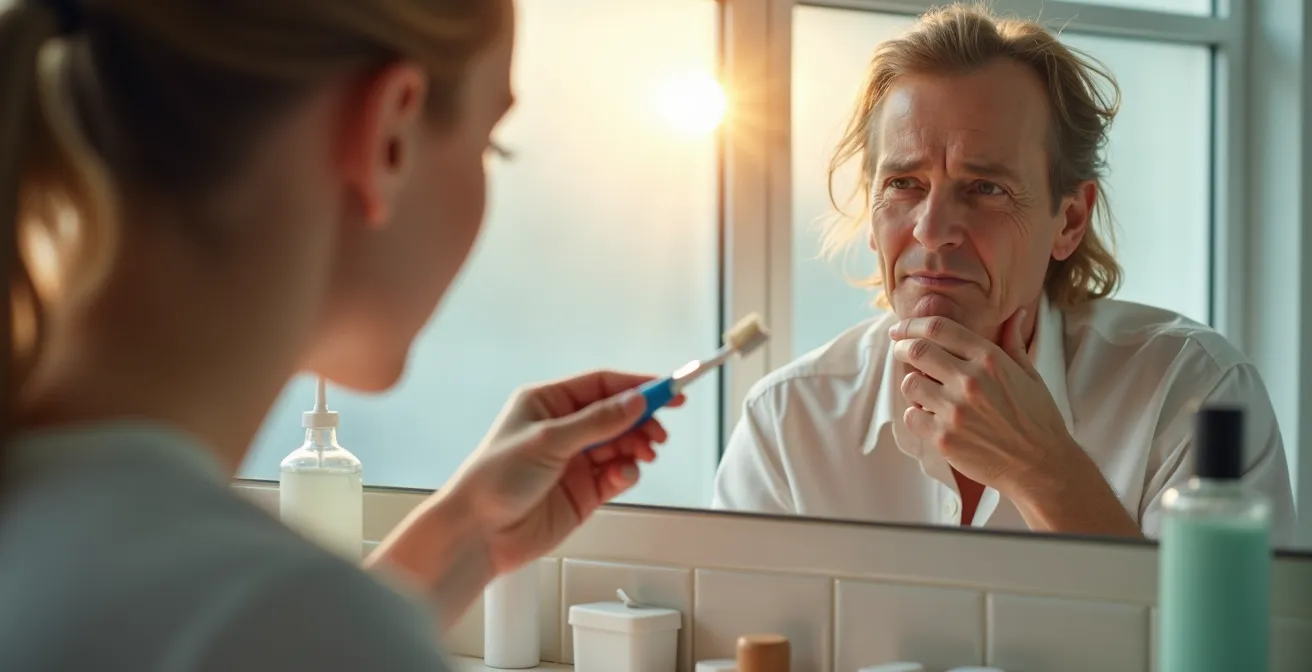
Brushing twice a day isn’t a guarantee against bad breath; the real culprits are often the subtle, overlooked errors in your technique and timing.
- The tongue is a primary source of odor-causing bacteria that a toothbrush can’t effectively remove.
- The timing of your brushing around meals and how you rinse can either protect or damage your enamel.
Recommendation: The key is to shift focus from frequency to precision: disrupt bacterial biofilm effectively and maximize fluoride contact time.
It’s a frustrating and confidence-damaging scenario: you diligently brush your teeth every morning and every night, you floss, and yet, you’re still self-conscious about bad breath. For a socially aware professional in a city like Montreal, this can feel like a persistent, invisible barrier in meetings and social interactions. The common advice—avoid garlic, drink water, floss more—feels inadequate because you’re already doing everything “right.” You’ve followed the rules, but you’re not getting the results.
The problem isn’t your dedication; it’s the details. The conventional wisdom on oral hygiene often misses the critical micro-adjustments that make the difference between a routine that simply goes through the motions and one that achieves clinical-level freshness. This isn’t about adding more steps, but about optimizing the ones you already perform. The saboteurs of your fresh breath are hidden in plain sight: in the tool you use on your tongue, in the moment you decide to brush, and even in the way you finish the process.
If the standard playbook has failed you, it’s time for an investigation. We need to move beyond the what and scrutinize the *how* and the *why*. This guide deconstructs your daily routine to pinpoint the common but critical errors that perpetuate halitosis. We will explore the science behind biofilm disruption, enamel protection, and the lifecycle of plaque, providing you with a troubleshooter’s manual to finally solve the puzzle of persistent bad breath.
This article provides a detailed investigation into the subtle yet crucial aspects of your oral hygiene routine. We will dissect each component to reveal how you can achieve lasting freshness and confidence.
Summary: Uncovering the True Causes of Persistent Bad Breath
- Scraper vs. Brush: Which Actually Removes the Bacteria Causing Odor?
- Why Spitting Without Rinsing Fluoride Increases Protection by 25%?
- Breakfast Before or After Brushing: Which Protects Enamel Best?
- Does Toothpaste Expire and Lose Its Effectiveness?
- How to Maintain Your Routine When You Forget Your Toiletries Bag?
- How to Keep Your Transparent Trays Odor-Free During a 12-Hour Workday?
- Why Does Plaque Come Back 12 Hours After a Cleaning?
- Scraper vs. Brush: Which Actually Removes the Bacteria Causing Odor?
Scraper vs. Brush: Which Actually Removes the Bacteria Causing Odor?
The primary suspect in cases of persistent bad breath is often overlooked: the tongue. Its rough, textured surface is an ideal breeding ground for bacteria that a toothbrush struggles to eliminate. These bacteria break down food particles and dead cells, releasing odorous substances known as Volatile Sulfur Compounds (VSCs), the direct cause of halitosis. While brushing your tongue is better than nothing, it often just moves the bacteria around rather than removing it effectively. This is where the investigation into proper tools begins.
A tongue scraper is designed for one purpose: mechanical debridement. It physically lifts and removes the biofilm—that slimy, whitish layer of bacteria—from the tongue’s surface. The difference in effectiveness is significant; some studies show tongue scraping reduced volatile sulfur compounds by up to 75%. In contrast, a toothbrush, with its soft bristles designed for smooth enamel, is ill-equipped for this task. It cannot apply the even pressure needed to clear the tongue’s deep crevices.
Local dental practices confirm this approach. At Smile Montreal, a local dental practice, Drs. Charles and Patrick Casey emphasize that when oral hygiene fails to remove bacterial colonies, they emit unpleasant odors as they multiply. This underscores the need for a targeted tool. A scraper provides a more effective method of biofilm disruption, directly addressing the root cause of VSCs. For anyone serious about eliminating bad breath, understanding this distinction is the first critical step.
Why Spitting Without Rinsing Fluoride Increases Protection by 25%?
This is a subtle but powerful technique that contradicts what most of us were taught. The standard habit is to brush thoroughly and then rinse vigorously with water. However, this action washes away the single most important protective ingredient in your toothpaste: fluoride. To understand why “spit, don’t rinse” is superior, you have to think of fluoride not just as a cleaning agent, but as a topical treatment that needs time to work.
When you brush, you are delivering a concentrated dose of fluoride to your enamel. If you immediately rinse with water, you dilute this concentration to almost zero, negating much of the benefit. By simply spitting out the excess foam and allowing a small residue to remain, you create a fluoride-rich environment in your mouth. This residual fluoride continues to work long after you’ve put your brush down, strengthening enamel and making it more resistant to acid attacks from food and bacteria. While the exact percentage of increased protection can vary, the principle is scientifically sound: higher fluoride concentration equals better remineralization and cavity prevention.
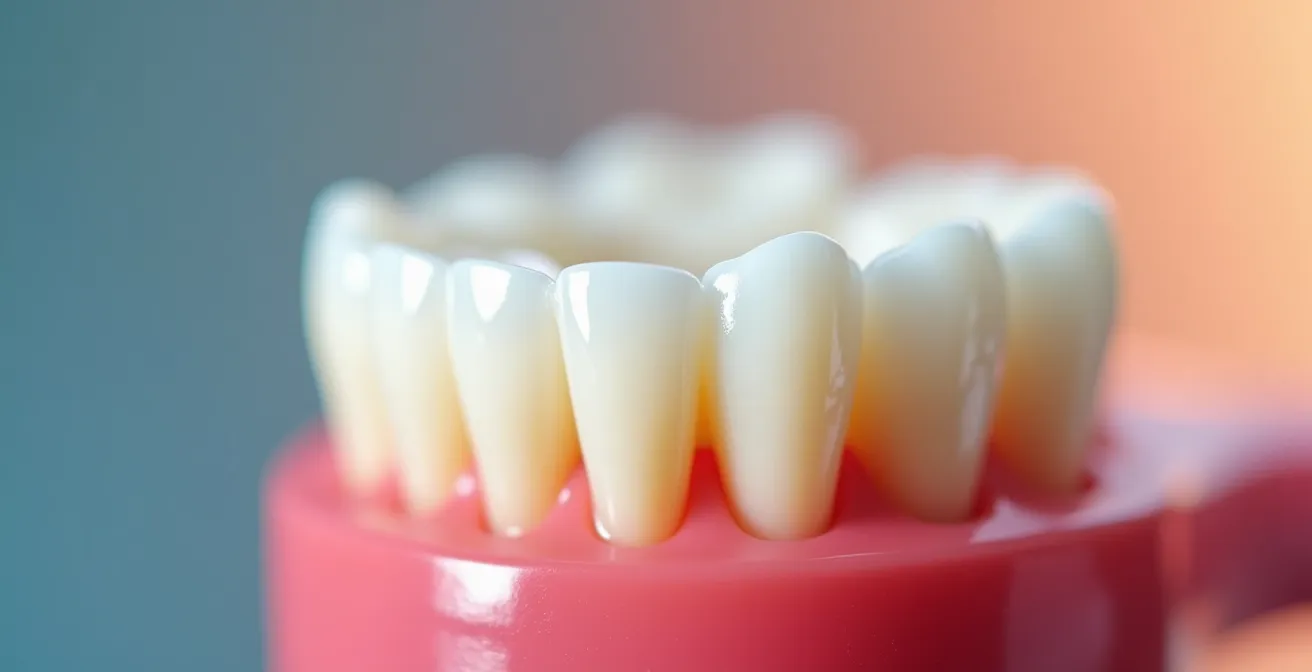
This subtle coating, as visualized in the image above, acts as a continuous shield for your teeth. This is especially critical for professionals who may sip coffee or other acidic drinks throughout the day. Adopting the “spit, don’t rinse” habit is a zero-cost, zero-effort change that significantly enhances the protective power of your daily brushing routine, working silently to fortify your defenses against decay and, by extension, the bacteria that can contribute to odor.
Breakfast Before or After Brushing: Which Protects Enamel Best?
The morning sequence of brushing and eating is a subject of much debate, but the science points to a clear answer depending on your breakfast choices. The core of the issue lies in enamel and pH levels. When you eat or drink, especially acidic items like coffee, orange juice, or fruit, the pH level in your mouth drops, temporarily softening your tooth enamel. Brushing immediately after consuming these items can cause microscopic damage to this softened surface, leading to enamel erosion over time.
Brushing *before* breakfast offers two key advantages. First, it removes the plaque biofilm that built up overnight, meaning there are fewer bacteria to feast on your breakfast sugars and produce acid. Second, it coats your teeth with a protective layer of fluoride, which acts as a shield against the acidic assault of your meal. The main downside is that you may not feel “fresh” after eating. Brushing *after* breakfast effectively removes food particles, but carries the significant risk of abrading softened enamel.
For a clear breakdown, this comparative analysis is extremely helpful. According to a guide on halitosis from Delta Dental, the optimal choice depends on what you eat.
| Timing | Benefits | Risks | Best For |
|---|---|---|---|
| Brushing Before Breakfast | Creates protective fluoride barrier, prevents acid attack | May need to brush again for freshness | Acidic breakfasts (coffee, juice, fruit) |
| Brushing After Breakfast | Removes food particles immediately | Can damage softened enamel if done too soon | Neutral pH foods (eggs, avocado) |
| Wait 30-45 Minutes After Eating | Allows saliva to remineralize enamel | Delayed cleaning | All breakfast types |
If you must brush after, the rule is to wait. As experts at Delta Dental advise:
Make sure you wait to brush for at least 30 to 45 minutes after eating — it takes that long for your saliva to remineralize your tooth enamel if you have had acidic foods or beverages
– Delta Dental, Delta Dental Halitosis Guide
This waiting period gives your saliva, your body’s natural defense mechanism, time to neutralize the acids and begin the enamel remineralization process, returning your teeth to a safe state for brushing.
Does Toothpaste Expire and Lose Its Effectiveness?
Yes, toothpaste does expire, and using it past its expiration date can sabotage your oral hygiene efforts. The expiration date, typically found stamped on the crimp of the tube, isn’t a marketing gimmick. It indicates the time frame during which the active ingredients, most notably fluoride, are guaranteed to be stable and effective. Over time, the chemical compounds in the toothpaste can break down, causing the fluoride to lose its potency and ability to bind to enamel and prevent cavities.
Beyond diminished effectiveness, expired toothpaste can also change in consistency, becoming dry or separated, making it unpleasant to use. More importantly, there’s a risk of bacterial or fungal growth in the tube after it’s been open for an extended period. For someone meticulously trying to eliminate odor-causing bacteria, introducing new ones from an old tube of toothpaste is counterproductive. Given the importance of effective fluoride, this is not an area to compromise.
In Canada, the focus on high-quality dental products is clear. Health Canada regulates fluoride toothpaste as a natural health product, ensuring strict standards for safety and efficacy are met. In fact, an analysis shows that the Canada’s high-fluoride dental products market is expected to grow at a 4.5% CAGR, highlighting the consumer and professional demand for effective products. Using a fresh, in-date toothpaste ensures you are getting the full, regulated benefit of the fluoride you are paying for, which is a cornerstone of preventing the decay that can lead to bad breath.
How to Maintain Your Routine When You Forget Your Toiletries Bag?
For a busy professional, a forgotten toiletries bag before a long day at the office or an unexpected overnight trip can feel like a hygiene disaster. It’s a moment that can induce anxiety, but having an emergency plan is key. Fortunately, in a city like Montreal, you are never far from a solution. The goal is to replicate the core functions of your routine: mechanical plaque removal and freshening your breath.
The first and most obvious step is to acquire a temporary kit. You don’t need fancy products; just the basics to get you through. A quick stop at any 24-hour Pharmaprix or Jean Coutu in downtown Montreal can equip you with everything you need for under $10. Even the dépanneur on the corner will have sugar-free gum with xylitol, which can help stimulate saliva flow and neutralize acids after a meal. At the YUL airport, you can often find single-use disposable toothbrushes like the Colgate Wisp, which are perfect for a quick refresh without water.
In a true pinch where no supplies are available, you can still perform mechanical cleaning. As one expert emergency technique suggests:
As odd as it will feel at first, bacteria collects on the tongue and can contribute to bad breath. In emergencies, you can use a clean paper towel to mechanically wipe plaque from teeth surfaces and tongue when no toothbrush is available.
While not a substitute for brushing, this method of mechanical debridement can physically disrupt the fuzzy biofilm on your teeth and tongue, providing a significant improvement over doing nothing. Rinsing vigorously with water afterward can help wash away dislodged particles.
Your Emergency Action Plan: The Montreal Professional’s Quick Kit
- Locate a Supplier: Head to any 24h Pharmaprix or Jean Coutu in downtown Montreal for immediate access to dental supplies.
- Assemble Your Kit: Purchase a travel-sized fluoride toothpaste (under $3), a basic travel toothbrush ($2-3), and dental floss picks ($3-4) for easy interdental cleaning.
- Immediate Refresh: If you can’t brush right away, chew sugar-free xylitol gum (available at any dépanneur) to stimulate saliva and freshen breath.
- Perform Mechanical Cleaning: Use your new tools to brush and floss as soon as possible, focusing on removing the plaque biofilm from all tooth surfaces and the tongue.
- Consider an Ultra-Portable Option: For future emergencies, look for single-use disposable toothbrushes like Colgate Wisp at YUL airport or major pharmacies to keep in your bag or car.
How to Keep Your Transparent Trays Odor-Free During a 12-Hour Workday?
Transparent aligners, while a discreet way to straighten teeth, can quickly become a source of bad breath if not managed properly during a long workday. The plastic trays create a closed environment where saliva, which normally helps wash away bacteria, cannot circulate freely. This allows odor-causing bacteria to multiply on both your teeth and the aligner surface, leading to noticeable halitosis. For a professional, maintaining fresh breath while wearing aligners requires a strict in-office protocol.
The cardinal rule is to never eat or drink anything other than water while wearing your trays. Sugars and acids from food, coffee, or other drinks will get trapped under the aligner, creating a perfect storm for both odor and cavities. After every meal or coffee break, you must remove your trays and, at a minimum, rinse both your mouth and the aligners with water before reinserting them. Keeping a dedicated water bottle at your desk in your Montreal office can make these quick rinses more convenient.
A deeper clean is also necessary. According to recommendations from a Quebec dental center, a healthy breakfast followed by brushing is a key first step. However, a workday requires more. It’s wise to establish a lunchtime routine in the office washroom that includes brushing, flossing, and cleaning your aligners. It is crucial to use a non-abrasive cleaner designed for retainers or aligners, as regular toothpaste is too abrasive and can create microscopic scratches on the plastic. These scratches can harbor even more bacteria, making the odor problem worse. Products like Polident for Aligners or Retainer Brite, available at most Montreal pharmacies, are ideal for this purpose.
Why Does Plaque Come Back 12 Hours After a Cleaning?
That “fuzzy teeth” feeling that returns just hours after a thorough brushing is a universal experience, and it’s not a sign that your cleaning was ineffective. It’s a demonstration of how quickly and efficiently oral bacteria work. The process of plaque reformation is constant and begins the very minute you stop brushing. It’s a relentless cycle rooted in the biology of your mouth.
The speed of this return is startling. In fact, specific research shows bacteria begin to significantly repopulate within 12 hours of being removed. This rapid colonization is what makes twice-daily brushing the absolute minimum standard for oral health. Missing even one brushing session gives this bacterial biofilm a 24-hour window to mature, harden into tartar, and produce the VSCs that cause bad breath and contribute to gum disease.
But why is it so sticky? The secret lies in a microscopic, invisible layer. As the Ordre des hygiénistes dentaires du Québec (OHDQ) explains, the mechanism is incredibly efficient:
The feeling of ‘fuzzy teeth’ returns so fast because within minutes of brushing, a protein layer called the pellicle forms on your teeth. This is the sticky foundation that bacteria colonize to rebuild plaque
– Ordre des hygiénistes dentaires du Québec, OHDQ Professional Guidelines
This pellicle layer acts like double-sided tape for bacteria. It’s a natural, protective film derived from your saliva, but it’s also the perfect anchor for plaque to begin its reconstruction. This is why your meticulous brushing routine is a battle, not a one-time cleanup. You are constantly working to disrupt a biofilm that is programmed to rebuild itself immediately. Understanding this cycle shifts your mindset from “cleaning” to “continuous disruption.”
Key takeaways
- Effective bad breath control goes beyond brushing; it requires targeted biofilm disruption on the tongue.
- The timing of brushing and the method of rinsing are as crucial as the act of brushing itself for enamel protection and fluoride efficacy.
- Plaque is a persistent biofilm that starts reforming within minutes; a consistent, precise routine is the only defense.
Scraper vs. Brush: Which Actually Removes the Bacteria Causing Odor?
We’ve established that the tongue is a major source of bad breath and that a scraper is the superior tool for the job. Now, let’s move from theory to practice. Incorporating a tongue scraper into your daily routine is a simple change that yields disproportionately large results. The goal is to make this step an automatic, non-negotiable part of your morning hygiene, just like brushing your teeth. It takes less than 30 seconds but can fundamentally change the freshness of your breath for the entire day.
The technique is straightforward. Standing in front of a mirror, you stick your tongue out, place the scraper as far back as is comfortable, and gently pull it forward with light, even pressure. You will see the whitish or yellowish biofilm being removed. Rinse the scraper under warm water and repeat the process two or three times, until no more residue is collected. It’s important to be gentle; the goal is to remove the soft biofilm, not to scrub your tongue raw.
This single action, performed once daily in the morning, directly targets the largest colony of odor-causing bacteria in your mouth. While your toothbrush handles the enamel and your floss takes care of the spaces in between, the scraper completes the triad by ensuring the entire oral environment is clean. This comprehensive approach is the only way to truly solve the problem of persistent bad breath for good.
Your 5-Step Action Plan: Mastering the Tongue Scraper
- Acquire the Right Tool: Purchase a stainless steel tongue scraper from a Montreal pharmacy like Jean Coutu or Pharmaprix for optimal hygiene and durability.
- Perform the Scraping Motion: Each morning, position the scraper at the very back of your tongue and gently pull forward with light pressure in a single stroke.
- Maintain Hygiene During Use: After each pass, rinse the collected biofilm off the scraper with warm water before the next stroke. Repeat 2-3 times.
- Integrate into Your Full Routine: Perform tongue scraping before you brush your teeth to avoid reintroducing bacteria into a clean mouth. Follow with your regular brushing and flossing.
- Schedule Professional Oversight: Discuss your routine with your dental hygienist during your regular cleanings (recommended every 6 months) to ensure your technique is effective.
Take control of your oral hygiene by implementing these precise adjustments today. A confident, fresh breath is not about more effort, but about smarter technique and a deeper understanding of the science in your own mouth.
Frequently Asked Questions About Fluoride Toothpaste in Canada
How much fluoride is in Canadian toothpaste?
Toothpaste in Canada contains up to 1150 ppm of fluoride, which provides effective cavity prevention when used properly.
Can children use fluoride toothpaste?
An adult should always help children under age 6 brush their teeth and use only a small amount (a small green pea-sized portion, or 5 mm maximum) of fluoridated toothpaste.
Is fluoride toothpaste regulated in Canada?
Yes, Health Canada regulates fluoride toothpaste as a natural health product, ensuring safety and efficacy standards are met.