
Prolonged thumb sucking after age four isn’t just a habit; it’s actively reshaping your child’s jaw and setting the stage for significant orthodontic issues.
- The constant pressure creates an open bite and narrows the upper palate, affecting teeth, speech, and facial development.
- Gentle, consistent interventions are most effective before kindergarten, where social pressures can add to a child’s stress.
- While orthodontic correction is possible later, it is a complex process and, crucially, not covered by RAMQ in Quebec.
Recommendation: Address the root cause of the habit—often a need for comfort—and schedule a dental check-up now to assess the situation and prevent costly, intensive future treatments.
As a parent in Montreal, seeing your young child soothe themselves by sucking their thumb is a familiar, often endearing sight. For infants and toddlers, it’s a completely normal reflex, a built-in tool for comfort and security. Many well-meaning friends, and even some outdated advice, will tell you to simply wait it out. They’ll say most children stop on their own, and for many, that’s true. But what happens when “toddler” turns into “preschooler” and the habit persists past their fourth birthday? This is where we must shift our perspective from passive observation to proactive care.
This isn’t about shaming a child or a parent. It’s about understanding a critical developmental tipping point. Around age four, when the permanent teeth are beginning their journey beneath the gums and the jaw is still highly malleable, what was once a harmless comfort can become a powerful force working against your child’s natural development. The mechanics of the pressure, the psychological triggers, and the potential for a “habit cascade” into issues like tongue thrusting all become more significant. Ignoring it is no longer a benign choice; it’s a decision with potential long-term dental, financial, and even social consequences.
The key isn’t to create a battle of wills over the thumb. The real strategy is to understand the underlying reasons for the habit and to recognize the specific risks it poses at this age. This guide is designed to move beyond the generic advice and provide you, a concerned Montreal parent, with a clear, compassionate, and firm timeline. We will explore the “why” behind the habit, the “how” of its impact on your child’s palatal architecture, and the practical, localized steps you can take to guide your child towards new comforting strategies before permanent changes set in.
This article provides a complete roadmap, from understanding the biomechanics of thumb sucking to navigating the specific care pathways available in Quebec. We will cover the psychological aspects, the hierarchy of gentle interventions, and the crucial financial realities of orthodontic treatment to empower you to make the best decision for your child’s future smile.
Summary: A Parent’s Guide to Thumb Sucking After Age 4
- How the Thumb Acts as a Lever Against the Upper Jaw Bone?
- Why Does Your Child Suck Their Thumb Only When Tired or Stressed?
- Band-Aids on Thumbs: Do Physical Barriers Work or Create Trauma?
- Can a Narrow Palate caused by Thumb Sucking Be Widened Later?
- How to Help Your Child Stop Before Kindergarten Teasing Begins?
- When Should a Child Have Their First Dentist Visit in Montreal?
- How to Stop Tongue Thrusting from Ruining Your Child’s Bite?
- Can a Narrow Palate caused by Thumb Sucking Be Widened Later?
How the Thumb Acts as a Lever Against the Upper Jaw Bone?
It’s easy to underestimate the power of a small thumb, but in pediatric dentistry, we see its effects daily. The issue isn’t a single, strong force; it’s the constant, gentle pressure applied over thousands of hours. Imagine the thumb as a persistent lever acting on the still-soft and developing bones of the upper jaw (the maxilla). This continuous force, especially during vigorous sucking, disrupts the natural balance of pressures from the tongue, cheeks, and lips that guide facial growth.
The primary impact is on the palatal architecture. The roof of the mouth is designed to be a wide, Roman arch, giving ample space for the tongue to rest and for the permanent teeth to erupt. Thumb sucking exerts an upward pressure that can narrow this arch, creating a high, constricted V-shape instead. Simultaneously, the pressure on the back of the upper front teeth pushes them forward and outward, leading to the classic “buck teeth” appearance, known clinically as an overjet. This also often creates an anterior open bite, where the front top and bottom teeth don’t meet even when the back teeth are closed, making it difficult to bite into foods like sandwiches or apples.
This process isn’t theoretical; it’s a predictable biomechanical outcome. The constant presence of the thumb prevents the tongue from resting in its proper position against the palate, which is a key driver of maxillary width. Without the tongue’s internal support, the external pressure from the cheek muscles contributes to the narrowing of the jaw. This is the first step in a cascade of orthodontic problems that become much more complex to treat after the major facial growth spurts are complete.
Why Does Your Child Suck Their Thumb Only When Tired or Stressed?
If you notice the thumb-sucking habit intensifies when your child is tired, anxious, or facing a new situation, you’ve identified a crucial clue. The habit is rarely about hunger or defiance; it is a deeply ingrained self-soothing mechanism. The rhythmic sucking action provides a sense of security and comfort, regulating their nervous system when they feel overwhelmed. For a preschooler in a bustling city like Montreal, triggers can be everywhere: the overstimulation of a busy `garderie`, the challenge of switching between French and English, or even the cooped-up feeling during long, cold winters.
Rather than viewing the habit as a problem to be eliminated, it’s more effective to see it as a signal. Your child is communicating a need for comfort that they don’t yet have other tools to manage. Punishing the behavior or creating a power struggle often backfires by increasing the child’s stress, which in turn increases their need to self-soothe. The compassionate and strategic approach is to become a “stress detective” for your child. By identifying the specific triggers, you can work on addressing the root cause instead of just battling the symptom.

This requires observation and empathy. Does the habit appear during `garderie` drop-offs? Perhaps a new morning ritual is needed. Does it happen late in the afternoon? They might be overtired from a busy day. By understanding the “why,” you can begin to introduce alternative comforting strategies, such as a special blanket, a calming story, or a quiet hug, that meet the same emotional need without the negative dental consequences.
Your Action Plan: The Stress Detective Checklist for Montreal Parents
- Monitor Timing: Does thumb sucking increase during Montreal’s long winter months when outdoor play is limited? Note the context.
- Track Transitions: Observe if the habit intensifies during `garderie` drop-offs or when switching between French and English environments.
- Identify Triggers: Check if hunger, overtiredness from early school starts, or separation from you increases the behavior.
- Observe Social Situations: Notice if playdates, new activities, or large family gatherings trigger the self-soothing response.
- Document Patterns: Keep a simple log for a week to identify specific stress points and patterns unique to your child’s routine.
Band-Aids on Thumbs: Do Physical Barriers Work or Create Trauma?
Many parents, in a moment of desperation, turn to physical deterrents: a colourful bandage, a bitter-tasting nail polish from the pharmacy, or a fabric thumb guard. The question is, are these helpful tools or sources of unnecessary conflict and trauma? The answer depends entirely on how they are used. These methods should never be a punishment. Instead, they should be framed as helpful reminders for a “big kid” who is learning a new skill. The goal is to make the child an active participant in breaking the habit, not a passive recipient of a restriction.
A physical barrier can be effective because it breaks the cycle. A child often sucks their thumb unconsciously, especially when tired or falling asleep. The strange texture of a bandage or a thumb guard interrupts that mindless action, bringing it to their conscious attention and giving them a chance to choose a different behavior. However, if this is imposed against their will, it can create anxiety and a sense of shame. Experts suggest that a habit can be broken in about 30 days of consistency, but the foundation must be a feeling of security. If a child is forced to stop without an alternative comfort, the underlying stress remains, and they may simply find a new, potentially equally damaging, habit.
A more effective strategy is to follow a hierarchy of interventions, starting with the least invasive methods. This approach respects the child’s emotional needs while gently guiding them toward change. For many Montreal families, this means starting with positive reinforcement and only escalating to physical or professional help if needed.
A Gentle Hierarchy of Intervention
- Level 1 – Positive Reinforcement: Create a sticker chart and praise your child for periods of not sucking their thumb. Focus on the positive behavior, not the negative one.
- Level 2 – Gentle Reminders: Collaboratively choose colourful bandages or a soft thumb guard (available at pharmacies like Jean Coutu) to wear at key times, like bedtime, as a “helper.”
- Level 3 – Behavioral Intervention: If the habit is very persistent, consulting a Montreal-based child psychologist for habit reversal therapy can provide professional, tailored strategies.
- Level 4 – Dental Appliances: In more resistant cases, a pediatric dentist can fit a non-punitive appliance, like a palatal crib, that makes it physically difficult to suck the thumb.
- Level 5 – Comprehensive Orthodontic Treatment: This is the final step, addressing the dental changes that have already occurred.
Can a Narrow Palate caused by Thumb Sucking Be Widened Later?
One of the most common questions from concerned parents is: “If the damage is done, can it be fixed?” The answer, fortunately, is yes. The field of orthodontics has developed highly effective methods for correcting a narrow palate, a common consequence of prolonged thumb sucking. The most frequently used tool for this is a palatal expander. This is a custom-made dental appliance that fits in the roof of the mouth and attaches to the upper molars.
The upper jaw is actually two bones (the maxillae) connected by a soft spot in the middle called the mid-palatal suture. In children and adolescents, this suture has not yet fused into solid bone. A palatal expander takes advantage of this developmental window. It has a small screw in the center that parents are instructed to turn with a special key on a prescribed schedule (e.g., once a day). Each turn gently separates the two halves of the maxilla by a fraction of a millimeter.
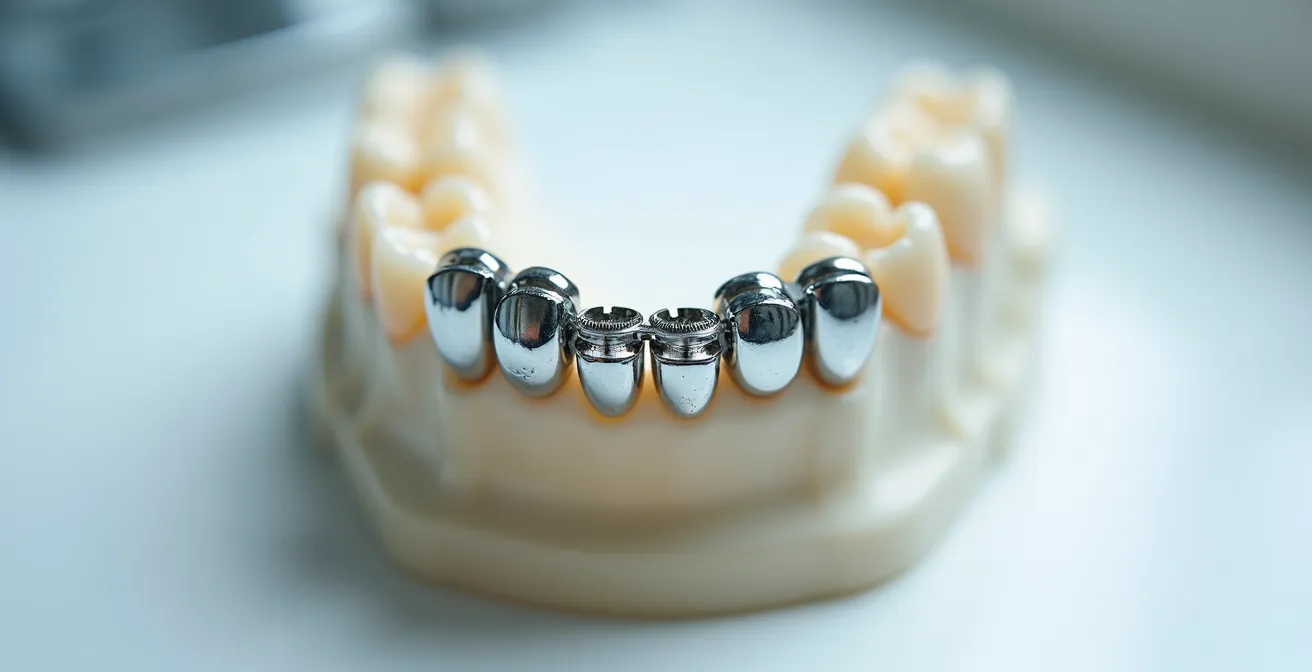
This gradual separation stimulates new bone to grow in the gap, effectively widening the entire upper jaw. The process is typically active for a few weeks to a few months, after which the expander is left in place for several more months to allow the new bone to solidify and stabilize. Widening the palate not only creates the necessary space for crowded permanent teeth to align properly but can also improve breathing by increasing the volume of the nasal cavity. While the device can cause some initial discomfort and pressure, it is a proven and reliable method for reversing the constricting effects of a thumb-sucking habit.
How to Help Your Child Stop Before Kindergarten Teasing Begins?
The transition to kindergarten (`maternelle` in Quebec) is a major social milestone, and it’s often the point where a thumb-sucking habit moves from a private family matter to a public social issue. While most children are accepting, teasing can happen, and it can be a significant source of stress for a child who already uses the habit for comfort. Preparing your child for this new environment is a key motivator for breaking the habit. The American Dental Association notes that while most children stop thumb sucking between 2 and 4 years of age, those who continue past this point are in the minority and may need more targeted help.
Empowering your child with confidence is your best tool. This means giving them the words to use if another child asks about their thumb. Role-playing simple, positive responses in both English and French can make a world of difference. The goal is not to make them feel ashamed but to give them a script so they aren’t caught off guard. Practicing with stuffed animals or in front of a mirror can make it feel like a game and build their self-assurance. This proactive approach focuses on building resilience, a skill that will serve them far beyond the playground.
Alongside these social strategies, this is the time to be consistent with the interventions discussed earlier. A sticker chart celebrating “thumb-free days” at `garderie` or a special “big kid” privilege for a successful night can provide powerful motivation. The looming start of school can be framed as an exciting goalpost for becoming a “big kid who doesn’t need their thumb anymore.”
Bilingual Role-Playing Scripts for Quebec Maternelle
- English Response: Teach them to say confidently, “I’m learning to be a big kid! Sometimes it’s hard but I’m trying my best.”
- French Response: Practice the phrase, “J’apprends à être un grand! C’est parfois difficile mais je fais de mon mieux.”
- Redirect Technique: Teach your child to change the subject to something positive they enjoy about school, like “Do you want to go play on the slide?”
- Confidence Builder: Practice these responses with their favourite toys in both languages to normalize the conversation.
- Parent Preparation: Gently role-play potential teasing scenarios with them before `maternelle` begins, so they have a plan.
When Should a Child Have Their First Dentist Visit in Montreal?
The Ordre des dentistes du Québec (ODQ) and the Canadian Dental Association recommend a child have their first dental visit within six months of the eruption of their first tooth, or by their first birthday. For a parent concerned about thumb sucking in a 4-year-old, this first visit is long overdue, but it’s never too late to start. This initial appointment is less about active treatment and more about establishing a positive relationship with the dental environment and providing crucial guidance for parents.
This visit allows a pediatric dentist to assess the specific impact of the habit on your child’s oral development. They can measure the degree of overjet or open bite and evaluate the shape of the palate. More importantly, they can provide personalized, age-appropriate advice based on what they see. This moves you from general internet advice to a concrete action plan tailored to your child. It also serves as a baseline, allowing the dentist to track any changes over the following months.
In Montreal, parents have a significant advantage: the Régie de l’assurance maladie du Québec (RAMQ) provides comprehensive coverage for basic dental care for all children under the age of 10. This includes exams, x-rays, and even some restorative treatments. As RAMQ dental coverage guidelines specify, this makes preventative care and early assessment highly accessible. There is no financial barrier to getting an expert opinion, which is the most critical first step.
How to Choose the Right Pediatric Dentist in Montreal
- Verify RAMQ Acceptance: Confirm the clinic accepts the RAMQ card for children under 10 to ensure the visit is covered.
- Look for Bilingual Staff: A team comfortable in both French and English is essential for clear communication with you and your child.
- Choose a Convenient Location: Look for a practice near a Metro station or with easy parking in areas like Westmount, the Plateau, or Brossard to reduce travel stress.
- Confirm Experience with Oral Habits: Specifically ask if the dentists have experience managing cases of thumb sucking and tongue thrusting.
- Ask About Emergency Availability: Knowing the clinic’s policy for urgent issues can provide peace of mind.
How to Stop Tongue Thrusting from Ruining Your Child’s Bite?
Thumb sucking is often the “gateway” to another, more persistent oral habit: the tongue thrust. When a child constantly has their thumb in their mouth, it forces the tongue down and forward. Over time, the muscles learn this incorrect resting posture. Even after the thumb sucking stops, the tongue continues to “thrust” forward against the front teeth during swallowing, speaking, and even at rest. This creates a habit cascade that can undermine or even reverse any progress made by stopping the initial habit.
A proper swallow involves the tongue pressing up against the spot on the roof of the mouth just behind the front teeth (the alveolar ridge). In a tongue thrust swallow, the tongue pushes directly against the back of the front teeth. With an average person swallowing hundreds of times a day, this constant forward pressure can maintain or worsen an open bite, preventing the front teeth from ever closing properly. Research in medical journals like PubMed confirms that oral habits like tongue thrusting can harm developing teeth and require orthodontic intervention for stable, long-term correction.
Correcting a tongue thrust often requires more than just awareness; it may involve therapy with a qualified `orthophoniste` (speech-language pathologist) in Montreal. However, parents can begin at home with simple exercises to help retrain the tongue muscles and promote proper placement. These exercises, when done consistently, can help build the neuromuscular memory needed for a correct resting posture and swallow pattern.
Simple Tongue Placement Exercises for Home Practice
- The Elevator Game: Have your child place the tip of their tongue behind their upper front teeth and then “ride the elevator” by sliding it back along the roof of their mouth.
- Spot Practice: Help them find “the spot” (the alveolar ridge) with their tongue tip. Practice holding it there for 5-10 seconds at a time while breathing through their nose.
- Clicking Sounds: Making a “clucking” or “clicking” sound with the tongue against the palate strengthens the tongue muscles and reinforces correct placement.
- Important Note: These exercises are a helpful start but do not replace professional therapy from a qualified Montreal `orthophoniste` if the habit is severe.
- Frequency: Practice these simple games for about 5 minutes, twice a day, with your supervision to ensure correct technique.
Key Takeaways
- The age of 4 is a critical tipping point where a thumb-sucking habit transitions from benign to potentially causing permanent dental changes.
- The habit’s root cause is a need for comfort; addressing stress and providing alternatives is more effective than punishment.
- A habit cascade can lead to tongue thrusting, a secondary issue that also requires intervention to protect the bite.
Can a Narrow Palate caused by Thumb Sucking Be Widened Later?
We’ve established that orthodontic solutions like palatal expanders exist and are effective. This is the good news. However, as a compassionate but firm dental professional, I must be clear about the reality of this “later” intervention. Committing to orthodontic treatment is a significant undertaking for both the child and the family. It involves multiple appointments, potential discomfort, diligent hygiene around the appliance, and a substantial time commitment, often lasting 1-2 years when combined with braces.
More importantly, there is a critical financial reality that every parent in Quebec must understand. While basic dental care for children under 10 is covered by RAMQ, specialized treatments are not. According to Quebec’s health insurance plan, orthodontics, including palatal expansion, are not covered services, regardless of whether they are deemed medically necessary to correct a problem caused by an oral habit. This means the entire cost of the treatment—which can run into thousands of dollars—falls to the parents or their private insurance.
This is the firmest point I can make: the orthodontic consequences of prolonged thumb sucking are almost entirely preventable. The cost of a few sticker charts, a thumb guard, and dedicated time spent with your child is minuscule compared to the financial and emotional cost of complex orthodontic treatment down the road. Acting decisively around age four is not just an investment in your child’s dental health; it is a pragmatic financial decision that can save your family a significant burden in the future.
The path forward is clear. By understanding the developmental tipping point, addressing the underlying need for comfort, and utilizing the gentle, consistent strategies outlined here, you can guide your child away from their thumb-sucking habit. The next logical step is to get a professional assessment. Schedule an appointment with a pediatric dentist in Montreal to get a clear picture of your child’s situation and create a personalized action plan today.